When the US Supreme Court rejected President Donald Trump’s attempt to restrict birthright citizenship, his attention soon turned from the justices to China, prompting a sarcastic social media post.
“I would like to congratulate President Xi, and the Great Country of China, on their massive Birthright Citizenship WIN! President DONALD J. TRUMP,” Trump wrote on social media.
In the hours that followed, the Department of Justice instructed federal prosecutors to prioritise investigations of so-called “birth tourism” schemes. Days later, US House Speaker Mike Johnson said lawmakers were examining legislation addressing women who enter the country to give birth.
The moves suggest that, after losing its constitutional challenge, the Trump administration and its congressional allies are shifting towards immigration enforcement and possible legislation, with China increasingly central to their rhetoric.
Yet no federal data set directly measures how many women enter the United States primarily to give birth, and available figures indicate that births to women living in China represent a minute share of US births.
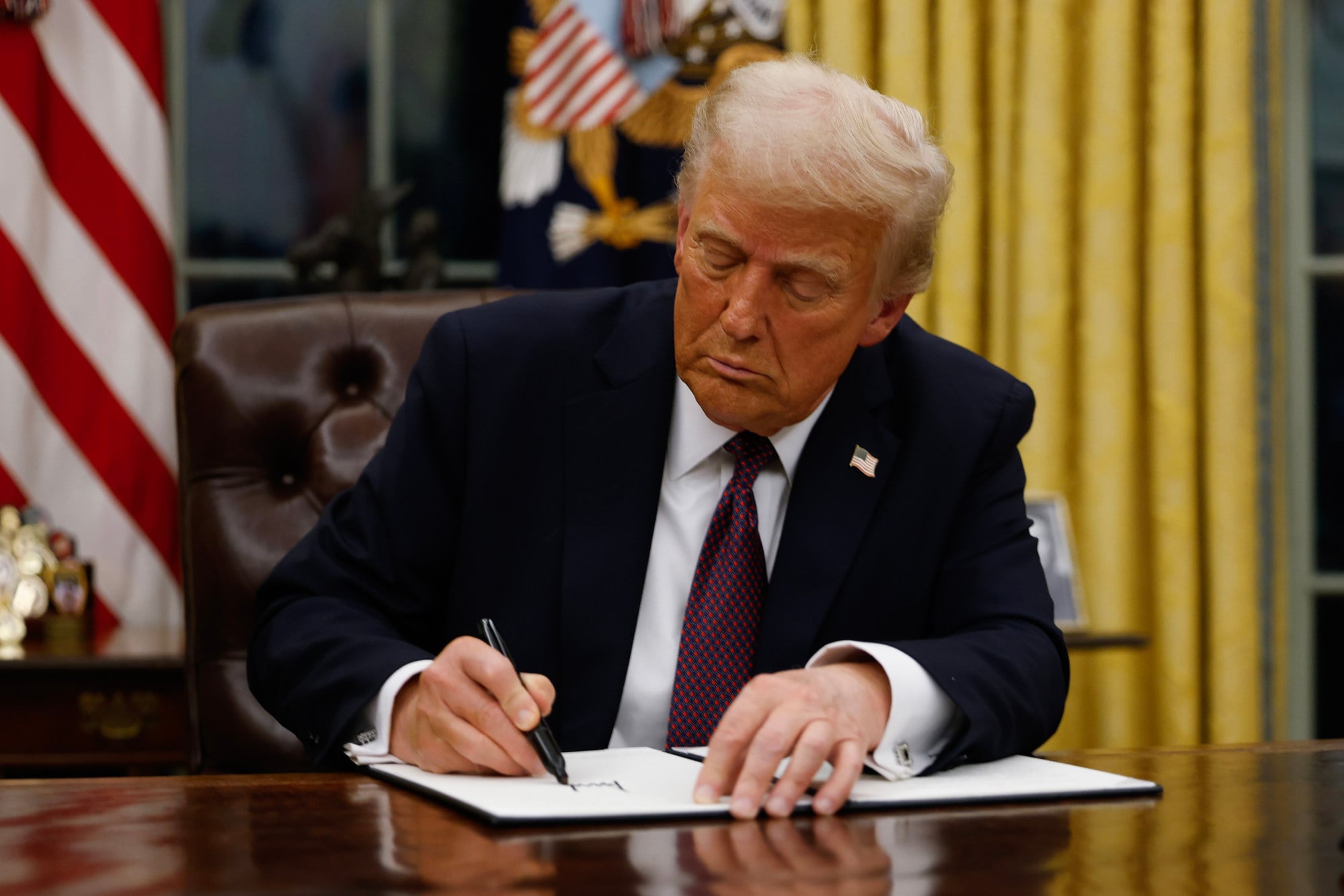
Trump signed an executive order on his first day back in office, directing federal agencies to deny citizenship documents to children born in the US when their parents were undocumented or present under temporary visas.
After lower courts blocked the policy, the Supreme Court ruled 6-3 on June 30 that those children were citizens at birth under the 14th Amendment.
Giving birth while visiting the United States is not, in itself, a criminal offence. Prosecutions described as “birth tourism” cases have generally relied instead on allegations of visa fraud, conspiracy, money laundering or other offences involving travellers who allegedly concealed the purpose of their visits and businesses that helped them do so.
“A pregnant traveller with a valid visa shouldn’t have to prove she isn’t a stereotype. When that becomes routine, the harm is real even if a case is never filed,” said US-based Joseph Kwon, a business immigration lawyer.
The US Justice Department has argued that organised schemes involving pregnant travellers constitute fraud and abuse of the immigration system, claiming that “thousands of foreigners” enter the US under “false pretences” to secure citizenship for their children.
“The Department of Justice will zealously protect the sanctity of United States citizenship by investigating and prosecuting those who fraudulently exploit our immigration system,” wrote Colin McDonald, assistant attorney general of the Justice Department’s National Fraud Enforcement Division.
In the memo, McDonald referenced a case from 2024 in which a husband and wife, Michael Wei Yueh Liu and Jing Dong, were each sentenced to 41 months in prison for operating a “birth tourism” scheme, charging Chinese clients tens of thousands of dollars to help them give birth in the US.
He also cited a case from 2020 involving fugitive Chao “Edwin” Chen, who was sentenced in absentia to 37 months in prison for his participation in a “birth tourism” scheme.
According to the memo, Chen operated a business that advertised a 100-person team based in China and claimed it had served more than 500 “birth tourism” cases in the US.
While much of the administration’s previous rhetoric had been tied to children of undocumented parents, so-called “birth tourism” and allegations against China emerged more frequently in the lead-up to the Supreme Court decision.
That shift was also reflected in Congress. Earlier this year, Republican congressman Chip Roy said that “when foreign adversaries like the Chinese Communist Party can leverage birth tourism and visa-less programmes to gain influence within our borders, we must restore integrity to our immigration system and defend the sovereignty of our Republic”, as he and other lawmakers urged then Homeland Security Secretary Kristi Noem to take action on the issue.
Although China has featured prominently in the debate, countries including Turkey, Russia and Mexico have also faced allegations of “birth tourism”.
Trump’s post after the ruling was not his first in 2026 targeting China over the issue.
“Birthright Citizenship is not about rich people from China, and the rest of the World, who want their children, and hundreds of thousands more, FOR PAY, to ridiculously become citizens of the United States of America. It is about the BABIES OF SLAVES!” the president wrote in March.
Trump has also falsely claimed the US is alone in its citizenship laws.
“We are the only Country in the World STUPID enough to allow ‘birthright’ citizenship!” he wrote on social media earlier this year.
Thirty-two other countries have birthright citizenship laws “substantially similar” to those of the US, according to a Pew Research Centre analysis, including the US’ neighbours, Canada and Mexico.
The scale of “birth tourism” has become a point of dispute. During a congressional hearing on birthright citizenship earlier this year, Peter Schweizer, president of the Government Accountability Institute, made the extraordinary claim that there were roughly one million “US citizens who are being raised in the People’s Republic of China today”.
Describing this figure as “wildly inflated”, American legal scholar Peter Spiro told the South China Morning Post in March that “the best that one can say is that it’s risen over the last few decades to become a non-trivial phenomenon”.
Despite claims of widespread issues, available data suggest the practice is extremely rare.
The National Centre for Health Statistics recorded 27,476 births to Chinese-born mothers in 2023, out of 852,470 births to foreign-born mothers and 3.7 million births overall, of which 113 were to non-US residents from China.
In contrast, these numbers were slightly higher in 2018, with 3.9 million births overall, of which 267 were to non-US residents from China.
The US territory of the Northern Mariana Islands, a location often accused of being a hotspot for “birth tourism”, showed a similar trend.
There were only 581 births in the territory in 2023, and just two of these were by foreign-resident mothers, statistics showed. In contrast, there were 1,262 births in 2018, with 565 to US or territory residents and 697 to foreign residents.
There are no statistics available on where these mothers were from, and the figures do not represent those who may have misrepresented their place of residence.
Against that backdrop, American-based legal experts have taken issue with the term “birth tourism” and are concerned about the wider implications of Trump’s push.
Staff attorney Kimberly Leung of the Asian Law Caucus rejects the term “birth tourism” entirely.
“I don’t use it. It’s not a legal term, and I think that it’s being used to mean different things,” she said.
She said the Trump administration was using divisive rhetoric about fraud without backing up those claims with evidence.
“I’ll just be blatant because this administration has been blatant, targeting countries that have non-white populations,” she added.
Leung described Trump’s focus on “birth tourism” as “fearmongering” and said it appeared to be a reaction to the Supreme Court ruling.
She said that claims the administration could find ways to “address” this or to “circumvent this ruling” were “blowing smoke” because “no president can rewrite the Constitution”.
Leung does not think it is actually a policy-driven discussion that Trump is having when talking about it.
“I think it is a very divisive one, or at least that’s his intent, that he is trying to sow divisiveness in our country by talking about birth tourism and obscuring the realities of Americans and our lives,” Leung added.
Leung pointed to the history of Wong Kim Ark, whose case established the constitutional basis of birthright citizenship more than a century ago.
The case of United States vs Wong Kim Ark has particular significance for Chinese Americans.
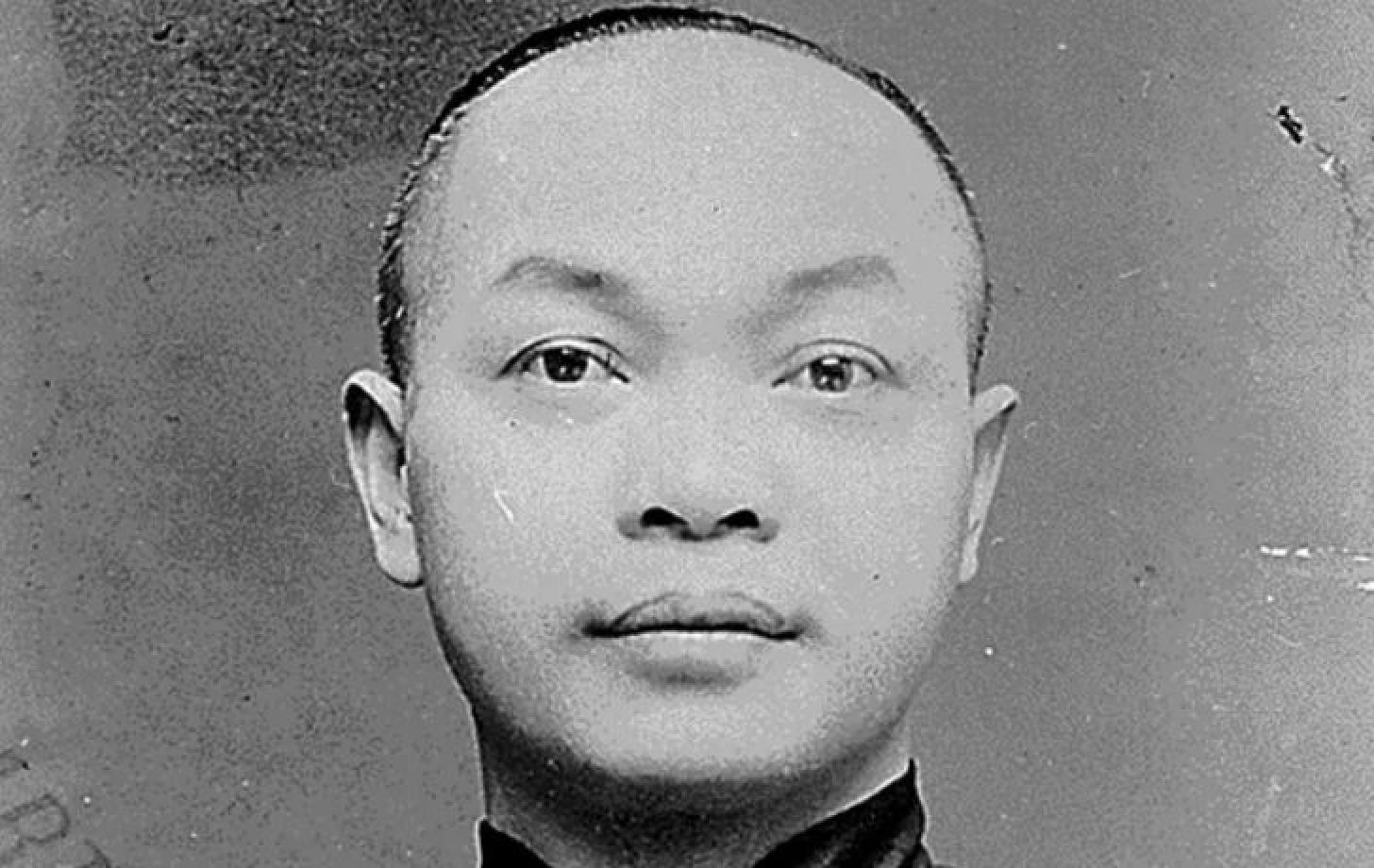
It held that a man born in San Francisco to Chinese parents was a US citizen under the 14th Amendment, affirming the principle that people born on US soil are generally entitled to citizenship, regardless of their parents’ nationality or legal status.
Kwon also reiterated that coming to the US and having a baby is not a crime, saying there is no statute against giving birth. Instead, the government is relying on subjective administrative measures.
“The legal hooks are both at the visa stage: a claim that someone lied about the purpose of their trip, or a consular officer denying a visitor visa because they suspect the real reason is to give birth,” he said.
“Both turn on what an officer believes about your intent. That’s a subjective standard, and subjective is exactly what lets bias in the door, whether anyone intends it or not.”
When translated into practice, Kwon warned that enforcement priorities such as those mentioned in the DOJ memo give officers widespread discretion at the border.
“When leadership signals that a particular group is the concern, that signal shapes who gets pulled into secondary inspection, who gets the longer questioning, whose answers get treated as suspicious,” he said.
“You don’t need a written policy to profile people. You just need a stated priority and a lot of discretion, and the border has both.”
The consequences to certain groups are not abstract, Kwon emphasised.
“They’re Chinese and Chinese-American travellers – many of them US citizens – who now brace for extra scrutiny because of how they look or where they flew in from,” he said.
By every serious estimate, “birth tourism” represents a tiny percentage of births in the US, and when the government spends outsized attention on a small number and attaches a nationality to it, that tells you the “priority isn’t really about the numbers”, Kwon added. -- SOUTH CHINA MORNING POST