




A Chinese researcher’s vision of serving spicy crawfish soup to astronauts on Mars became an unlikely symbol of Washington’s growing anxiety over China’s scientific ambitions at a US Senate hearing on Tuesday.
Drew Endy, associate professor at Stanford University and director of bio-strategy and leadership at the Hoover Institution, said that last autumn he met a 20-year-old Chinese researcher from Shanghai at a scientific conference in Paris.
Dressed in a large red crawfish costume, the young scientist described work on enzymes that could break down crawfish shells, allowing the material to be reused in a future circular economy on Mars.
The researcher assumed Chinese astronauts would eventually reach the planet – and would want spicy crawfish soup when they did, Endy said. The discarded shells could then be turned into other useful materials, including fabric.
“That’s what we’re competing with,” Endy said. “The vibe is good in Beijing.”
The colourful anecdote captured the central concern running through the hearing: while Republicans and Democrats increasingly agree that China poses a formidable scientific and technological challenge, they remain divided over whether US President Donald Trump’s cuts to research funding are undermining the country’s ability to respond.
The hearing, titled “Measuring What Matters: Science, Standards, and Strategic Competition”, was the latest in a series of congressional events examining whether the United States is losing its innovation advantage as China increases research spending and makes gains in fields including artificial intelligence, biotechnology and advanced manufacturing.
Senator Ted Budd, the North Carolina Republican who chairs the Senate subcommittee on science, manufacturing and competitiveness, said China accounted for about 30 per cent of global research and development spending in 2024, outspending the US for the first time, according to data from the National Science Board.
Budd also accused Beijing of intellectual property theft and unfair economic practices, arguing that Washington had reached a decisive moment in its effort to preserve its technological advantage.
“We must be clear-eyed about the competition that we face,” he said. “We are at a critical inflection point if we want to maintain and improve that lead.”
Democrats broadly shared that assessment of China’s technological rise, but argued that the Trump administration was weakening the foundations of American scientific competitiveness through cuts and disruptions to federal research programmes.
Julia Phillips, a former National Science Board member whom Trump fired in April, warned that the United States was approaching a crisis in its science, technology, engineering and mathematics workforce and said sustained investment in research was essential.
“Funding decisions must thus be honoured in full to preserve the integrity of the [science and engineering] enterprise,” Phillips said. “The US must renew its investments in and commitment to its historic strengths.”
The Trump administration has cut or frozen more than US$3 billion in previously approved National Institutes of Health and National Science Foundation research grants, according to independent researchers at Grant Witness.
The administration has also moved to dismantle the Department of Education. Meanwhile, the US Commerce Department revoked more than US$200 million in Tech Hub grants, with Commerce Secretary Howard Lutnick describing the original award process as “rushed, opaque and unfair”.
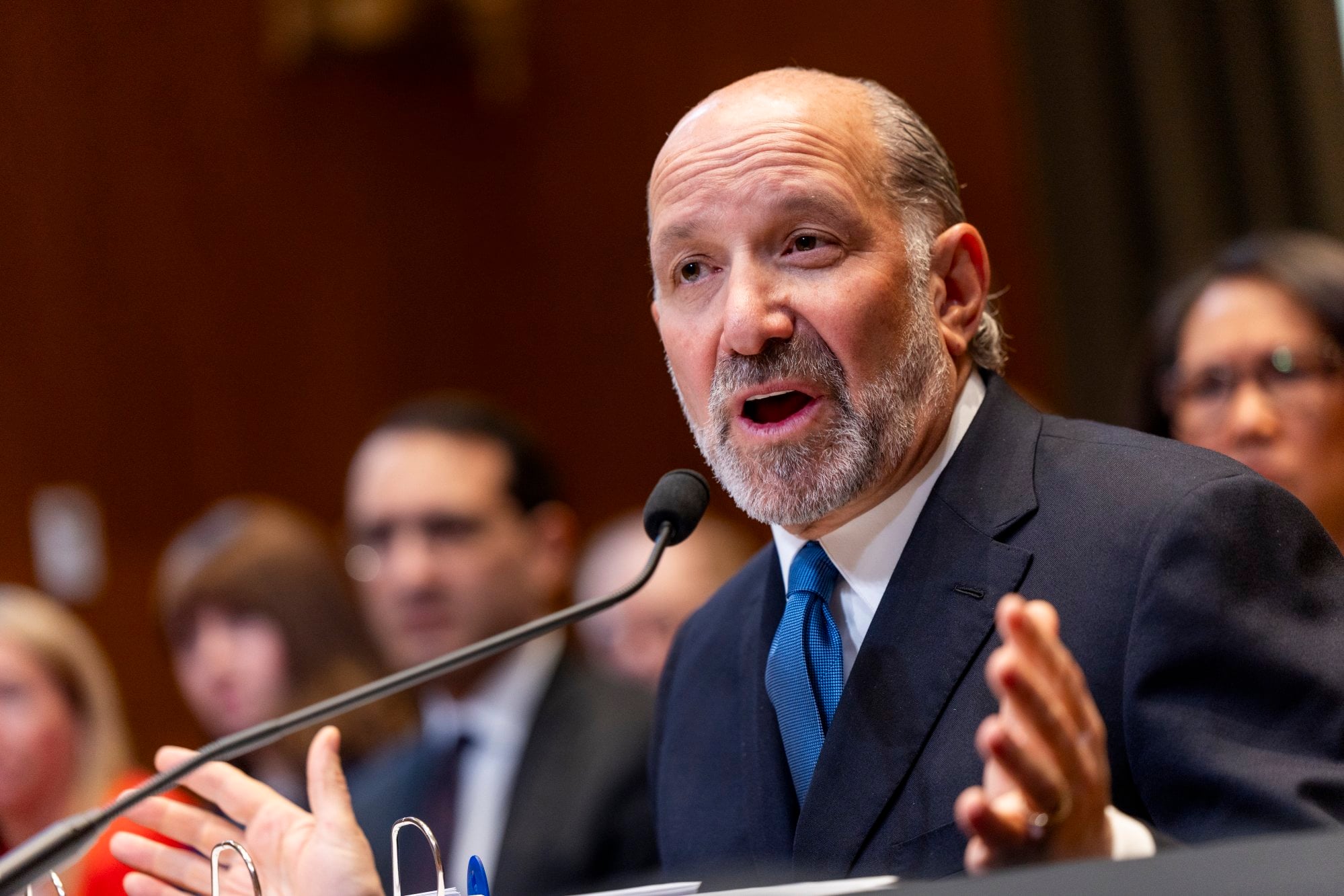
The competing arguments underscored a broader tension in Washington’s approach to China: lawmakers are seeking to restrict Beijing’s access to advanced US technology while debating whether the administration’s domestic policies are weakening the universities, laboratories and scientific workforce responsible for America’s technological lead.
Those concerns have become particularly acute in artificial intelligence, where recent advances by Chinese companies, including Moonshot AI and Alibaba Group Holding, have intensified debate over how rapidly China is narrowing the gap with leading US developers. Alibaba is the owner of the South China Morning Post.
Washington has responded by restricting China’s access to advanced semiconductors and other sensitive technologies, while pursuing measures to reduce US reliance on Chinese supply chains in strategic industries.
But Tuesday’s hearing suggested that constraining China may be only one part of the competition, with lawmakers also confronting questions about whether the United States is investing enough in its own scientific capabilities. -- SOUTH CHINA MORNING POST


