
As the United States marks the 250th anniversary of its founding, it confronts a new world order dominated by its relationship with China. In this wide-ranging series, we examine the pressure points and possibilities in those ties, from hard tech to soft power. Here, Dannie Peng looks at what is at stake amid the countries’ historic low in scientific collaboration.
In late May, Zhang Ning, founder of TopEdit, a Maryland-based company that provides editing services for academic publications, learned of a troubling development.
The US Congress was discussing a proposal to ban American research institutions from collaborating with certain Chinese entities using federal research funds.
Zhang’s immediate reaction was blunt: “This is absurd.”
Zhang’s exchange took place with a vice-president for a global publishing company during the annual meeting of the Society for Scholarly Publishing in San Diego.
“My first reaction was: is this real? It is ridiculous,” Zhang recalled, adding that even if the bill eventually failed, “it feels as though the world is becoming increasingly irrational”.
The legislation in question, the Securing Innovation and Research from Adversaries (SIRA) Act, would prohibit American scientists from using federal funding “to enter into, support or carry out any research collaboration” with Chinese scientists “associated with” entities on Washington’s various blacklists, according to the journal Science on May 27.
Zhang lives in Maryland, home to the prestigious National Institutes of Health (NIH), a leader in biomedical and public health research in the US.
When he arrived a decade ago, the NIH had an estimated 2,000 Chinese researchers, mostly postdoctoral fellows and visiting scholars. But, over the past eight years, as Washington has intensified its scrutiny, that number has steadily waned.
China-US scientific collaboration has hit a historic low of late. In frontier fields directly tied to national security – such as artificial intelligence, quantum technology and semiconductors – the two superpowers are locked in a fierce tech rivalry.
At the same time, heightened US vetting mechanisms have placed scientists of Chinese origin under strict surveillance regarding research funding and international exchanges, creating severe compliance pressures and deep uncertainty for bilateral partnerships.
This year marks America’s 250th anniversary, and despite unprecedented headwinds, many researchers describe the scientific landscapes of both countries as deeply intertwined, reflecting mutual interdependence rather than mere competition.
More than 30 per cent of high-impact international research from the US involves Chinese scientists, which a World Economic Forum article last year called “a testament to the depth and productivity of this partnership”.
“In reality, true decoupling is extremely difficult, particularly in the health sector, which spans the full continuum from basic scientific research to downstream technological applications,” said Ding Sheng, founding dean of the school of pharmaceutical sciences at Tsinghua University and director of the Beijing-based Global Health Drug Discovery Institute (GHDDI), which is co-funded by the private philanthropic Gates Foundation.
And despite the intermittent political measures targeting China’s perceived biotechnology threat, collaboration between academia and industry in the sector has never truly ceased.
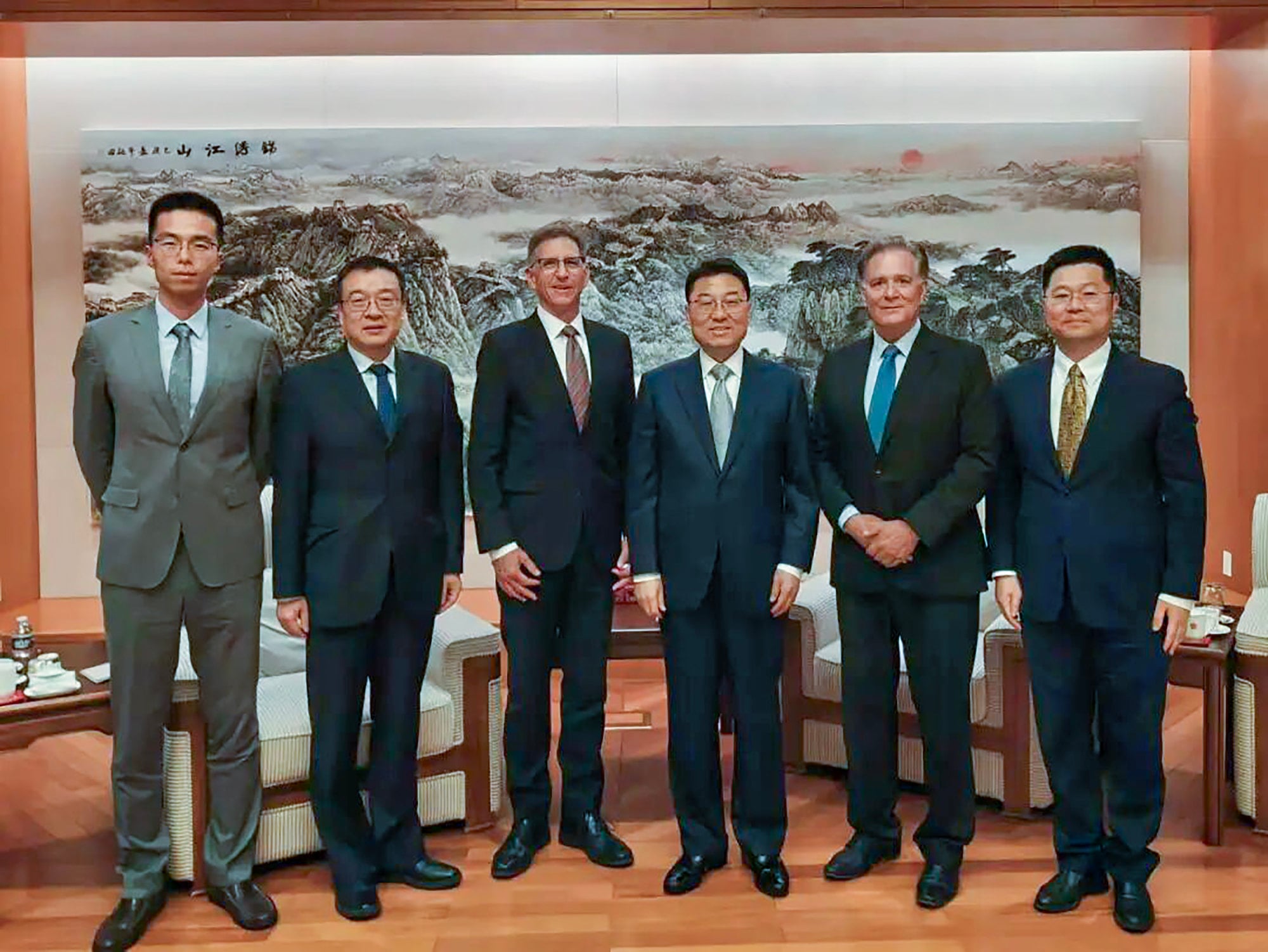
For instance, China’s ambassador to the US, Xie Feng, met last month with the president and CEO of Biocom California, a large life science membership association, to exchange views on bilateral cooperation in the biopharmaceutical industry, particularly among small and medium-sized enterprises.
In a paper published in June last year by the Centre for Strategic and International Studies, a Washington-based think tank, researchers said scientific cooperation between the US and China spanned more than 45 years and “provided both countries and the rest of the world with extraordinary advantages”.
They noted that although China was once viewed mainly as a source of students or a site for field research, knowledge exchange now flowed equally in both directions.
“If the United States wants to continue advancing in artificial intelligence, life sciences, medicine, climatology, physics, chemistry and other fields, cooperation with Chinese counterparts will accelerate progress,” the researchers wrote.
Li Yang, a geologist and associate professor at Peking University’s school of Earth and space sciences who studies critical minerals such as rare earths and gold, collaborates closely with researchers across the US, Canada and Europe.
Li was recently invited to join an international team studying geothermal springs in Yellowstone National Park, aiming to advance the exploration of underground heat sources and the valuable metals found in such environments.
He said that in areas such as rare earths, where China leads in resources, processing and hi-tech manufacturing, international academic exchange offered an important channel for researchers worldwide to keep pace with the latest scientific discoveries and technological developments.
“Collaboration is always a win-win,” Li said. “In science, when each side contributes its expertise, the outcomes become part of a shared body of human knowledge. Over time, industry can build on these discoveries to generate economic value.”
TopEdit founder Zhang echoed the sentiment, adding: “China and the US each have distinct strengths in scientific research, and many of these are complementary.”
One of China’s main strengths, Zhang said, was its large talent pool.
With less interest in the US in biology, for example, much of the field’s research has been driven by Chinese academics. In return, many who later move back to China help to advance the field there.
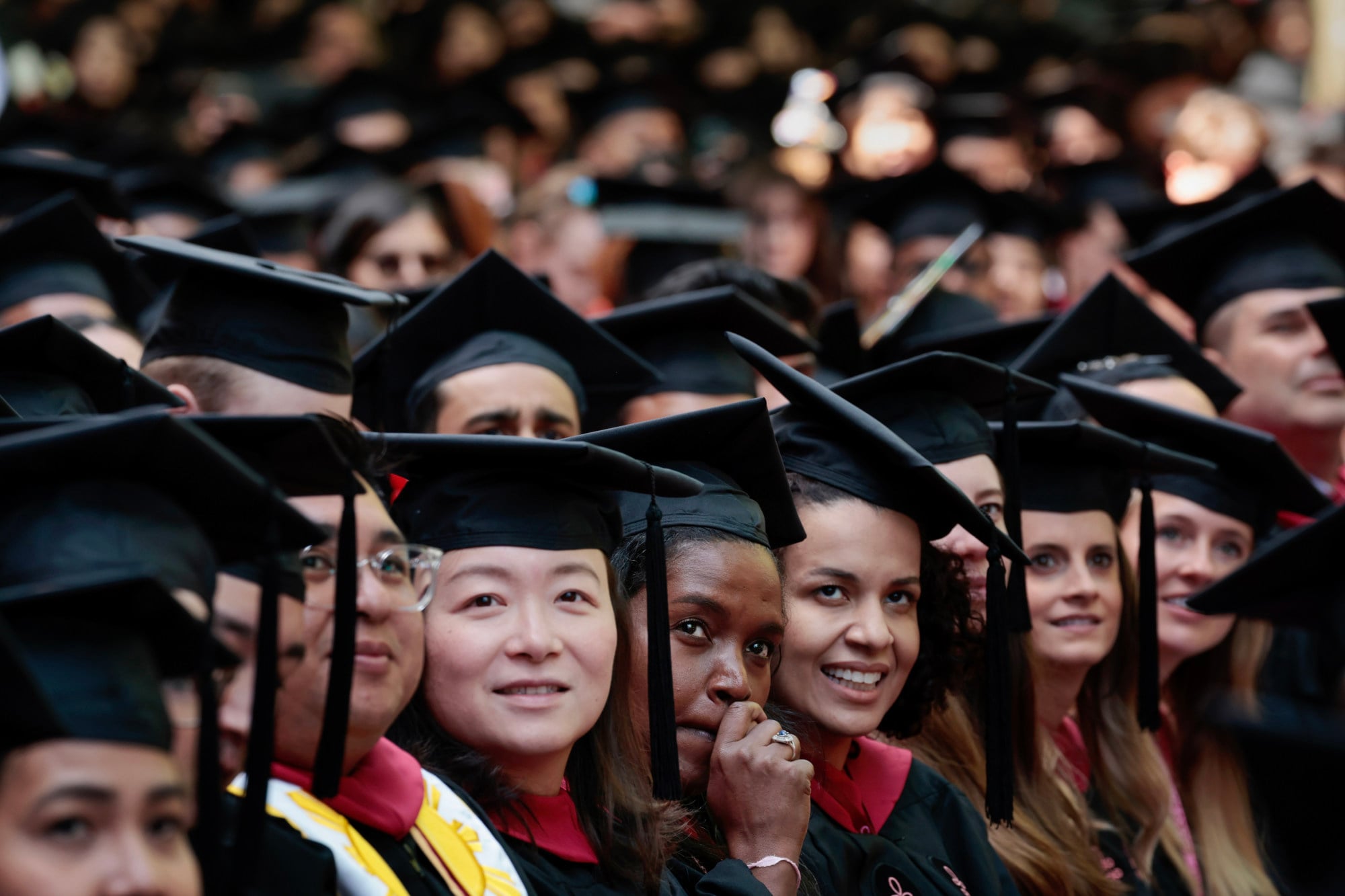
For more than two decades, China has been the main foreign pipeline for US-based scientists.
Official data shows that US universities have consistently awarded about 6,000 doctoral degrees annually to Chinese students in recent years, making them the largest international cohort.
As the number of Chinese-born researchers in the US declines, Zhang worries that both countries will ultimately suffer from a talent shortfall.
The biomedical sector highlights a deeply codependent relationship.
The US relies extensively on China for clinical trials, active pharmaceutical ingredients (APIs) and cost-effective manufacturing. China, conversely, depends on US capital, global market access and cutting-edge foundational research to commercialise its innovations.
According to an analysis by Washington-based strategic advisory firm The Asia Group, the US remains heavily reliant on Chinese APIs despite years of diversification efforts, as China accounts for about 13 per cent of global US Food and Drug Administration-registered API manufacturing facilities.
“After years of collaboration and market-driven development, a deeply interconnected ecosystem has already taken shape,” Ding said.
“If China were to stop supplying APIs and other contract services, the US would not be unable to cope, but rebuilding these production lines and value chains would take considerable time and would be far less efficient.”
China has also emerged as a vital source of innovation in advanced medicine.
Chinese drug developers out-licensed roughly 94 molecules in 2024, a figure that rose to a record 157 in 2025, with many acquired by American pharmaceutical giants such as Merck and Bristol Myers Squibb.
Zhang Dan, co-founder of Shanghai-based global contract research organisation ClinChoice, said China’s edge lay in its speed and cost-effectiveness in producing samples and running clinical trials.
“After the US researchers publish foundational research, Chinese counterparts move quickly to translate it into primary products for testing,” he added.
Yet, this dynamic is reciprocal.
“China’s ability to develop second- and third-generation innovative drugs has benefited significantly from the early-stage exploration and validation carried out by US researchers,” Ding said.
“At the same time, without US capital and acquisition opportunities, many Chinese biotech companies would have faced far greater challenges in surviving and scaling.”
The Asia Group’s analysis highlighted a structural difference that makes biotechnology inherently more difficult to decouple than semiconductors.
While the semiconductor sector is asset- and infrastructure-intensive, biotech is “science-driven, relatively asset-light and highly dependent on talent, with much frontier knowledge residing in the public domain”, it said.
Before Washington and Beijing established formal diplomatic ties in 1979, their interaction was almost non-existent, and mutual distrust ran deep.
Scientific cooperation was identified as a strategic tool to break the ice and foster cross-border contact. On January 31 that year, US president Jimmy Carter and Chinese leader Deng Xiaoping signed the historic Science and Technology Cooperation Agreement.
Decades of shared academic and industrial achievements followed.
Among them, cooperation under a landmark 1998 agreement on peaceful uses of nuclear technologies upgraded safety protocols in China’s nuclear sector, paving the way for the commercial successes now enjoyed by US nuclear firms operating in China.
In critical areas such as public health, oceanography and climate science, robust cooperation has long ensured crucial data sharing and coordinated global responses.
Beyond structural frameworks, this shared history has been defined by individual scientists transcending national boundaries.
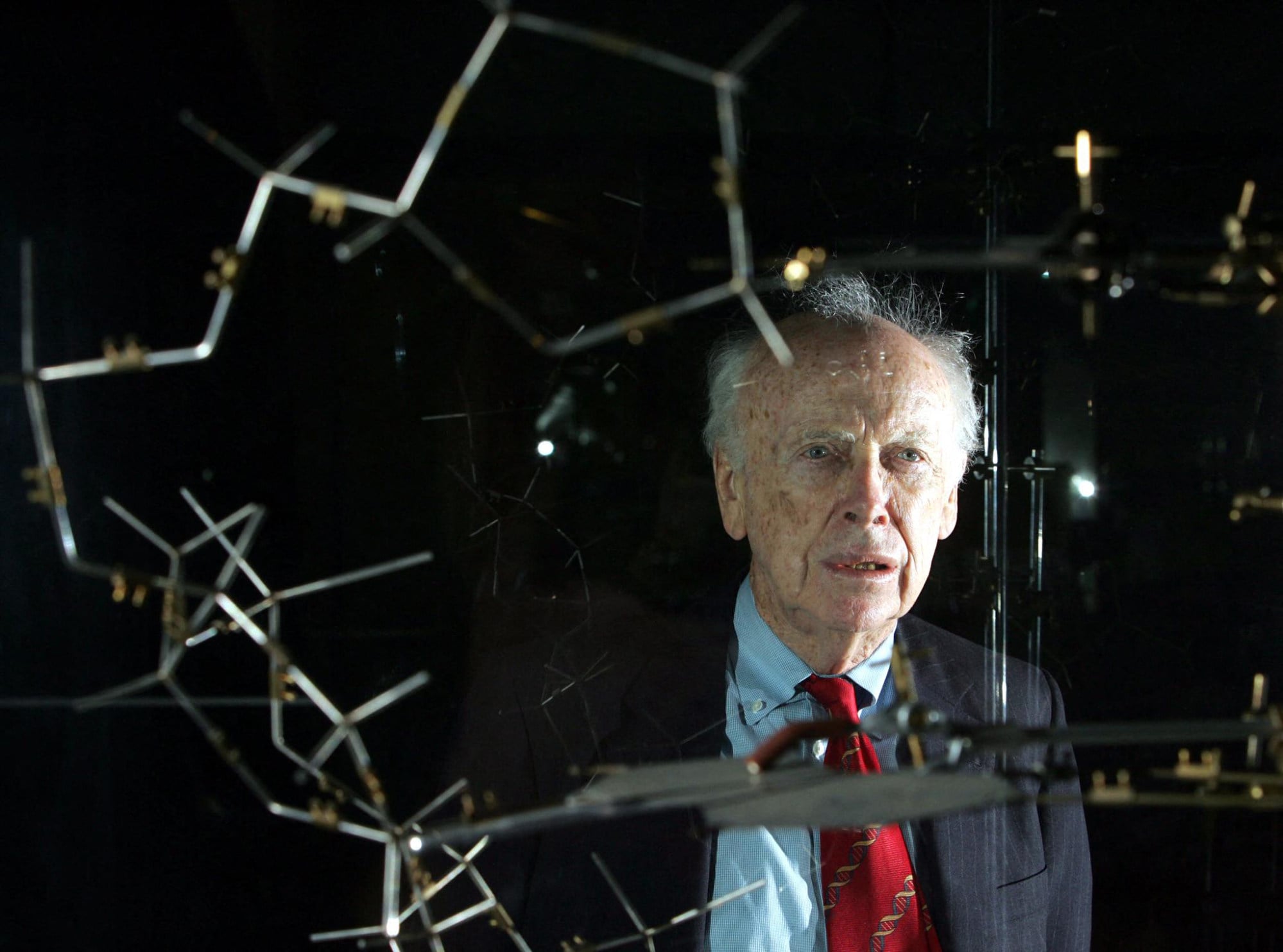
Nobel laureate James Watson, who co-discovered the double helix of DNA, was among the first American scientists to visit China as relations thawed in the 1970s.
From the 1980s, Watson quietly helped lay the institutional foundations for China’s rise in life sciences by sending books, journals and bacterial strains to isolated researchers.
He also opened the doors of the Cold Spring Harbor Laboratory, where he served as director and president, to Chinese scholars when such opportunities were rare.
Conversely, Chinese-born scientists have left an indelible mark on the American research ecosystem. Shanghai-born aerospace engineer Qian Xuesen co-founded Nasa’s Jet Propulsion Laboratory and developed foundational theories for early US missile and rocket development.
However, as Washington has increasingly defined Beijing as a strategic competitor, scientific exchange has entered a turbulent era.
This friction was epitomised by the controversial “China Initiative” launched in 2018 to counter reported economic espionage.
Widely criticised for unfairly targeting Chinese-American researchers, the programme had a chilling effect that persists long after its official termination in 2022.
Even fields unrelated to core tech rivalries have become weaponised. In one case, a Chinese research fellow at the University of Michigan was arrested for importing an illicit plant pathogen. Many in academia flagged the case as unnecessarily politicised.
Against this backdrop, a reverse brain drain is under way. Leading scientists are increasingly relocating from the US to China.
Many cite funding cuts, hostile political environments and family considerations, and the shift is reshaping the global research landscape.
Nevertheless, some argue that science transcends national competitions.
“Science is a shared endeavour of all humanity – it requires a collective effort and is an endless pursuit,” one senior Chinese scientist whose work spans the US and China said on condition of anonymity.
“In an ideal world, we would mobilise the intellectual resources of all humanity to tackle the fundamental questions confronting us, from the mysteries of life to the challenges of ageing, disease and death.” -- SOUTH CHINA MORNING POST