TOKYO: Japan and Singapore are taking their bilateral relationship into orbit, locking in a landmark agreement on July 6 to jointly develop and expand cooperation in the peaceful uses of outer space.
The pact, signed with the Japan Aerospace Exploration Agency (JAXA), marks the first bilateral agreement for the three-month-old National Space Agency of Singapore (NSAS). It is a launch pad for both entities to exchange critical information and deepen collaboration in cutting-edge fields like quantum satellite communications.
The agency-level deal was one of a flurry of agreements signed on July 6 spanning industry associations, private businesses and academia, elevating the two nations’ space cooperation to new heights.
Though space technology might seem esoteric, it is increasingly woven into the fabric of everyday life, encompassing anything that pings data to a satellite rather than subsea fibre-optic cables. It cuts across critical domains from telecommunications and cybersecurity to maritime, aviation and defence.
Singapore’s space industry is nascent, with about 70 companies and 2,000 professionals. But attributes such as its status as a financial centre and a research and innovation hub make it a logical partner for Japan, which has decades of experience, beginning with JAXA’s predecessor, founded in 1969.
NSAS chief executive Ngiam Le Na told ST after the signing ceremony with JAXA president Hiroshi Yamakawa that Japanese and Singapore firms are already working hand in glove, and she foresees “significant breakthroughs” in the coming years.
She pointed to Singapore quantum start-up SpeQtral, which in January partnered with Japanese satellite operator SKY Perfect JSAT Corporation to conduct trials of ultra-secure satellite communications using quantum cryptography.
SpeQtral founder Lim Chune Yang told ST on July 6 that because modern supercomputers can increasingly crack traditional, mathematics-based encryption, quantum signals transmitted by satellites will be vital to defending against next-generation cybersecurity threats. Quantum signals degrade when transmitted over long distances via terrestrial cables.
“We are using space technology to augment the entire global telecommunications industry,” Lim said. “For users on Earth, think about banking infrastructure, data centres or cloud services. Their internal communication needs to be secure because they handle sensitive client data. This applies to government defence, which is highly sensitive as well.”
Lim noted that he benefited from Singapore’s institutional backing for “blue skies research”, or theoretical concepts without immediate commercial applications. The formation of the NSAS, he said, sends a powerful signal of the Republic’s commitment to the cosmos.
Established on April 1 under the Ministry of Trade and Industry, the NSAS’ mission is to advance Singapore’s national space ambitions and contribute to the global space ecosystem. In the lead-up, Singapore hosted the inaugural Space Summit in February as part of a broader push to attract the global space community.
NSAS deputy chief executive Jonathan Hung told ST that Singapore and Japan share a mutually beneficial relationship. “They come into Singapore, they access our market, they also support the wider South-east Asian market. Our Singapore companies provide very niche components, niche enabling technologies.”
He cited Singapore’s political stability, talent pipeline and vibrant start-up and venture capital ecosystem as major draws.
Yamakawa noted that JAXA has had a longstanding partnership with Singapore, having previously launched and deployed Singapore satellites. The two nations have also collaborated on space education and a regional framework for satellite-based disaster monitoring, he said, adding that the agreement will enable closer cooperation with Singapore, which is a “key partner with whom we share common values”.
On July 6, the two agencies also announced their partnership to promote business and industry ties under JAXA’s Co-funded Business Promotion Framework. Singapore is only the third international partner to join the framework, following Britain and France.
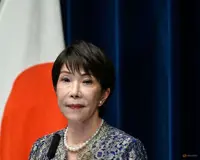
The deals stem from a bilateral summit in Tokyo in March, where Japanese Prime Minister Sanae Takaichi and her visiting Singaporean counterpart Lawrence Wong marked 60 years of diplomatic ties by committing to space cooperation as a key pillar of the two sides’ strategic partnership.
The signings on July 6 took place at SPACETIDE 2026, Japan’s premier space industry conference, now in its 11th year.
SPACETIDE president Masayasu Ishida said space is rapidly becoming a strategic domain linked to national security and economic resilience. On June 20, Takaichi’s government identified space as a strategic growth sector in a road map that planned 14 trillion yen (S$112 billion) in public-private investment by 2040 for an industry valued at 1.2 trillion yen today.
Also on July 6, the Association of Aerospace Industries (Singapore) (AAIS) and the Society of Japanese Aerospace Companies pledged to boost corporate ties across aerospace, unmanned aircraft systems and the space sector to accelerate commercial innovation and fortify regional supply chains.
AAIS chief executive Chew Hwee Yong told ST that Singapore is sharpening its focus on satellites and related technologies, and hopes to glean insights from Japan’s mature ecosystem.
Meanwhile, Singapore wireless laser tech start-up Transcelestial Technologies entered a partnership with Japan’s inter-satellite communication startup Warpspace.
Nanyang Technological University also inked a deal with Japanese cloud computing firm Fusic to develop artificial intelligence systems capable of managing massive, complex satellite constellations.
The partnership addresses a looming global bottleneck. The number of active satellites in orbit is projected to skyrocket from roughly 14,000 today to up to 100,000 by 2030, threatening to overwhelm human ground crews.
The collaboration aims to automate fleet management using AI as much as possible. NTU’s Satellite Research Centre (SaRC), a local pioneer that has designed, built and operated 13 satellites since launching Singapore’s first home-grown satellite in 2011, will provide mission data to train and test these AI programmes.
“Space involves a lot of imagination, whether from a commercial point of view or a research point of view,” Lim Wee Seng, executive director at SaRC, told ST, adding that space is becoming an increasingly magnetic field drawing younger Singaporeans. - The Straits Times/ANN