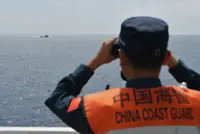
Beijing’s move this week to add 20 more Japanese entities to its export-control list is the latest chapter in a complex US-Japan-China geopolitical triangle.
Over the past seven months, an angry China has punished Tokyo repeatedly. A miffed Japan is left feeling betrayed. And a war-distracted Washington has struggled to navigate between the two, adding further tension in a region already on tenterhooks, according to analysts and former US government officials.
The gnawing unease was sparked in November when then-newly elected Japanese Prime Minister Sanae Takaichi characterised any attack on Taiwan by Beijing as an “existential crisis” that could draw Japan in, prompting it to intervene militarily.
“If it involves the use of warships and military actions, it could by all means become a survival-threatening situation,” the hardline politician told Japanese lawmakers in November, refusing to back down.
While Beijing’s angry response involving a core “red line” was predictable, perhaps less so was the seam it opened between Washington and Tokyo amid tepid support from Washington and little willingness to stand up for its treaty ally.
Analysts said this is as much about US President Donald Trump’s personality and world view as it is US strategic calculations.
Japan has taken the Trump administration’s non-committal response to heart, meanwhile, analysts said.
“Japan would of course welcome more vocal [public] support from Washington against Chinese coercion, but Tokyo is also reluctant to ask the US directly for it,” said Jeremy Chan, senior analyst with Eurasia Group.
“Japan does not want to seem weak internationally and it fears that complaining publicly about Chinese pressure could invite further attacks.”
Privately, however, sources familiar with the matter said Japanese officials have escalated their appeals in recent months for Washington to press Beijing to, in particular, ease its rare earth restrictions on Tokyo.
The curbs were imposed in January among several other retaliatory measures after Takaichi’s comments ruptured relations.
Japan’s entreaties have steadily increased, they add, from a “one-time request” to frequent discussions at the cabinet and legislative levels.
The sources, who spoke on condition of anonymity because they were not authorised to comment publicly, said while White House officials have discussed China’s expanding economic pressure on Japan, it was treated as a low priority.
“It’s been a case of ‘Japan wants this ... Next subject,’” one source said.
Sources said Trump raised China’s rare earths restrictions with Chinese President Xi Jinping in Beijing last month, but only briefly as one of several secondary issues on the table.
The Trump administration’s lack of urgency has frustrated Tokyo, with one source pointing to a “simmering dissatisfaction” among Japanese officials. “Trump pays lip service to the Japanese leader and then softballs with Xi,” the source said.
“[Japan is] sort of at a loss for words. They thought Congress would be more forceful here.”
While some analysts say Takaichi overplayed her hand by outing the strategic ambiguity that has helped maintain an uneasy peace across the Taiwan Strait for a half-century, others said it only reflected what has long gone unsaid given Japan’s geography and large US military presence.
Analysts said several factors are at play in the US-China-Japan dynamic.
Washington’s preoccupation with the Middle East, especially the Iran war that Trump started with Israeli Prime Minister Benjamin Netanyahu, has forced the president to avoid any East Asia irritants, according to the Brookings Institution and other think tanks, especially as the US has shifted forces and anti-missile systems from East Asia to the Persian Gulf.
But Takaichi’s comments predated the war’s February start, so that may not fully explain Trump’s tepid defence of one of the most strategically vital US allies.
Another related factor: given the transactional president’s growing list of difficulties, including his sinking popularity at home and war-related economic pressures ahead of midterm elections, he may view his lack of support for Japan as a way to strengthen his position with China and Xi, whether in a possible Washington summit this fall or in ongoing trade negotiations.
“He somehow thinks that regional security is a card that he can play, his remarks about Taiwan and perhaps the silence about Japan, that somehow he can use this to his benefit,” said Jeffrey Moon, head of China Moon Strategies and former member of the National Security Council.
Also in the mix is Trump’s long-standing suspicion of allies as freeloaders, in contrast with the long-standing US view that collective security benefits all parties, despite Japan’s many attempts to contribute more and strengthen ties.
“Tokyo has emphatically answered US calls for allies to spend more on defence and invest in new capabilities to deter China, making Washington’s lack of support more disappointing,” added Chan, formerly with the US consulate in Shenyang and the US embassy in Tokyo.
This has been compounded by Trump’s open disappointment that Tokyo, Nato and several European allies did not send ships and otherwise assist him in the Persian Gulf, a likely topic during next week’s Nato summit in Turkey.
Asked by a Japanese reporter during a March White House meeting with Takaichi why he did not share his war plans with allies beforehand, Trump said: “We wanted surprise. Who knows better about surprise than Japan? Why didn’t you tell me about Pearl Harbour?”
“It’s appropriate that people step up,” the notoriously undiplomatic president added before denying that he needed any help.
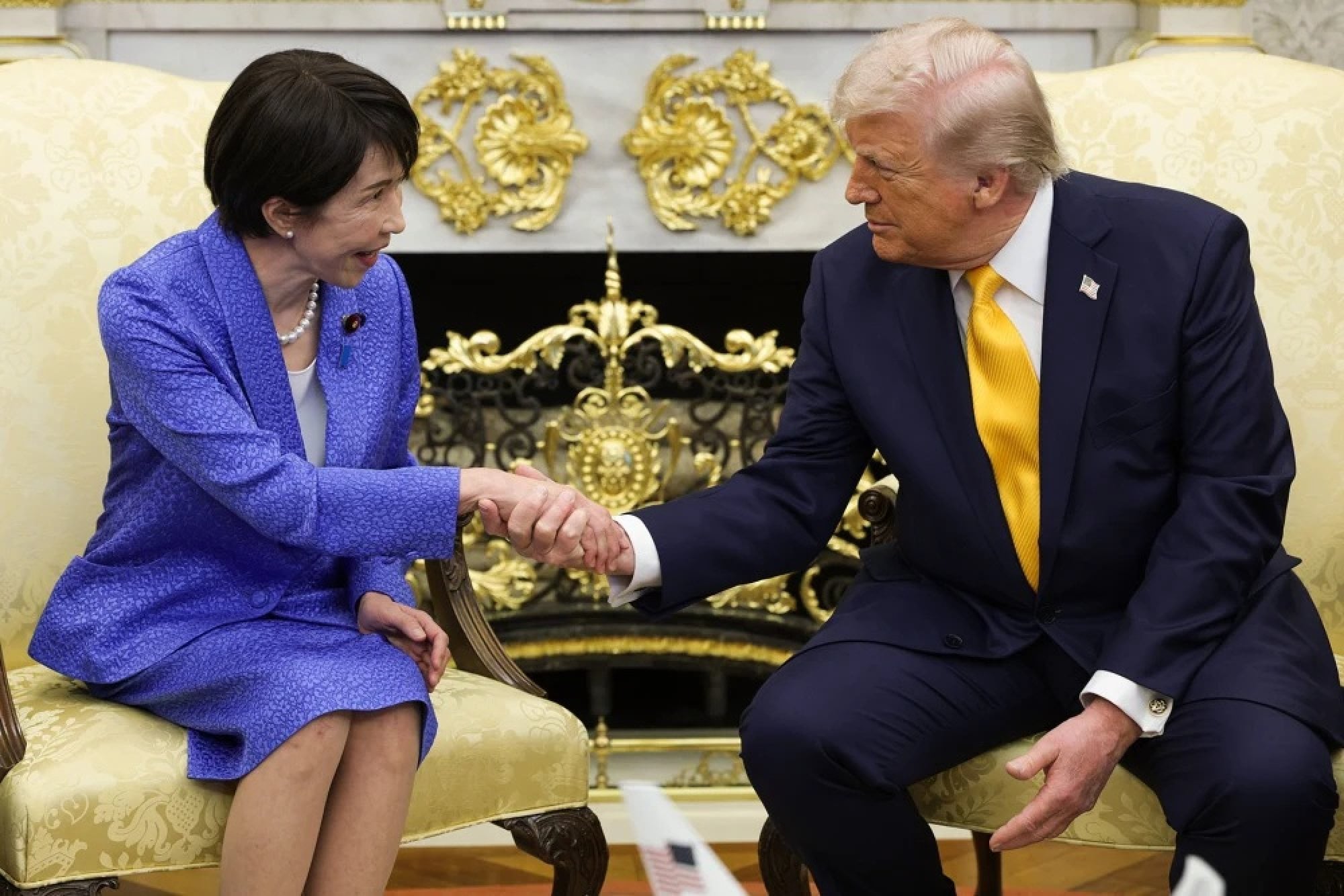
Another factor, analysts said, is that Trump has become progressively more focused on personal issues in his second term, including family property and cryptocurrency deals, along with grudges and disfavour of inclusion as he is on geopolitical concerns and Republican Party success.
Trump made over US$1.4 billion last year from crypto business dealings, according to a mandatory financial report released on Tuesday.
“It’s increasingly about him personally, not about the party, not about the international community. And so taken from that perspective, this is not a priority,” said Moon. And
“I’m kind of reluctant to mention, but I think it’s out there, is his view towards women.”
In mounting tension with another ally, also led by a woman, Trump earlier this month claimed that Italian Prime Minister Giorgia Meloni “begged” him for a selfie, which he granted because he “felt sorry for her” and wanted to help elevate her poll numbers since she was “doing poorly”.
Italy has also been far more pointed than Japan in rejecting US calls to assist in the war.
“If you look at how he treated Meloni in Italy recently, which is shocking to me, he underestimates the importance of women in politics in general, and in the international community,” Moon said, adding: “that said, there’s no excuse for not coming to the defence of a treaty ally that seems to be under unremitting pressure.”
Beijing sees Taiwan as part of China to be reunited by force if necessary. Most countries, including the US, do not recognise Taiwan as an independent state, but Washington is opposed to any attempt to take the self-governed island by force and is committed by law to supplying it with weapons.
Monday’s punitive tariff move against Tokyo is only Beijing’s latest since November 7 with little or no US pushback.
In addition to Chinese export restrictions on rare earth materials essential for Japan’s tech industry – a replay of a 2010 dispute over territory – Beijing has banned the export of dual-use goods, blacklisted a number of other Japanese corporations and banned all Japanese seafood.
Chinese fighter jets also reportedly locked their missile-targeting radar on Japanese fighter jets during an interception near Okinawa.
China also circulated a formal letter at the UN that any Japanese military intervention involving Taiwan would be viewed as an “act of aggression”, giving Beijing the right to take self-defence action against Japan.
And on other fronts, China has restricted Japan-bound tourist groups; suspended academic, business and cultural exchange programmes; and banned pro-Taiwanese Japanese lawmakers from entering mainland China or Hong Kong, arguing in state media that Japan’s “peace mask is coming off” and that Takaichi is engineering a return to “neo-militarism”. -- SOUTH CHINA MORNING POST