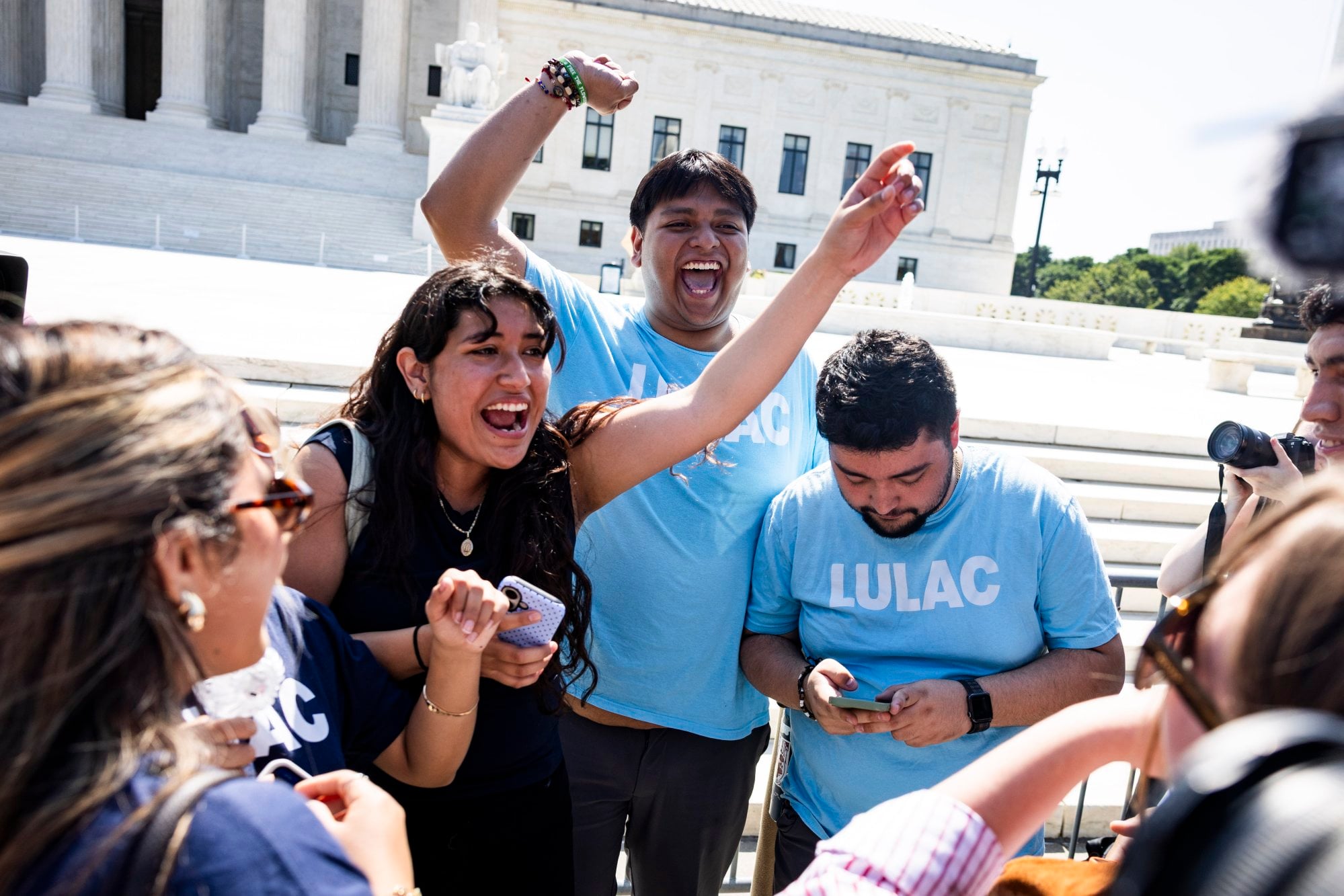
In a historic ruling, the US Supreme Court on Tuesday struck down a Trump administration executive order targeting birthright citizenship, preserving a defining principle of what it means to be born an American.
The court ruled 6-3 in Trump vs Barbara, holding that children born in the United States to undocumented parents or parents on temporary visas are entitled to US citizenship.
While undocumented immigration has long been central to the debate about birthright citizenship, so-called birth tourism has become an increasing focus in some political and policy arguments, with allegations made against China.
Echoing accusations of proponents of his executive order, US President Donald Trump took aim at China in a social media post after the decision was announced.
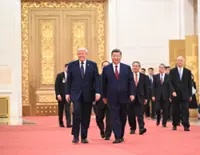
“I would like to congratulate President Xi, and the Great Country of China, on their massive Birthright Citizenship WIN! President DONALD J. TRUMP,” Trump wrote.
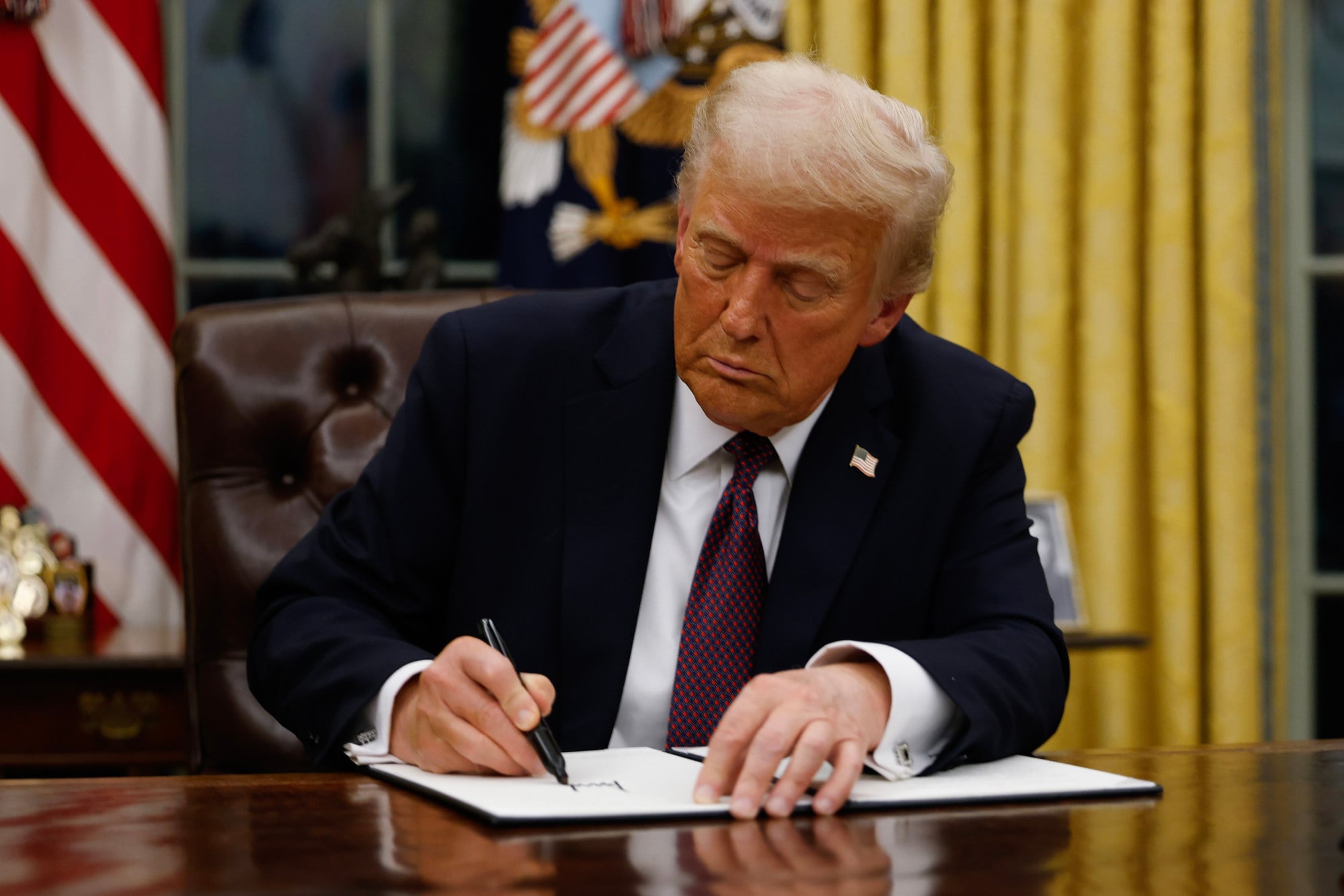
Restricting birthright citizenship has been a cornerstone of Trump’s second-term agenda, which saw him sign an executive order in early 2025 to end citizenship for children of undocumented parents or temporary visa holders.
The policy was scheduled to take effect the following month, but was repeatedly blocked in federal courts before it headed to the Supreme Court.
In another social media post, Trump called the Supreme Court’s decision “too bad” for the country, while claiming “we can easily make it up in Congress through Legislation” and that “no long and unwieldy Constitutional Amendment is necessary”.
“Congress should start TODAY to work on ending expensive and unfair to our Country, Birthright Citizenship. They will have my Complete and Total Support!”
While much of the birthright citizenship rhetoric has been about unlawful immigration, the Trump administration’s order actually targeted those who are lawfully present in the US and on the path to permanent legal status.
This included people on highly skilled work visas such as an H-1B or L-1, as well as dependent visas, student visas, temporary labour visas and achievement visas, which are all considered “lawful but temporary” by the US Citizenship and Immigration Services (USCIS).
If one parent is a citizen, the child would still have been granted birthright citizenship under the order.
Legal history of birthright citizenship key to final verdict
The legal history of birthright citizenship in the US was key to Tuesday’s decision, as arguments on both sides in 2026 examined the 14th Amendment’s Citizenship Clause.
“Citizenship, then and now, was the right to have rights – to freely participate in our political community. The Framers of the Fourteenth Amendment extended that promise to ‘every free-born person in this land’,” Chief Justice John Roberts wrote in the majority opinion. “We keep that promise today.”
The clause has long been understood to grant citizenship to nearly all children born in the US, regardless of their parents’ immigration status. It was passed in 1866, just after the Civil War, and ratified in 1868, to safeguard the rights of former slaves and other minorities.
However, modern-day birthright citizenship stems from a landmark 1898 case involving a Chinese national. In United States vs Wong Kim Ark, the Supreme Court ruled that a man born in San Francisco to Chinese parents was a US citizen under the 14th Amendment.
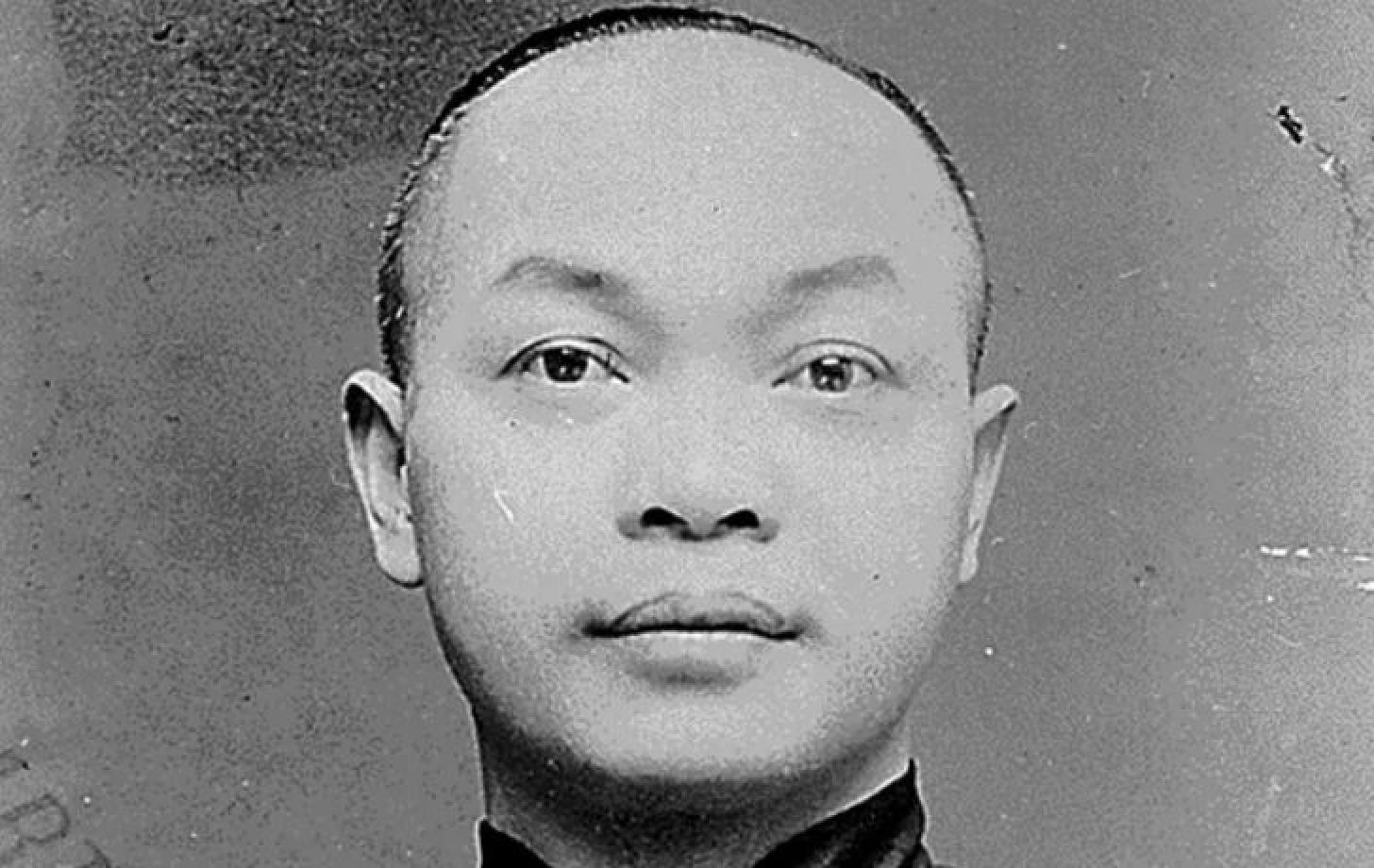
Wong had been denied re-entry to the United States after a trip to China, with officials arguing he was not a citizen under the Chinese Exclusion Act because of his parents’ immigration status.
The landmark ruling established that nearly all persons born on US soil are citizens, regardless of their parents’ nationality.
Following Tuesday’s decision, Wong Kim Ark’s descendants commended the ruling in a statement, with Norman Wong saying his great-grandfather never set out to become a symbol.
“He was one man, only a cook, and yet he stood up for what was right, and I believe that it has made a difference,” Wong said.
“As a result, he stood up for the rights of all of us Americans – it just so happens that I am related to him. Today’s ruling shows that his victory remains as important now as it was in 1898.”
Birthright citizenship survived the Chinese Exclusion Act and Jim Crow, said Krish O’Mara Vignarajah, president of Global Refuge, a non-profit organisation that works with refugees, adding that today, it survived an executive order that would have “essentially turned the maternity ward into a customs checkpoint”.
Meanwhile, Stop AAPI Hate noted that the ruling carries special significance for Asian-American communities while citing Wong Kim Ark’s case.
“Birthright citizenship has shaped America into the uniquely diverse and democratic nation it is today,” the organisation said in a statement.
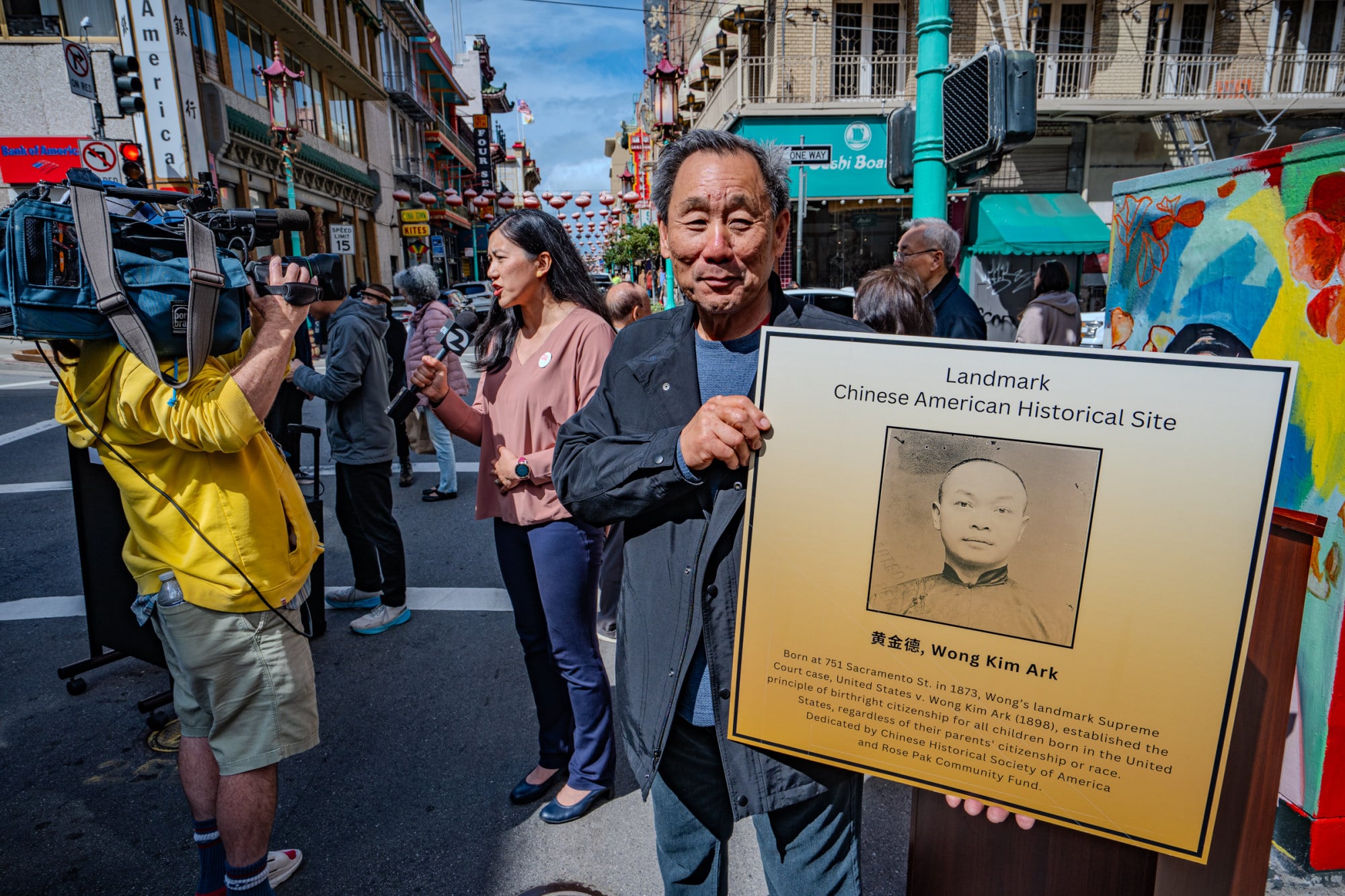
“Because of this right, the Asian-American community and other communities of colour have been able to grow in size and political power – and that is precisely why the Trump administration attempted to end it.”
In a memo on Tuesday afternoon, the US Department of Justice directed federal prosecutors to prioritise investigations of birth tourism schemes.
“The Department of Justice will zealously protect the sanctity of United States citizenship by investigating and prosecuting those who fraudulently exploit our immigration system,” wrote Colin McDonald, a senior Justice Department official, in the memo that was posted to social media.
McDonald referenced a 2024 case in which a husband and wife, Michael Wei Yueh Liu and Jing Dong, were each sentenced to 41 months in prison for operating a birth tourism scheme, charging Chinese clients tens of thousands to help them give birth in the US.
In 2026, Chinese nationals found themselves at the centre of disputed claims of abuse amplified by Trump’s immigration campaign.
Birthright citizenship “has spawned a sprawling industry of birth tourism”, said Solicitor General D. John Sauer, Trump’s top litigator, when the Supreme Court heard oral arguments in April.
“Uncounted thousands of foreigners from potentially hostile nations have flocked to give birth in the United States in recent decades, creating a whole generation of American citizens abroad with no meaningful ties to the United States,” Sauer said.
While claims of the practice are not unfounded, legal and immigration experts argue that figures have been inflated and are not supported by credible data or evidence of risk. With no official figures on the practice, available data suggests it is rare.
“The best that one can say is that it’s risen over the last few decades to become a non-trivial phenomenon,” American legal scholar Peter Spiro told the South China Morning Post in April, while describing claims one million US citizens were being raised in China today as “wildly inflated”.
“There have been a number of Chinese nationals who have come to the United States to give birth for purposes of acquiring citizenship for a child,” he said, adding: “it’s not at the level that should raise any serious policy concerns”.
At the time, Trump marked a historic first for a sitting president by attending the Supreme Court to hear the arguments.
“Birthright Citizenship is not about rich people from China, and the rest of the World, who want their children, and hundreds of thousands more, FOR PAY, to ridiculously become citizens of the United States of America. It is about the BABIES OF SLAVES!” Trump wrote on social media.
According to a Pew Research Centre analysis, 32 other countries have birthright citizenship laws “substantially similar” to those of America. Most of these countries are in the western hemisphere, with the US’ neighbours, Canada and Mexico, among them.
World Cup highlights significance of birthright citizenship victory
Meanwhile, the topic of birthright citizenship has been front and centre at this year’s World Cup, helping at least three players on the US men’s team secure spots playing for America.
This includes the US’ top scorer, Folarin Balogun, who was born in New York City after his mother travelled from London to see her sister, granting him automatic birthright citizenship. Balogun’s parents are both Nigerian and were living in the United Kingdom at the time.
His mother, who was seven months pregnant, had planned to travel back to England to have him, but the airline refused to allow her to fly back, citing that she was too pregnant, therefore sealing the footballer’s American fate.
“The court’s decision reaffirms a fundamental American promise – if you are born here, you are a citizen,” said Cecillia Wang, the lawyer who argued on behalf of those challenging the executive order.
Wang is a birthright citizen whose parents came to America from Taiwan for graduate school in the 1960s. Born in 1971, while both of her parents were still on student visas, she automatically gained US citizenship at birth.
“A president cannot change the Constitution by executive fiat,” she said. “Our brave clients and our legal team stand with millions of people around our country who spoke up for one of our most cherished rights. The Constitution’s guarantee of birthright citizenship stands strong.” -- SOUTH CHINA MORNING POST