




Hong Kong and Macau can complement rather than compete with each other in tourism development, officials and industry leaders in the gaming hub have said, as it continues its decades-long push for economic diversification.
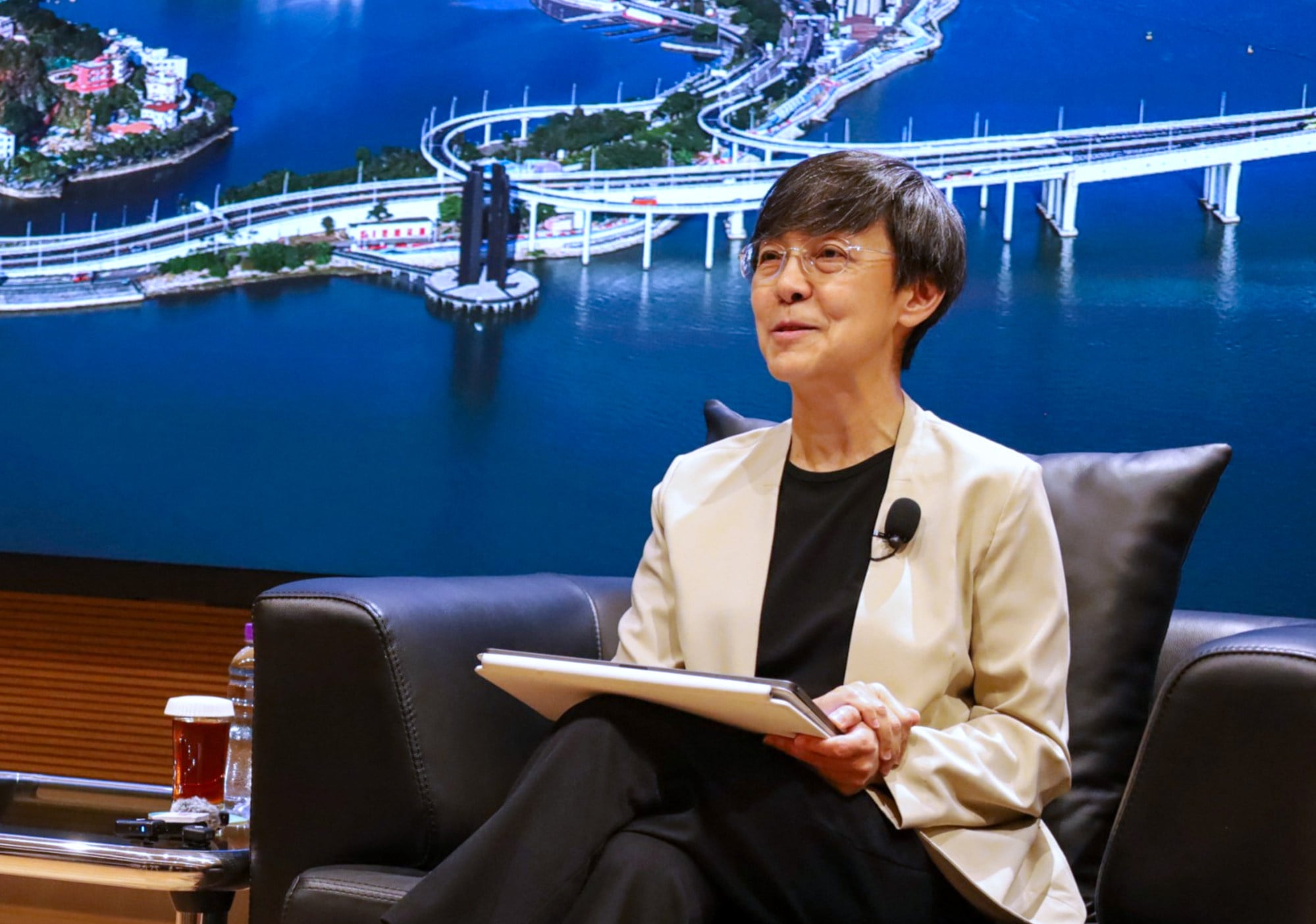
Maria Helena de Senna Fernandes, director of the Macau Government Tourism Office, said that the two cities had long worked together to attract overseas visitors and should continue building on that relationship rather than viewing each other as rivals.
Speaking ahead of an Asia-Pacific Economic Cooperation (Apec) tourism ministers’ meeting in Macau next week, she noted that the two cities offered distinct experiences and could benefit from sharing visitor flows by leveraging their respective strengths.
Fernandes highlighted Hong Kong International Airport’s role as a key transport hub for the Greater Bay Area, adding that the opening of the Hong Kong-Zhuhai-Macau Bridge in 2018 had significantly improved regional connectivity and made multi-destination travel more convenient.
“We should continue thinking about how to make better use of everyone’s resources and tell the Greater Bay Area story well,” she told reporters visiting Macau.
She added that Macau should work not only with the Hong Kong Tourism Board but also with the city’s wider tourism industry.
China is hosting Apec this year, with Hong Kong set to hold the finance ministers’ meeting in October, in addition to Macau’s imminent tourism ministers’ meeting. Shenzhen will host the economic leaders’ meeting in November.
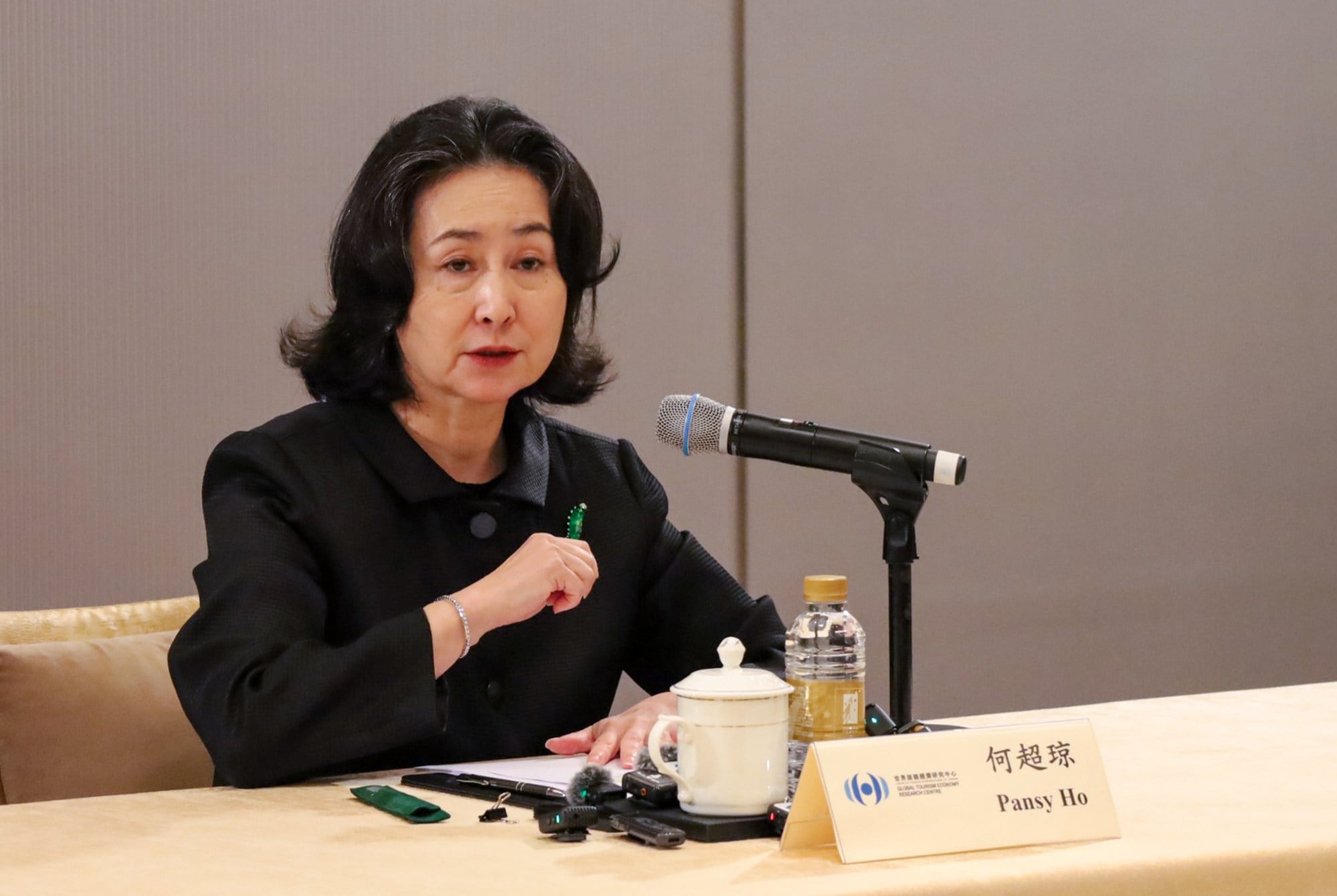
Pansy Ho Chiu-king, president of Macau’s non-profit Global Tourism Economy Research Centre, said Greater Bay Area cities should be marketed collectively rather than as competitors.
Ho, whose family is a key player in Macau’s casino industry, said the city occupied a strategic position at the centre of the region’s transport network, linking east and west through infrastructure such as the Hong Kong-Zhuhai-Macau Bridge, ferry services and airports in Hong Kong, Macau, Shenzhen and Zhuhai.
She said the concept of “multi-destination travel” should not be viewed merely as a transport arrangement but as an opportunity for visitors to experience the “distinct characteristics” of all 11 Greater Bay Area cities.
“I don’t think we overlap with or compete against other cities,” Ho said.
Macau welcomed more than 40 million visitors in 2025, a record number. Arrivals surpassed what officials described as the “psychological barrier” of the 40 million mark for the first time. Hong Kong recorded 49.9 million arrivals in 2025, about 76 per cent of its 2018 peak.
Their remarks came as Beijing continues to promote its initiative to help Macau diversify its casino-led economy, the Guangdong-Macau In-Depth Cooperation Zone in Hengqin.
But officials also acknowledged that the broader challenge of diversification had not been fully resolved.
Cheong Chok-man, director of Macau’s Policy Research and Regional Development Bureau, said the city had first identified economic diversification as a priority more than two decades ago.
While progress had been made and the government had laid out a clearer strategy through its “1+4” development framework, Cheong acknowledged that Macau’s economic structure remained heavily concentrated in gaming and that the “fundamental situation” had not changed.
The strategy, introduced in 2023, aims to reduce Macau’s reliance on gaming by strengthening its position as a world tourism and leisure centre – the one core objective – while developing four emerging industries: traditional Chinese medicine and healthcare; modern finance; high technology; and convention, exhibition, culture and sports-related businesses.
Cheong described diversification as both an “old problem” and a “new challenge” for Macau, calling it the city’s most important long-term task.
He said efforts to diversify had long been constrained by Macau’s small size, limited domestic market and labour shortages, making Hengqin a critical part of the city’s ongoing development plans.
“The original intention behind Hengqin was to create conditions for Macau’s economic diversification,” Cheong said.
According to Cheong, future efforts would focus on improving institutional integration between Macau and Hengqin, enhancing cross-border flows of people, goods, capital and information, upgrading transport links and checkpoints, and encouraging industrial collaboration.
He said the goal was to create economic linkages that supported Macau’s diversification ambitions, under the model of “research in Macau, commercialisation in Hengqin; registration in Macau, production in Hengqin”.
Established in 2021, the cooperation zone was designed to address Macau’s limited land and resources by providing space for industries that could not easily develop within the city’s mere 33.3 sq km land mass.
According to official figures, more than 8,000 Macau-invested enterprises have been established in Hengqin as of June this year.
The bay area is a Beijing initiative to turn Hong Kong, Macau and nine cities in Guangdong province into an economic powerhouse. -- SOUTH CHINA MORNING POST


