
A Hong Kong school that summarily dismissed its principal after he was filmed swearing at security guards in Singapore could face a high legal threshold to justify the move if the dispute goes to court, a lawmaker has stated, likening the decision to a death sentence in the labour sector.
Another lawmaker said the termination might affect the principal’s provident fund payments.
Lee Cheuk-hing, the former principal of San Wui Commercial Society Secondary School in Tuen Mun, said last Friday that he had appointed legal representatives to review his dismissal after the school board rejected his resignation and terminated his contract with immediate effect on June 3 without compensation.
A secondary school principal’s salary ranges from about HK$101,000 to HK$147,100 (US$12,890 to US$18,774) a month, depending on the size of the institution.
Last year, 2,581 teachers withdrew an average of HK$3.38 million each from the Subsidised Schools Provident Fund, which provides payments upon retirement, resignation, dismissal, termination of contract or death of contributors, according to South China Morning Post calculations.
Lee was filmed swearing at security guards during a school trip to Singapore on May 22, prompting his suspension and an investigation by the Education Bureau.
After apologising for the incident, Lee submitted his resignation letter on May 28 and requested that his last day be August 31.
But last Wednesday, the school dismissed Lee with immediate effect, saying his remaining there would “gravely disrupt the operation of the school and prevent the school’s teachers and students from moving forward as soon as possible”.
The board said it invoked a clause under the Employment Ordinance which stipulates that an employer has the right to summarily terminate an employment contract without notice or compensation in lieu of notice on certain grounds.
Lawmaker Chau Siu-chung, who represents the labour functional constituency, said using this clause to fire an employee was regarded as a last resort.
“Summary dismissal is regarded as capital punishment in the labour sector. The threshold for invoking this clause is very high, as employees enjoy no benefits once they are summarily dismissed,” he said, adding that, historically, courts had required employers to provide rigorous evidence to justify such actions.
Under the ordinance, an employer may summarily dismiss an employee without notice or payment in lieu of notice if the employee wilfully disobeys a lawful and reasonable order, engages in misconduct, is guilty of fraud or dishonesty, or is habitually neglectful in his duties.
The Labour Department notes on its website that summary dismissal is a serious disciplinary action and only applies to cases where an employee has committed very serious misconduct or fails to improve after repeated warnings.
“It is highly disputable for the school to invoke this clause,” Chau said, noting that past court rulings had maintained a very high bar for such actions. “The principal stated he only acted to protect his students, and the video footage does not show that they found his behaviour offensive.”
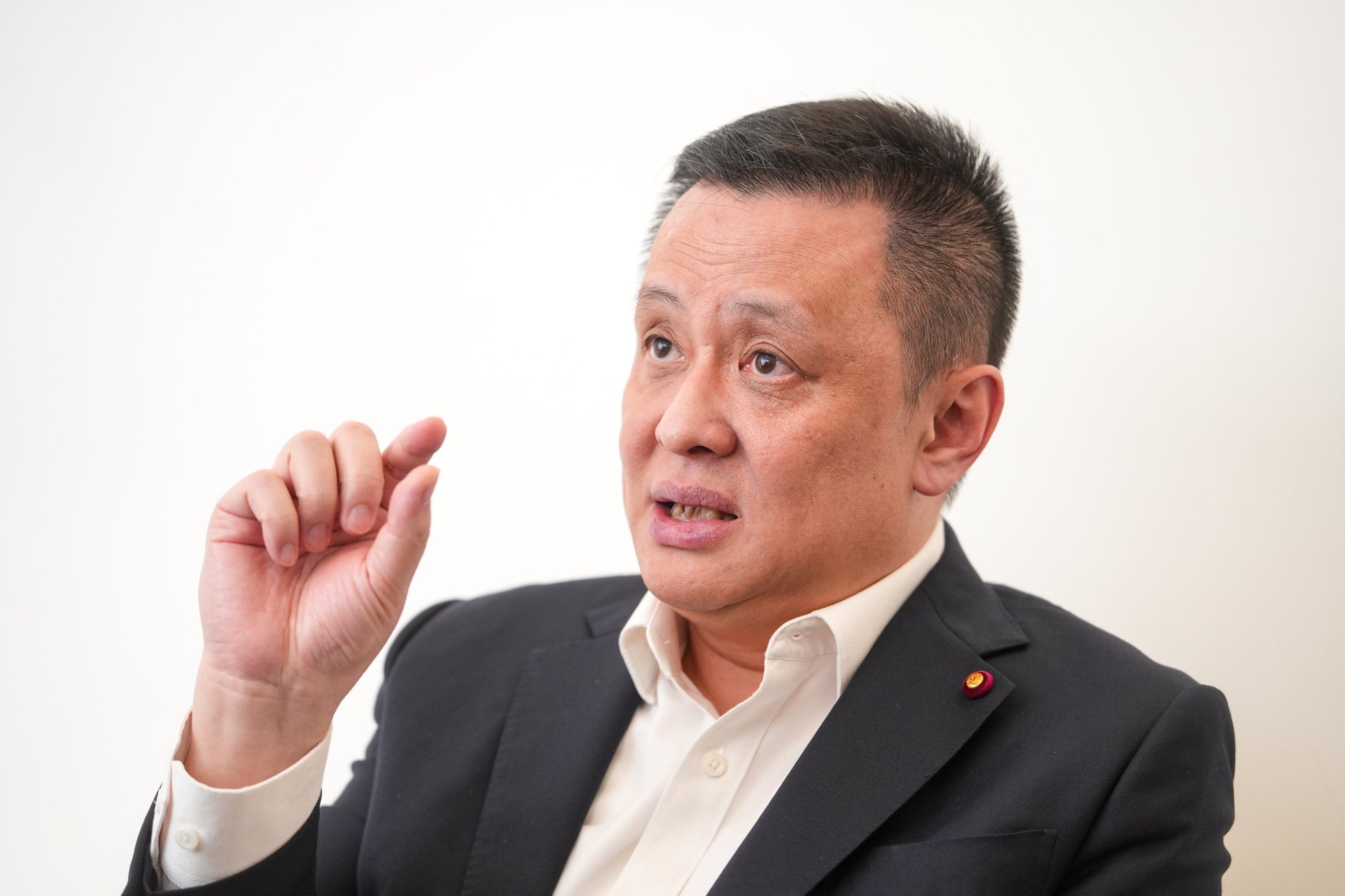
Tang Fei, a former secondary school principal and a lawmaker representing the education constituency, said Lee might have felt his rights were not fully safeguarded in the termination and therefore chose to seek legal advice to see if the termination was lawful.
He said the termination might impact Lee’s provident fund, but the final decision lay with the Education Bureau, adding that summary dismissal was very rare in the education sector.
“I think the incident may impact his provident fund, but I do not know how big it will be, as it all depends on the Education Bureau’s decision,” Tang said.
When asked if Lee’s provident fund payments and teaching qualifications would be affected, the bureau declined to comment on the specific case but added that if a teacher violated professional ethics or the law, it would take appropriate action based on the nature and severity of the incident.
According to the annual report of the Subsidised Schools Provident Fund, 2,581 teachers withdrew money from the fund last year, each taking out an average of about HK$3.38 million.
Teachers and principals from public schools must complete a form to withdraw their provident fund, which requires certification by the school supervisor before being sent to the bureau for approval.
Under local regulations, a dismissed teacher whose registration has not been officially cancelled may still teach in schools. This applies if the authority issues a lesser penalty instead of disqualification, such as a verbal warning, reprimand or written warning.
Conversely, if a teacher or principal has their registration cancelled, even for reasons unrelated to being fired, they are prohibited from teaching in any educational institution, including tutorial schools. -- SOUTH CHINA MORNING POST