PHNOM PENH: A decision by the Medical Council of Cambodia (MCC) to order prominent health content creator 'Dr Tong” to remove his videos from social media has ignited a wider debate over the role of medical professionals in public education and the risks of creating a vacuum that could be filled by unqualified voices.
The controversy erupted after the MCC instructed the well-known medical doctor to delete his videos, citing concerns that some of his content did not comply with professional standards and regulations governing medical practice.
The Post understands that rather than sharing misinformation, he failed to seek approval for his content, as required by the medical council, and that he formed a brand partnership with globally recognised vitamin and supplement provider Swisse, which is unregistered in Cambodia.
The move quickly drew widespread public reaction online, with many social media users questioning whether the action could discourage qualified healthcare professionals from sharing medical knowledge with the public at a time when misinformation remains prevalent across digital platforms.
The debate intensified after physician and public health specialist Dr Mengly J. Quach published a lengthy reflection titled “Who Will Educate the Public if Qualified Voices Grow Silent?”, warning that Cambodia still faces significant challenges in health literacy and access to evidence-based health information.
“People still need answers. Parents still need guidance. Patients still need explanations. Families still need reliable information,” he wrote.
According to Mengly, many Cambodians continue to leave clinics, hospitals and healthcare facilities without fully understanding their illnesses, treatment plans or preventive measures, while healthcare professionals often work under severe time constraints that limit opportunities for patient education.
As a result, he said, increasing numbers of people rely on social media and online platforms as their primary source of health information.
“At the same time, we are witnessing a growing number of individuals with little or no formal medical, health or public health training providing health advice to large audiences,” he wrote.
He argued that when qualified professionals become less visible in public discussions, the information gap is often filled by individuals who may lack professional training, expertise or accountability.
“The reality is simple: If qualified professionals do not occupy the space of public education, someone else will,” he said.
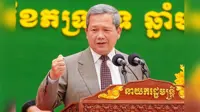
The concerns were echoed by Kin Phea, director-general of the International Relations Institute of Cambodia at the Royal Academy of Cambodia, who suggested that restricting expert voices could unintentionally create more room for unqualified actors to dominate public discourse.
“If medical experts do not participate in disseminating health education messages to the public, then those selling beauty products and supplements without expertise will do it instead,” he wrote on social media.
He argued that if intellectuals and professionals withdraw from public engagement, digital platforms risk being increasingly dominated by individuals spreading misinformation and content that could negatively influence public understanding.
The case has highlighted growing tensions between professional regulation and public communication in the digital age, particularly as social media becomes an increasingly important source of information for millions of Cambodians.
Public health specialists note that while professional oversight is necessary to protect the public from inaccurate or harmful medical advice, health education differs from diagnosis and treatment.
Mengly stressed that explaining disease prevention, nutrition, mental health, child development and healthy lifestyles should be viewed as a valuable public service rather than a substitute for clinical care.
“Health literacy is not merely a medical issue. It is a national development issue,” he wrote.
The Medical Council’s statement comes amid growing concerns globally over health misinformation circulating online, especially on social media platforms where content creators can reach large audiences with little formal oversight.
However, critics argue that efforts to regulate health-related content must strike a careful balance between maintaining professional standards and encouraging qualified experts to engage with the public.
In response to the debate surrounding health-related content on social media, Ministry of Information spokesperson Tep Asnarith stressed that the government supports and encourages the sharing of knowledge and opinions that benefit citizens and society, with the aim of promoting a high-quality information environment.
However, he noted that information related to public health and social well-being requires a higher level of scrutiny before publication than general information because it directly affects people’s lives and health.
Asnarith warned that content creators should not exceed their professional roles or exaggerate information merely to attract attention and increase online views.
He said the production of sensationalised or misleading health content for the purpose of gaining popularity undermines the public’s right to receive accurate information.
According to him, such practices can confuse audiences and potentially lead to misunderstandings about healthcare and disease prevention.
He emphasised that all health information disseminated to the public must be based on clear, accurate and verifiable scientific and medical evidence.
Where health products are promoted, those products must be properly registered with the relevant authorities and accompanied by clear medical guidance.
“Health information should not be based on personal opinions or demonstrations presented in images or videos alone,” Asnarith told The Post, stressing the need for evidence-based communication when discussing issues that could affect public health.
He stated overall, promoting unregistered products, using one’s status as a doctor to advertise, endorse or associate with any product that has not been properly registered with the Ministry of Health is inappropriate.
Such actions can undermine public trust in the healthcare sector and may damage the reputation, dignity and professional standing of doctors who practice responsibly and in accordance with medical ethics and regulations.
Asnarith called on all social media content creators to adhere to ethical standards and the principles of professional journalism, stressing that content dissemination should not jeopardize public health or create health risks simply in pursuit of higher view counts without accountability.
The spokesperson also urged the public to exercise caution and carefully verify information before accepting claims circulated online, particularly those shared on social media platforms.
He specifically advised consumers to be vigilant when purchasing health-related products and to avoid products that have not received clear approval or recognition from the Ministry of Health. - The Phnom Penh Post/ANN