SINGAPORE (The Straits Times/ANN): Seventeen countries, including Singapore, Malaysia and Australia, are joining hands to safeguard critical underwater infrastructure, with the aim of protecting subsea telecommunications and energy cables against attacks.
The Guiding Principles for Underwater Infrastructure Defence Exchanges (GUIDE), which was started by Singapore, was launched on May 30 on the sidelines of the 23rd Shangri-La Dialogue held in the Republic.
The first framework that cuts across regions to deal with undersea security challenges, it will facilitate the sharing of information to support early warning for security incidents.
The voluntary, non-legally and non-financially binding framework also allows for the sharing of best practices and technical knowledge, and could improve incident and crisis responses should the need arise.
Critical underwater infrastructure systems and related elements are essential to connectivity and economic growth, with global communications networks dependent on subsea telecommunications cables that carry more than 95 per cent of all internet and data traffic under the ocean.
States also rely on subsea energy transmission infrastructure, such as oil and gas pipelines and power cables.
The Ministry of Defence (MINDEF) said recent incidents involving cuts or damage to subsea telecommunications or energy cables and pipelines have underscored the vulnerabilities of critical underwater infrastructure.
Such incidents also show the difficulties in responding outside of territorial waters, including challenges in attribution, jurisdiction and enforcement.
There have been recent high-profile cable-cutting incidents, including those involving Taiwan and linked to Chinese-crewed ships in 2025. While these have fuelled suspicions about Beijing’s “grey zone” tactics, China has responded by positioning itself as an important contributor to the protection of undersea cables.
The Baltic Sea has also seen several undersea cables being cut or damaged in recent years.
In April, it was reported that three Russian submarines conducted a covert operation involving cables and pipelines in waters north of the UK. A British warship and aircraft were deployed for deterrence, but there was no evidence of any damage.
The 17 countries involved in GUIDE are Singapore, Australia, Brunei, Estonia, Finland, France, Italy, Latvia, Lithuania, Malaysia, the Netherlands, New Zealand, the Philippines, Qatar, Sweden, Thailand and Britain.
MINDEF said it welcomed the increasing attention of governments, private industry, and international and multilateral organisations on developing secure, reliable and resilient critical underwater infrastructure, as well as improving multinational and multi-stakeholder cooperation in responding to incidents.
While these broader efforts are civilian- and industry-led, the ministry said there is a role for defence establishments and militaries to support and complement the efforts of national civilian agencies and the private sector in improving the security of critical underwater infrastructure.
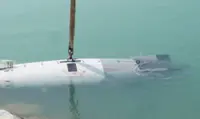
This could include contributing ships, aircraft and unmanned underwater vessels to support maritime surveillance.
Speaking at the launch of GUIDE on May 30, Defence Minister Chan Chun Sing said there were serious conversations at the Shangri-La Dialogue in 2025 about the increasing importance of critical underwater infrastructure.
He said: “If we are honest with ourselves, we will know that we have quite a lot of work to do to establish the international norms on how we can lay those critical infrastructure... but, more importantly, how to maintain them and how to prevent people from disrupting them.
“We don’t want a situation whereby such critical infrastructure is disrupted, and all of us get the negative knock-on effect. Because as I mentioned (in 2025)... any attack on one part of the network is an attack on the entire network.”
Mr Chan said that while GUIDE countries may not have all the answers, they want to work on the issue together to see how international norms can be established to build and maintain critical underwater infrastructure, and protect it. They include “taking to task those who may mean harm to our infrastructure and our way of life”.
He said there are other countries that want to join the initiative, but are awaiting domestic approval.
MINDEF said the framework does not create new legal obligations nor prejudice existing rights and obligations under international law, including the 1982 United Nations Convention on the Law of the Sea, and is implemented in accordance with national laws and policies, as well as international law.
Defence establishments endorsing GUIDE have also expressed interest in exploring potential areas of cooperation, subject to their own national requirements and resource commitments, said MINDEF.
These include promoting discussions and exchanges to deepen understanding of each participant’s national approaches to critical underwater infrastructure security, and sharing best practices, measures and lessons learnt, including from their own national and regional experiences.
They are also looking to improve information sharing across regions to support maritime awareness and early warning for security incidents, working closely with civilian maritime agencies, defence partners, private operators and the commercial shipping community.
Another area of potential cooperation is in exchanging points of contact among various national agencies and coordinating structures to improve potential incident and crisis response to security-related issues involving critical underwater infrastructure. -- The Straits Times/Asia News Network