President Donald Trump’s foreign policy direction could have lasting effects on America’s alliances and global leadership, and it could also speed up the shift to a multipolar world where China plays a bigger role.
That is according to Wu Xinbo, dean of the Institute of International Studies at Fudan University in Shanghai.
Speaking at a seminar hosted by the university on Tuesday, Wu said the Trump administration was “reshaping US foreign policy” – and it could be a turning point for the country as it prepares to mark 250 years since its founding.
Wu said the administration had pushed Washington towards a realist foreign policy while accelerating the erosion of its alliance system, particularly its transatlantic ties with Europe.
“Under Trump, the US alliance system has come under unprecedented strain ... The question is whether the transatlantic partnership can be repaired after Trump. I think there may be some partial recovery, but it will never return to what it once was,” Wu said.
“One reason is that Europe’s confidence in the US is already gone, because Europeans know that once there has been one Trump, he will not be the last American leader like this. Therefore, Europe can no longer place its hopes in the US the way it did in the past.”
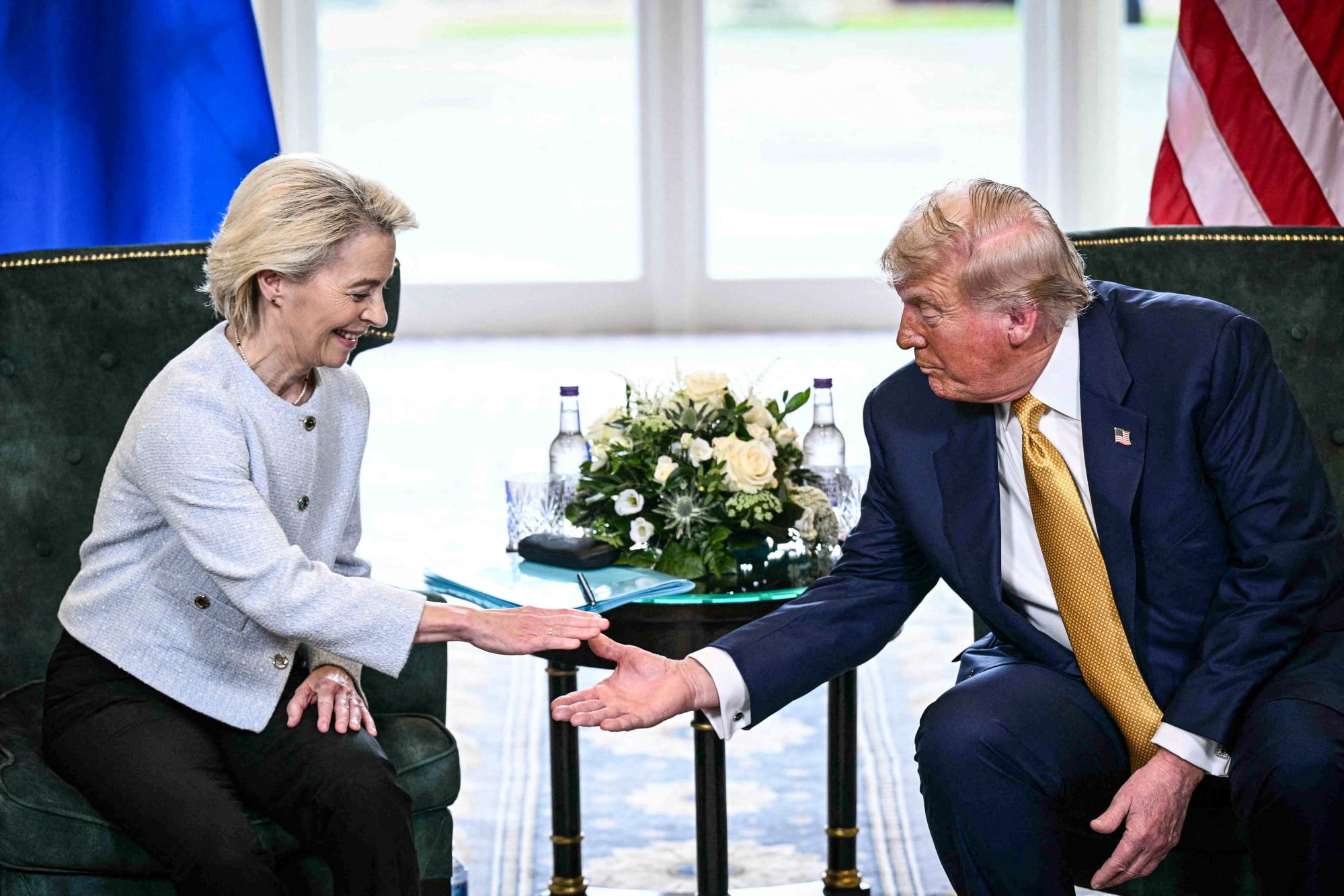
Since Trump’s return to the White House last year, Washington has warned that Europe can no longer rely on American security guarantees and must take charge of its own defence.
The leaders of a number of traditional American allies have also been increasingly vocal about the need to reduce dependence. Some have travelled to Beijing this year seeking closer ties to hedge against Washington.
Wu noted that Europe had in recent years accelerated the development of its defence capabilities, and once those capabilities were further developed the transatlantic alliance would “look very different from what it was in the past”.
He also pointed to America’s waning influence in international organisations, saying it weakened the country’s global leadership position, while other players were emerging including China, middle-power coalitions and regional groups.
Since his first presidential term, Trump has withdrawn the US from multiple UN bodies, including the World Health Organization, and sharply cut foreign aid.
Earlier this year, Trump signed an executive order suspending American support for 66 international organisations, agencies and commissions, including 31 UN agencies and 35 others unaffiliated with the world body.
Looking ahead to the post-Trump era, Wu argued that policy adjustments could improve Washington’s global standing but it would be unlikely to return to its previous position.
“When a leadership vacuum appears, there will always be other powers seeking to fill it,” he said. “Even if the US comes back, it will not return to the position it once held.”
Another key change brought by Trump’s diplomacy was the acceleration of a multipolar international order and a broader transformation of global governance, Wu said.
He noted that in Trump’s second term, the administration had acknowledged that “multipolarity is the norm”, while Trump had praised China’s development and governance achievements.
Wu said that signalled that the world had “entered an era of increasing diversity in development and governance models”.
“Today, the US is increasingly becoming just one important partner for many countries, rather than the single most important one,” he said.
“This is particularly evident in the policy shifts of key US allies such as the UK, Australia and Canada, especially in their approaches towards China.”
According to Wu, China’s space in the global community is expanding.
“As US leadership declines and a vacuum in global leadership emerges, China will naturally take advantage of this opportunity to act as a responsible major power,” he said.
“However, China plays its international role in a way that emphasises collective leadership and pluralism, which is different from the US. Although China seeks to expand its international space, it has no intention of monopolising global leadership.” -- SOUTH CHINA MORNING POST