
Former US ambassador to China Max Baucus has described the latest US-China summit as ushering in a new phase of wary “constructive stability”, with both sides focused more on preventing crises rather than building trust or meaningfully resetting their relationship.
In an interview on Wednesday, Baucus said last week’s Beijing summit between President Xi Jinping and his US counterpart Donald Trump served as a guard rail to prevent breakdown and escalation, while revealing the limits of the superpowers’ ties.
But for a relationship long defined by fierce competition and deep mutual distrust, that limited outcome was precisely the point, said Baucus, who served as US envoy to Beijing from 2014 to 2017.
“Two big countries, two different systems, we really do not trust each other,” the former Democratic senator said. “Constructive stability is more crisis prevention ... Both sides want to stabilise the relationship, prevent it from getting any worse.”
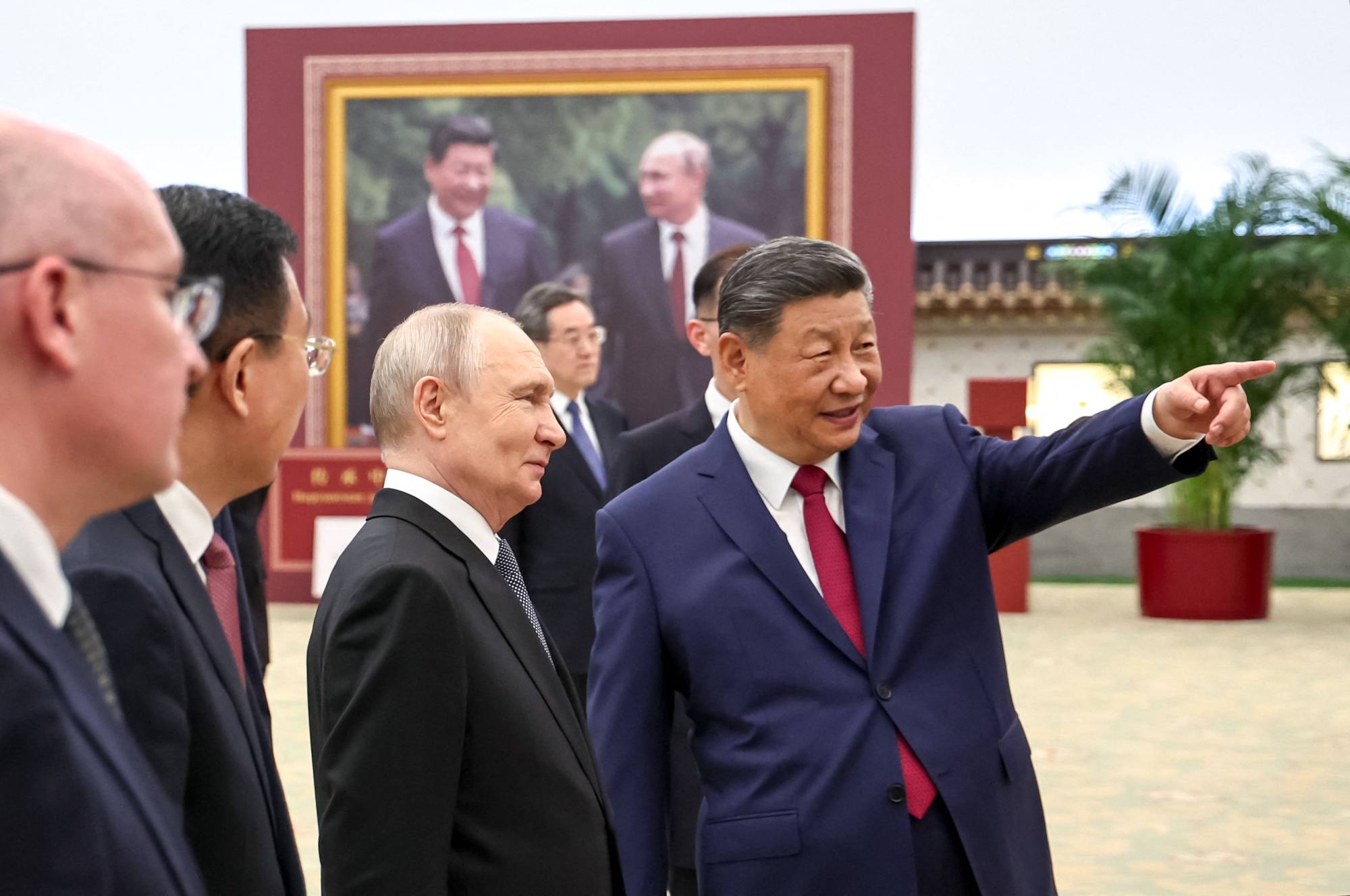
His assessment came as Xi hosted Russian President Vladimir Putin on Wednesday, just days after Trump’s visit, underscoring Beijing’s continued strategic alignment with Moscow even as it seeks steadier ties with Washington.
Noting that both sides framed bilateral ties as moving towards “constructive strategic stability”, Baucus said the new language pointed to a holding pattern rather than the beginning of a durable thaw.
Hosting Trump last Friday at the Zhongnanhai leaders’ compound, where he lives and works, Xi hailed their “historic and landmark” summit, a milestone event that ushered in a “constructive strategic stable” relationship. “We have achieved many cooperative outcomes,” he told Trump.
No major agreements or substantive solutions emerged, but the absence of confrontation or acrimony was itself seen as a modest success.
Baucus argued that the summit still mattered because it gave Xi and Trump a chance to air their core concerns directly – Taiwan and export controls on Beijing’s side, market access and purchases of American farm products, aircraft and energy on Washington’s.
“At least it’s a start,” Baucus observed. “Even though there were no significant conclusions, there was no catastrophe. No break-up. No bad feelings that I’m aware of.”
Baucus said turning “constructive stability” into more than a slogan would require concrete mechanisms, calling for more direct communication between the two presidents and institutionalised military-to-military channels to avoid accidents from spiralling out of control at sea or elsewhere.
He also advocated locking in at least two summits per year, which would help to clarify red lines and reduce the risk of misunderstandings.
“The more our presidents meet, the better the relationship is going to be,” he said.
Beijing has hailed 2026 as a landmark year for China-US relations, with the two leaders expected to meet up to four times.
Chinese Foreign Minister Wang Yi confirmed last week that Xi would visit the US in the autumn, following Trump’s official invitation to meet on September 24.
The two leaders are also slated to meet on the sidelines of the Asia-Pacific Economic Cooperation summit in Shenzhen in November, and at the Group of 20 summit in Miami a month later.
Baucus said cooperation was still possible in areas that were less directly tied to national security, including cancer prevention, mental health, trade and especially artificial intelligence (AI).
“AI is probably the most important at this point because it’s so new and so pervasive and so concerning,” he said, citing shared worries in both countries over jobs and security.
On Taiwan, Baucus expected broad continuity, saying he saw no evidence of a deal or trade-off amid speculation that Trump might have hinted at concessions on the issue to secure Beijing’s help on Iran.
“I think the current status quo is going to continue indefinitely. I don’t see much change,” he said.
Beijing sees Taiwan as part of China to be reunited by force if necessary. Most countries, including the United States, do not recognise Taiwan as an independent state, but Washington is opposed to any attempt to take the self-ruled island by force and is committed to supplying it with weapons.
Despite Beijing’s efforts to stabilise ties with Washington, Baucus believed China has made a long-term strategic choice to align more closely with Russia, noting Xi’s stronger personal ties with Putin than with Trump.
“I think it’s smart from Beijing’s perspective to host Putin right after Trump,” he said. “It makes China appear, in a certain sense, more powerful and stronger globally.”
He added that a “reverse Nixon” strategy to pull Russia away from China would “never happen. Not in my lifetime.”
The Nixon strategy refers to then US president Richard Nixon’s 1972 Cold War policy to contain the Soviet Union by engaging China. Some analysts expected Trump’s return to office last year to reverse Washington’s strategy and decouple Russia from China.
Rising trade between Beijing and Moscow amid the Iran crisis and Trump’s waning interest in the Ukraine war, Baucus argued, shows Putin has bet against the US, even as Russia becomes increasingly dependent on China.
“Russia is the little brother compared with China,” he said.
Baucus characterised Trump’s China policy during his second term as “slightly less confrontational” than his policy during his first term, yet still heavily shaped by domestic politics, midterm pressures and hawkish voices.
He pushed back against Cold War analogies, instead framing the broader relationship as entering a new phase of competitive global coexistence underpinned by deep economic interdependence and persistent suspicion.
He warned against naivety, citing “very strong forces in each country that will try to undermine any cooperation that might exist between the two.”
The core challenges, according to Baucus, stem from a combination of clashing interests, mutual misunderstandings and eroded trust.
“Americans really do not know China very well. But Americans feel somewhat threatened by the rise of China. And Americans are worried about our own national security,” he said, while Beijing remained anxious about US containment.
He praised Xi’s invocation of the “Thucydides trap” during the talks with Trump as “very clever” because the risk of conflict between a rising power and the established hegemon was “realistic, honest, true”.
“He basically said, if we do not work out things, then we have to worry about the Thucydides trap as conflict. It’s very smart of him to do that,” Baucus said. -- SOUTH CHINA MORNING POST