



As winds move across Asean and opportunities surge in Malaysia, the “2026 Asean Legacy & Family Office Forum” organised by JLS Advisory was successfully held in Kuala Lumpur, Malaysia, on May 19, 2026.
At this critical juncture of accelerated global economic restructuring and profound transformation across industrial and supply chains, the summit gathered political dignitaries, chamber leaders, pioneering outbound enterprises, family office decision-makers, and professional investment institutions from both China and Malaysia.
The venue was filled with distinguished guests and vibrant discussions. Through high-level dialogue and deep strategic exchange, participants jointly created a cross-border, cross-industry intellectual feast, mapping out a new strategic blueprint for Chinese enterprises expanding into Asean.
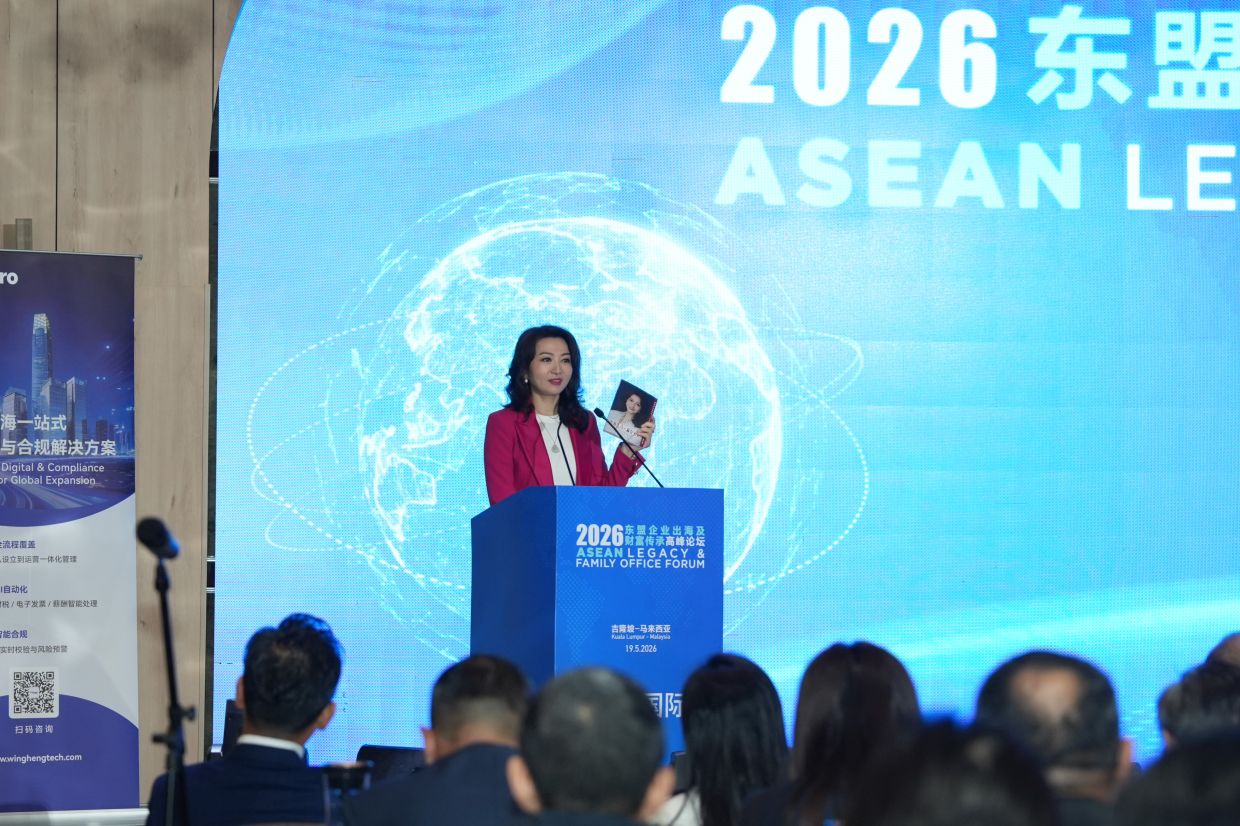
Jenny Liu, founder of JLS Advisory, delivered the opening keynote address. She emphasized that in today’s rapidly restructuring global economy, the future of overseas expansion is no longer a solitary endeavor but a collaborative ecosystem-wide operation.
"The future gap between enterprises will not merely be reflected in asset size, but more profoundly in who can understand globalization earlier, accelerate overseas deployment sooner, cultivate international competitiveness faster, and establish resilient cross-border wealth structures ahead of others," said Jenny.
"JLS Advisory remains committed to long-termism and is dedicated to building an efficient, sustainable platform connecting Chinese enterprises with high-quality Asean resources. Using this platform as a solid foundation, the company seeks to unlock deeper cross-border collaboration opportunities and unleash the limitless potential of regional synergy, jointly creating a mutually beneficial and sustainable new ecosystem for global expansion."
The forum also received strong attention and support from Malaysia’s political and business communities. Numerous distinguished guests attended and delivered keynote speeches, underscoring the forum’s high caliber and far-reaching influence.
Loo Kok Seong, President of the Malaysia-China Chamber of Commerce, shared insightful perspectives on industry trends. He pointed out that the current “going global” movement has fully shifted from opportunity-driven to strategy-driven. It is no longer simply about exporting goods and capital; rather, it is a comprehensive test involving cross-regional supply chain restructuring, industrial collaboration, legal compliance, multicultural integration, and long-term operational capabilities.
China has remained Malaysia’s largest single trading partner for 17 consecutive years, with bilateral trade deeply structured and highly integrated. As Asean’s trade and investment hub, Malaysia enjoys unique geopolitical advantages, including political stability, an open business environment, multilingual international talent, and access to Asean’s 600 million population market.
He stressed that enterprises seeking to establish themselves in Malaysia must abandon short-term thinking and embrace long-term strategy, respecting local multiculturalism, operating in full legal compliance, and building deep trust with local communities.
"The Malaysia-China Chamber of Commerce will continue serving as the core bridge for bilateral business cooperation, helping Chinese enterprises make accurate strategic moves, avoid unnecessary pitfalls, and establish resilient brand moats within cross-cultural markets," he said.
Also, Datuk Abdul Majid Ahmad Khan, former Malaysian Ambassador to China and President of the Malaysia-China Friendship Association, reflected warmly on the enduring friendship between China and Malaysia. He highlighted the natural affinity shared between the two countries in language, culture, and people-to-people exchange, which provides unparalleled soft-power support for deeper economic and industrial cooperation.
Amid the global restructuring of supply chains and capital allocation, Malaysia’s strategic value as Asean’s core hub is rapidly rising. Current bilateral civil and business exchanges between China and Malaysia are at their strongest historical level, creating a golden window for Chinese entrepreneurs to fully expand into Asean while advancing enterprise globalization and sustainable family wealth succession.
Zheng Xue Fang, Minister, Embassy of the People’s Republic of China in Malaysia, in his keynote speech on behalf of the Chinese Embassy in Malaysia, noted that the global economic landscape is undergoing a profound transformation, with industrial chains, supply chains, and value chains rapidly restructuring.
''Against this backdrop, Asean has become one of the world’s most dynamic and promising economic regions due to its stable development environment, youthful demographics, and regional cooperation mechanisms. Particularly under the full implementation of RCEP and the official signing of the upgraded China-Asean Free Trade Area 3.0 agreement, regional economic integration is reaching a new level," he said.
In 2025, China-Asean trade volume exceeded US$1 trillion for the first time, reaching US$1.05 trillion, representing a 7.4% year-on-year increase. This year also marks the fifth anniversary of the establishment of the China-Asean Comprehensive Strategic Partnership. China stands ready to further deepen strategic alignment with Asean.
"As an important Asean member state and China-Asean coordinating country, Malaysia has long played a vital bridging role. In recent years, China and Malaysia have achieved fruitful cooperation across manufacturing, digital economy, green energy, cross-border e-commerce, infrastructure, artificial intelligence, and financial services. The Chinese Embassy in Malaysia will continue providing solid policy support and protection for Chinese enterprises, promoting an even closer China-Asean community with a shared future."
As the Guest of Honour, Datuk Chan Foong Hin, the Deputy Minister of Agriculture and Food Security of Malaysia, attended the forum and delivered a strategic address. He emphasized that bilateral economic and trade relations between Malaysia and China are entering a historic phase of deeper cooperation and upgrading.
"The Malaysian government consistently upholds an open and inclusive approach, warmly welcoming high-quality Chinese capital and advanced technologies. Malaysia will continue optimizing its local business environment while deepening regional industrial coordination and supply chain integration," said Chan.
"Particularly in forward-looking high-value sectors such as agricultural digital transformation, modern food security supply chains, and green sustainable development, Malaysia is releasing strong signals of cooperation and immense market opportunities. He encouraged Chinese entrepreneurs to leverage Malaysia as a strategic springboard into the broader Asean market, achieving optimal regional resource allocation and mutual prosperity."
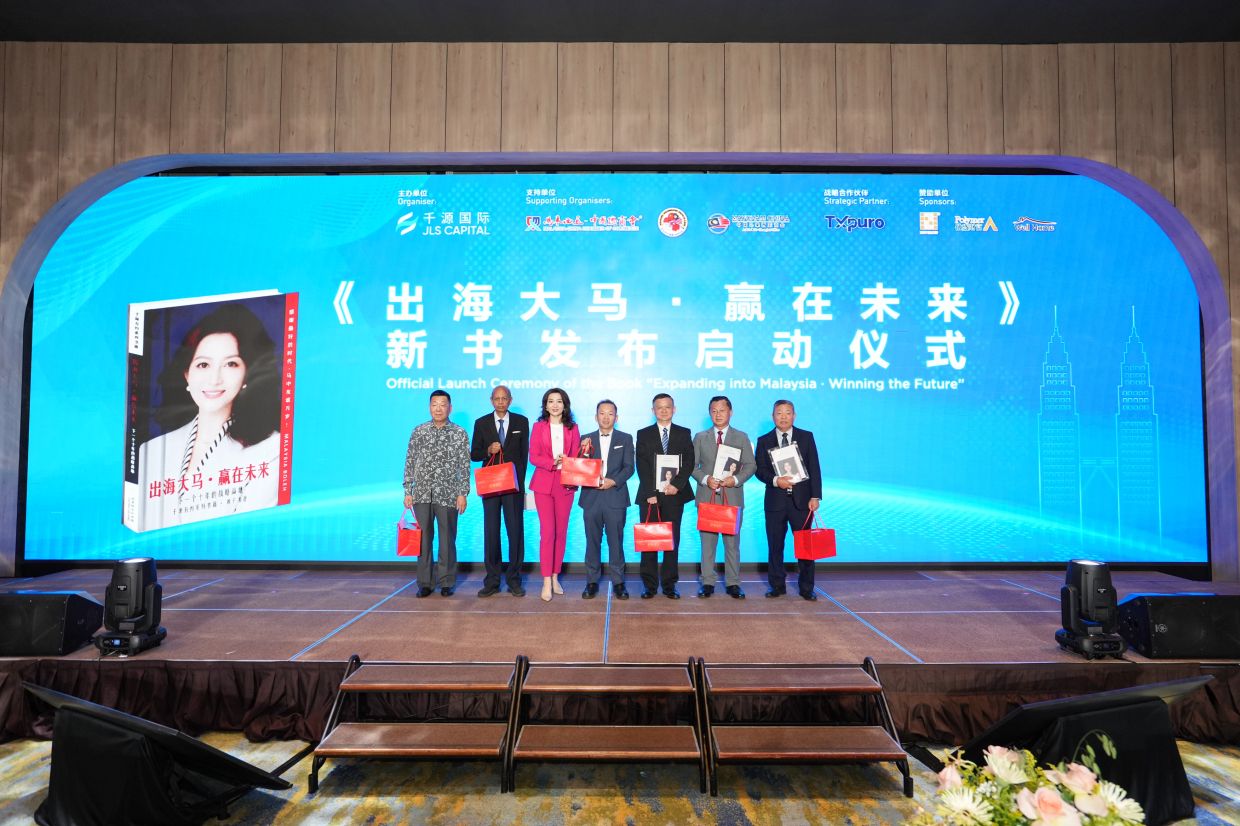
Following the speeches by political and business leaders, the forum welcomed one of its most significant events — the official launch ceremony of “Expanding into Malaysia Winning the Future in Malaysia,” a strategic guidance authored by veteran Malaysia market expert “Malaysia Qianyuan Jie,” who has been involved in the Malaysian market for 14 years.
As an upgraded sequel to the classic “Ten Years in Malaysia,” the new publication establishes a robust “China-Malaysia bilateral empirical matrix.” The book systematically compiles real-world cross-border experiences from ten benchmark institutions, including PowerChina, COSCO Shipping, SAIC Motor, Alibaba, Whale Cloud, VIVO, Hikvision, GoldenHome Living, Amber Catering, and Jiangsu Chamber of Commerce.
It also integrates the latest policy directions from authoritative institutions such as the Malaysia Digital Economy Corporation (MDEC), Malaysian Investment Development Authority (MIDA), and the Malaysia-China Chamber of Commerce.
The unveiling of the book was an exciting affair, and the copies at the event sold out rapidly within a very short time. Political leaders and top scholars unanimously praised the publication as not only a crystallization of China-Malaysia business wisdom, but also as a “globalization foundation” and “practical playbook” for Chinese enterprises seeking stable establishment and wealth growth in Malaysia.
Keynote Leadership: Four Industry Pioneers Decode the Evolution of Globalization
May Lim Ming Yee, Director, Foreign Investment Division, Malaysian Investment Development Authority (MIDA)
Focusing on “Global Macroeconomic Transformation and Malaysia’s Strategic Positioning,” she analyzed the restructuring of global supply chains and capital allocation.
She stated that Asean has evolved from a traditional manufacturing base into a vibrant consumer market, regional supply chain hub, and emerging capital growth center. Among Asean nations, Malaysia stands out with its stable and open business environment, advanced manufacturing ecosystem (including semiconductors, precision engineering, and electronics), and unparalleled geographic advantages.
Supported by Malaysia’s New Industrial Master Plan 2030 (NIMP 2030), the country is aggressively focusing on advanced manufacturing, AI and digitalization, green technology, and energy transition.
Jing Rui Rui, Head of Alibaba Malaysia Cross-Border Supply Chain
Speaking on “Practical Overseas Expansion and Cross-Border Supply Chain Resilience,” she shared extensive localization case studies.
She emphasized that overseas expansion is not simply about replicating domestic operations abroad, but rather deeply integrating into local legal systems, business norms, social culture, and lifestyles. Amid geopolitical uncertainty, enterprises urgently need digital empowerment and AI technologies to accelerate the transition from traditional offline operations to fully integrated online ecosystems.
Leveraging deep expertise in logistics, taxation, compliance, and payment systems, Alibaba’s supply chain ecosystem comprehensively supports overseas enterprises in overcoming cross-border barriers and rapidly establishing stable growth in multicultural overseas markets.
Sun Liguo, General Manager of COSCO Shipping Lines Malaysia
From the macro perspective of global logistics, Mr. Sun delivered a keynote titled “Building Global Logistics Support to Safeguard Overseas Supply Chain Security.”
He noted that 2026 marks the 10th anniversary of COSCO Shipping’s strategic restructuring and integration, as well as a golden era for comprehensive China-Malaysia economic cooperation. Over the past decade, COSCO Shipping has transformed from a newly restructured enterprise into a global leader, building worldwide shipping, port, logistics, and integrated service systems, alongside the world’s largest fleet and port network.
As the strongest logistics backbone for Chinese enterprises “going global” and “bringing in,” COSCO Shipping will fully leverage its global network advantages to safeguard cross-border supply chain stability and security while supporting Chinese and Asean enterprises in advancing global expansion strategies.
Riva Wang, Founder of Wing Heng Technology
Focusing on “Compliance Technology and Digital Infrastructure in the AI Era,” Ms. Wang comprehensively explained digital collaborative management solutions for multinational operations.
She stressed that compliance is the lifeline of overseas expansion. Through advanced “SaaS + AI” platform architecture and proprietary models, Wing Heng Technology has established a full-cycle intelligent ecosystem covering company incorporation, payroll compliance, auditing, and taxation.
Its cross-border collaboration management system integrates Chinese and Malaysian management expertise, overcoming language and cultural barriers to enable efficient multicultural teamwork. Notably, its payroll management system has received official Malaysian compliance certification, making it the first Chinese-controlled enterprise to achieve this distinction.
By empowering businesses through compliance technology, the solution dramatically simplifies traditionally cumbersome processes and enhances operational efficiency, building dual technological and compliance moats for overseas enterprises.
Together, the four keynote speakers and four roundtable discussions were held at the forum. Political leaders, financial institution executives, industrial park representatives, top think-tank scholars, and senior international legal experts from China and Malaysia gathered to debate topics including industrial localization, capital structures, compliance technology, and offshore finance.
In hindsight, the forum also noted that, in 2026, enterprise globalization had evolved from a simple “market expansion option” into a defining “must-answer question” for the next decade.
The successful conclusion of the “2026 Asean Enterprise Expansion & Wealth Succession Summit” ensured a convergence of top-level China-Malaysia political and business resources and also represented a collective resonance around long-termism and mutual prosperity.
The value of this cross-border event extends far beyond the forum itself and has been concretely embodied in the newly launched strategic publication “Going Global in Malaysia.” As a comprehensive “global expansion playbook” integrating real-world experiences from benchmark institutions and official policy insights, the book provides Chinese enterprises with a solid foundation for sustainable establishment and wealth growth in Malaysia.
Qianyuan International will continue anchoring itself in professionalism and ecosystem-building, rooted in Malaysia while radiating throughout Asean.
The company remains committed to creating long-term resource integration platforms and helping Chinese enterprises establish strong footholds across the region. At the same time, it will also identify the strongest strategic launchpads for Chinese enterprises, and jointly build a sustainable and mutually beneficial industrial ecosystem.

