MANILA: After a tumultuous week that started with a Senate power grab and descended into a terrifying night of gunfire, the impeachment saga against Philippine Vice President Sara Duterte moved Monday (May 18) to the trial phase.
The Senate convened as Duterte’s impeachment court, where its 24 members will determine if she is guilty of allegations including fund misuse and unexplained wealth. That’s after the House of Representatives, dominated by allies of her rival, President Ferdinand Marcos Jr, voted to impeach her. She’s denied wrongdoing.
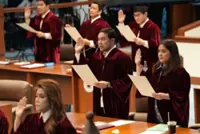
During Monday’s proceedings, all but one of the sitting senators donned red robes and took their oaths as judges for Duterte’s trial. The impeachment court summoned the vice president and directed her to answer the charges against her. Senate President Alan Peter Cayetano presided over the proceedings, despite earlier rumors of another leadership shakeup.
"Trial of Sara Duterte is hereby declared open,” Cayetano said. The vice president has 10 days to respond to the summon issued to her, he added.
Senator Ronald Dela Rosa, wanted by the International Criminal Court on allegations of crimes against humanity, was absent but is still in the country and has no plans to leave, according to a fellow senator.
While she is expected to be acquitted by the upper chamber, given the two-thirds hurdle needed for a conviction, the political drama is rattling a country with a weak economy and may limit the ability of Marcos to stem the bleeding. Stagflation concerns are rising in the nation, which has been pummeled by the energy crunch caused by the Middle East conflict.
Throw in an ongoing, widespread corruption scandal and the Marcos administration has been sapped of investor confidence and political capital for reforms, including measures to promote budget transparency and dilute the power of political dynasties.
"The impeachment saga is not yet a macro story, but is already a confidence and volatility story,” said Ruben Carlo Asuncion, chief economist at Union Bank of the Philippines. "The bigger risk sits in governance: prolonged proceedings can distract policymakers and slow progress on priority reforms, creating a drag on sentiment.”
The markets have largely looked past the political noise of the past week, but that’s cold comfort with the peso and the stock benchmark among the worst performers in Asia since the start of the conflict in Iran in late February.
Meanwhile, business and civil society groups are urging lawmakers to right the ship. The Management Association of the Philippines, with hundreds of private sector leaders as members, and 10 other organisations have called for Duterte’s impeachment trial in the Senate to be free from political intervention.
"For the business community, the implications are significant,” the groups said in a joint statement. "When the rule of law appears subordinate to political interests, investor confidence and institutional credibility suffer.”
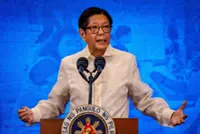
The drama marks a fresh low in the bitter feud between Marcos and Duterte. The vice president is the lead contender to replace Marcos when his single six-year term ends in 2028, and the president has aired concerns that his ally-turned-nemesis could reverse his reforms including trade and security pacts.
Duterte is the only Philippine politician to be impeached twice. Her initial impeachment last year was ultimately nixed after the top court struck down the case on procedural grounds.
This time Duterte has an even clearer edge, after her allies installed a supporter as leader of the Senate. That gave her camp the power to decide when the trial starts and what evidence will be revealed.
The new Senate leadership has already signalled the chamber’s time will be split between the impeachment proceedings and its normal business of legislative hearings and sessions to move bills along.
"The biggest issue for me is the balancing of legislative work, given the crisis that we are facing now,” Cayetano said at a briefing last week. "If the economy were in good shape, we can give 90% to 95% of our time to the impeachment court.”
The Senate leadership will likely want a quick acquittal rather than letting the trial drag out, given their new majority in the upper chamber is fragile, according to Gary Ador Dionisio, dean of the School of Diplomacy and Governance at the De La Salle-College of Saint Benilde in Manila. That may limit potentially damaging evidence from being presented, he added.
"The vice president has the upper hand,” Dionisio said. "Preventing the Senate from discussing all the evidence is most probably their game plan here.” - Bloomberg