The US-Israel war against Iran has now entered its 10th week and there has been little progress on the stalled peace talks.
These are the major takeaways from what happened overnight.
What did Trump say?
Iran reportedly sent a response to Washington’s latest proposal – a one-page memo aimed at ending the war – but it was rejected by US President Donald Trump.
“TOTALLY UNACCEPTABLE!” he wrote on social media on Sunday.
Iran’s Tasnim news agency, citing an “informed source”, reported that Tehran’s proposal included an immediate need to end the war and maritime blockade on Iran.
Iran also requested that sanctions be lifted by the US Office of Foreign Assets Control relating to Iranian oil sales over a 30-day period, according to Tasnim.
The news agency also dismissed as “largely inaccurate” an earlier report by The Wall Street Journal that Iran had proposed to have some of its highly enriched uranium diluted and the rest transferred to a third country.
What did Iran say?
Iranian President Masoud Pezeshkian wrote on social media on Sunday that “we will never bow our heads before the enemy”.
“If talk of dialogue or negotiation arises, it does not mean surrender or retreat. Rather, the goal is to uphold the rights of the Iranian nation and to defend national interests with resolute strength,” he added.
And Israel?
In an interview with CBS News’ 60 Minutes programme aired on Sunday, Israeli Prime Minister Benjamin Netanyahu said the war was “not over” because there was still highly enriched uranium that “has to be taken out of Iran”.
“There’s work to be done,” he added.
First transit
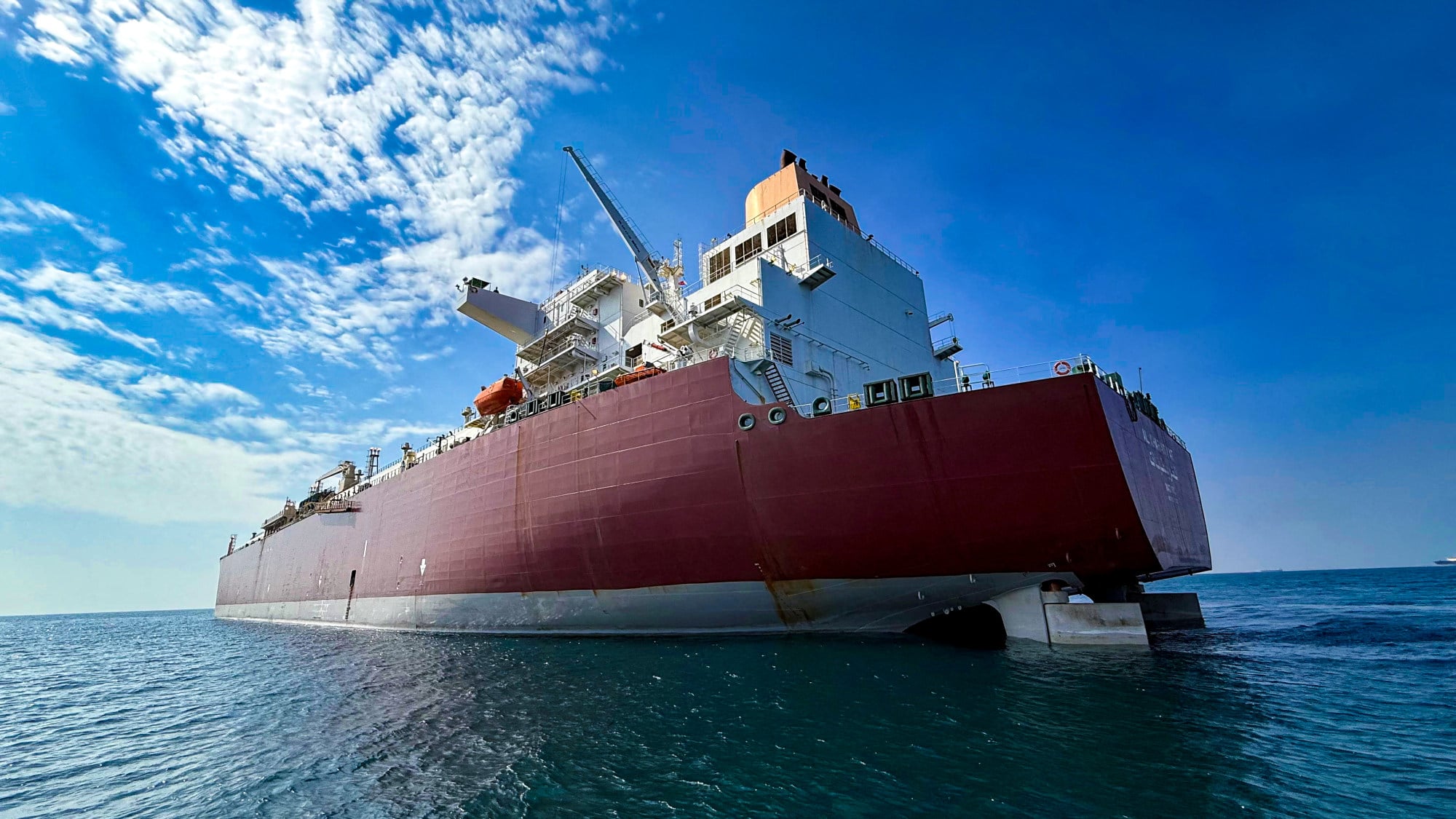
Meanwhile, a Qatari LNG tanker passed through the Strait of Hormuz – the first Qatari ship to do so since the war started about 70 days ago.
Ship tracking data showed the tanker passed through a route mapped out by Iran, entering the Gulf of Oman on Sunday on its way to a port in Pakistan.
Qatar supplies around 20 per cent of the world’s liquefied natural gas.
But the strait still remains effectively blocked.
And with a fragile ceasefire in place, the situation in the Gulf region remains volatile – the United Arab Emirates, Kuwait and Qatar all reported drone attacks on Sunday.
US Secretary of State Marco Rubio met Qatari Prime Minister Mohammed bin Abdulrahman al-Thani in Miami on Saturday as part of efforts to reach a peace deal.
Al-Thani also had a phone conversation with Iranian Foreign Minister Abbas Araghchi on Sunday, when they “reviewed efforts aimed at achieving peace and enhancing security and stability in the region”.
The US Central Command on Sunday said “over 20” American warships were enforcing the blockade against Iran.
“CENTCOM forces have redirected 61 commercial vessels and disabled 4 to ensure compliance,” it said in a social media post.
New sanctions
The US on Friday sanctioned nine mainland Chinese and Hong Kong companies and individuals, accusing them of helping Iran’s military.
Washington has been increasing pressure on China to use its influence on Iran to secure an effective ceasefire.
An Iranian army spokesman told state media that countries enforcing sanctions against Iran would face problems with their vessels passing through the Strait of Hormuz.
China could be ‘guarantor’
Iranian ambassador to China Abdolreza Rahmani Fazli told reporters in the Chinese capital on Friday that Tehran did not believe Washington had the leverage to turn Beijing against Iran.
In a social media post on Sunday night he said that “Beijing can serve as the guarantor for any agreement” given China’s relationship with Iran and other Gulf states.
The Middle East crisis is expected to be one of the topics raised when Trump visits China later this week.
China accounted for the most shipping orders of any country in the first three months of this year. -- SOUTH CHINA MORNING POST