
Hong Kong should adopt a comprehensive, top-down ecotourism policy led by a single designated authority to safeguard environmentally sensitive spots overwhelmed during the Labour Day “golden week”, experts have urged.
The call on Monday follows a viral video showing a Mandarin-speaking tourist smoking at Ham Tin Wan Beach in Sai Kung. In the clip, the man claimed he had “confirmed” with authorities that smoking was allowed, responding defiantly to a fine imposed on a mainland Chinese visitor for littering at the same site.
When asked about visitors’ responsibility to take away their trash, the tourist said on Sunday: “I find it laughable. I will just pay the fine, won’t I? Does he have the right not to take the trash away [after he was fined]?”
The video clip sparked outrage on social media in Hong Kong, with many saying the large influx of mainland visitors to the city’s natural landmarks was putting the sites at risk.
Lam Chiu-ying, former chairman of the Hong Kong Countryside Foundation, said ecotourism was “fundamentally incompatible” with mass tourism. He asserted that protecting biodiversity must remain the absolute priority.
He argued that a comprehensive, centralised policy was the only way to prevent future crowding.
“A top-down, holistic policy for ecotourism is essential, with a designated department taking the lead,” he said.
Hong Kong recorded 905,277 trips by mainland visitors during the first four days of their May 1 holiday, an 8.5 per cent increase over the previous year.
Thousands visited eco-sensitive zones in Sai Kung, where some tourists were seen consuming sea urchins harvested directly from the water. Authorities claimed those specific locations were not designated conservation areas.
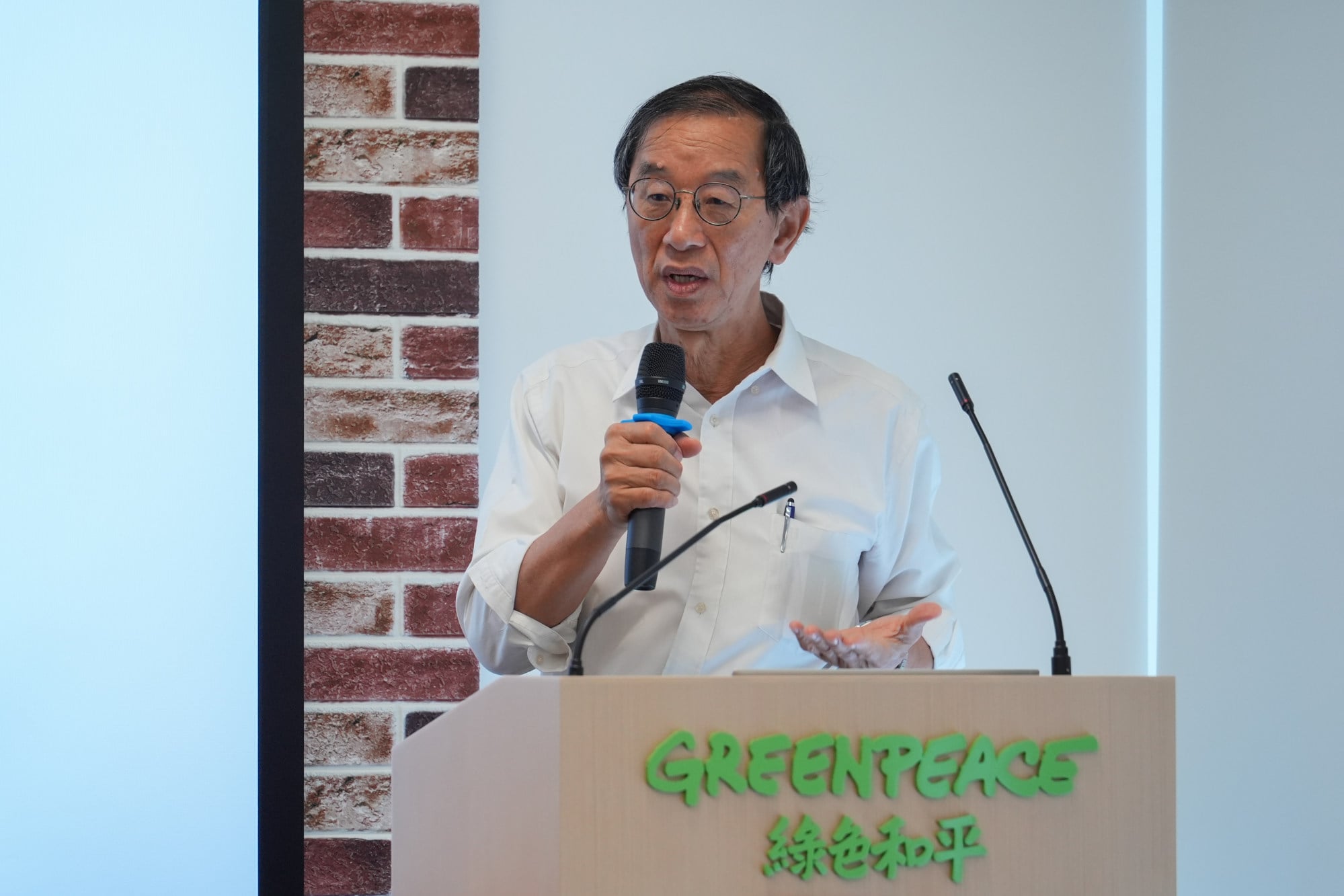
Lam pointed out that the current situation was hampered by a fragmented approach, where multiple departments were involved but none were ultimately accountable.
Lam, who also helps operate the Hakka Life Experience Village at Lai Chi Wo – which aims to promote the city’s sustainable development – further noted the absence of a policy to manage visitor flows at popular hotspots and urged the government to define clear objectives for ecotourism.
Greenpeace campaigner Ha Shun-kuen said that while the city had historically prioritised infrastructure development, it overlooked ecological preservation.
He said a cohesive, long-term strategy for ecotourism was needed, citing the chaos at Ham Tin Wan as a prime example.
He suggested the government reclassify high-risk locations as conservation areas, which would allow for stricter regulation and enforcement alongside enhanced public outreach.
“It is vital that tourists understand the ecological value of these sites. This ensures they do not simply visit for taking photos for social media while degrading the environment, but instead help protect these areas,” he said. “There are only poor policies, not bad tourists.”
Ha further suggested that either the Culture, Sports and Tourism Bureau or the Environment and Ecology Bureau could take the lead in coordinating policy.
He also added that the government could consider different kinds of management policies such as the introduction of a reservation and fee-charging system in certain popular spots, as one lawmaker earlier proposed.
Several mainland tourist spots are closed during public holidays to help preserve the environment.
Roy Ng Hei-man, campaign manager at the Conservancy Association, said that the government should conduct a comprehensive study on visitor requirements to better align infrastructure and amenities with actual demand.
“Without such data, it is difficult to formulate long-term strategies or accurately review the carrying capacity of popular tourist hotspots,” he said.
Ng further called for a more proactive approach to public education, suggesting that initiatives such as organised volunteer clean-ups could foster a culture of environmental stewardship and positively influence tourist behaviour through social example.
Wong Fook-yee, a former assistant director of the Agriculture, Fisheries and Conservation Department (AFCD), said that the government might have been caught off guard by the sheer volume of visitors.
He stressed that ecotourism should not be treated as mass tourism and stated that authorities must take a more proactive role in educating both tourists and the public to ensure they adhered to the city’s established environmental protocols and social norms.
When asked about a long-term ecotourism strategy, a spokeswoman for the Culture, Sports and Tourism Bureau told the South China Morning Post it was “not taking the lead” on the matter.
According to the 2024 policy address, the bureau was explicitly tasked with developing Hong Kong’s ecotourism, such as by transforming Tsim Bei Tsui and Pak Nai into environmentally friendly tourist nodes.
An AFCD spokesman told the SCMP that the department would draw on management experiences from the Labour Day golden week and previous long holidays to review long-term strategies, including the introduction of reservation and fee-charging systems.PRINT CUT TO END
The department also said that it had taken enforcement action over 19 cases at Sai Kung East Country Park, including at the High Island Reservoir East Dam and other popular campsites between May 1 and 5, involving offences such as littering and illegal camping.
It said an average of approximately 2,900 visitors per day were recorded at the East Dam area while Sharp Island recorded a daily average of about 1,400 visitor arrivals during the period.
Shui Hau saw a daily average of 380 visitor arrivals, with a peak of nearly 1,000 visitors on May 1, the department added. -- SOUTH CHINA MORNING POST