




China has released new regulations that aim to counter the “unjustified” extraterritorial use of foreign laws, the latest move to protect its interests from external threats.
Analysts view the move as a shift from diplomatic protests to legal warfare, and some warn it could have wide-ranging applications.
The European Chamber of Commerce in China raised concern that the “broad scope, vague language and wide discretion” of the rules went far beyond similar statutes in the West. Amid the US blockade of the Strait of Hormuz, it said the move added to uncertainty around global supply chains.
The Regulations on Countering Unjustified Extraterritorial Application of Foreign Legislation took effect on April 13 when passed by the State Council, China’s cabinet.
The 20-point framework aims to identify, block and counter foreign measures that Beijing deems “improper extraterritorial jurisdiction”.
That refers to any foreign action seen to violate international law or harm China’s sovereignty, security, development interests or the legitimate rights of its citizens and organisations.
Wang Jiangyu, a law professor at City University of Hong Kong, said Beijing had for years been working on a security framework to fend off sanctions, interference and “long-arm jurisdiction” from other countries.
He noted that the “scope, intensity and normalisation” of foreign pressure on China was mounting.
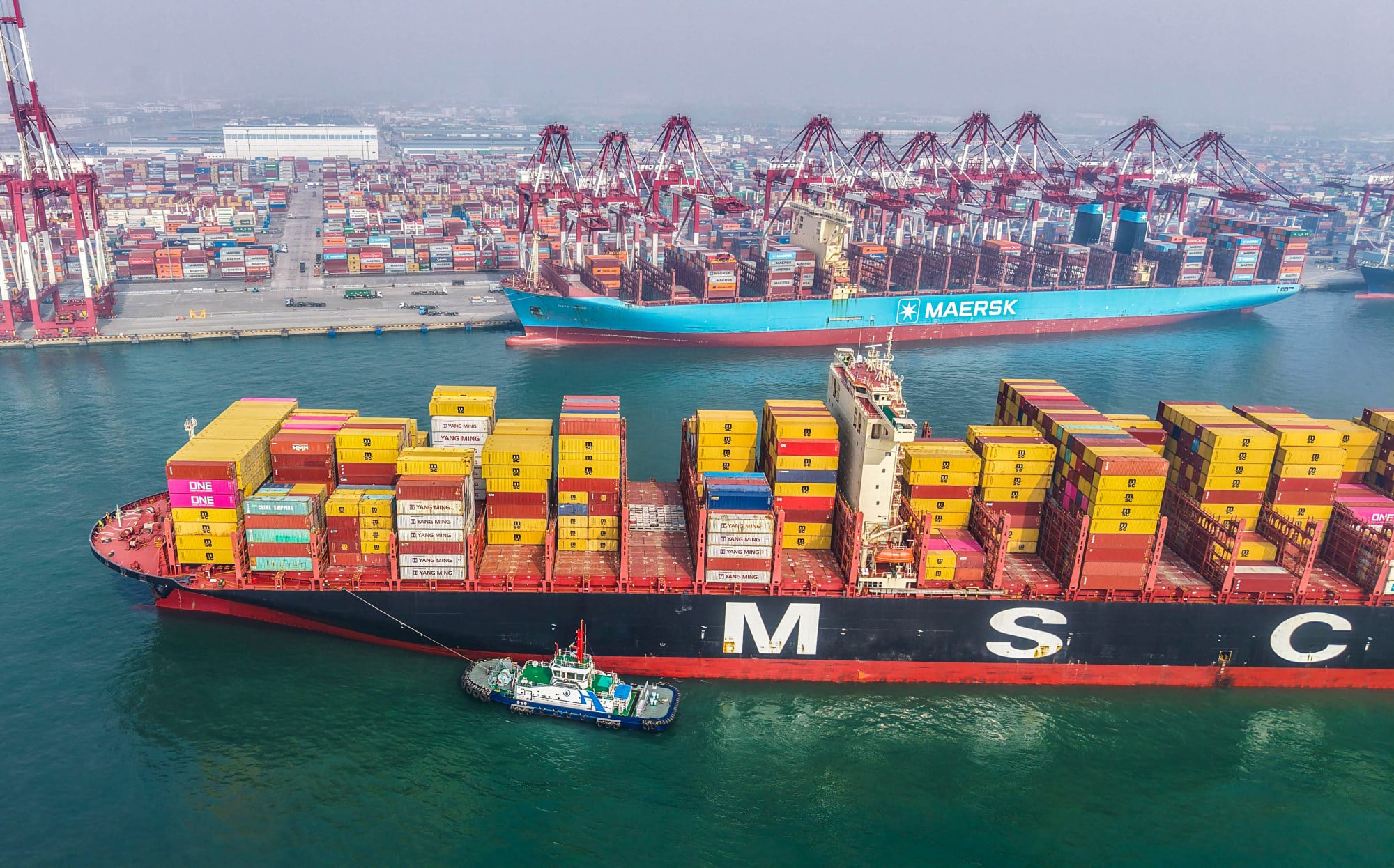
In recent years, sanctions – particularly from the US – have increasingly targeted global shipping, energy trade, finance, technology licensing and third-party conduct, according to Wang.
He said Beijing viewed that as a bid to “reshape global economic behaviour through domestic law rather than traditional diplomacy or multilateral mechanisms”.
“Beijing is signalling that persistent reliance on long-arm jurisdiction will now encounter structured legal resistance, rather than case-by-case diplomacy,” Wang said.
But there was a gap in the existing legal framework comprising the National Security Law, the Foreign Relations Law, and the Anti-Foreign Sanctions Law.
Huo Zhengxin, an international law professor at the China University of Political Science and Law, said the anti-sanctions legislation – passed in 2021 – targeted sovereign interference and unilateral sanctions.
He said it did not adequately address “improper extraterritorial jurisdiction” that breached international or Chinese laws without constituting a direct threat to sovereignty.
Under the new rules, the cabinet’s legal affairs department takes the lead.
Wang described the rules as a “procedural instruction manual” to make existing counter-sanctions powers practically usable in the courts and compliance departments and to help enforce them.
He said they set out the identification and assessment of foreign measures, coordination across agencies, when prohibition orders would be issued, and how litigation, retaliation and compliance supervision worked in practice.
Catch-22?
The new rules partly aim to address the “compliance trap” that has long plagued Chinese state-owned firms and the private sector alike.
Huo pointed to a landmark 2015 case when a US judge held Bank of China in contempt for refusing to hand over account information of Chinese suspects in a counterfeit lawsuit brought by luxury brand Gucci.
The bank argued that turning over the data would violate China’s Commercial Banking Law and its data secrecy regulations.
US District Judge Richard Sullivan in Manhattan dismissed the bank’s defence, saying the “hardship” to the bank was speculative.
Sullivan said the bank had not provided evidence of a single instance where the Chinese government had prosecuted or severely penalised a bank for complying with a US court order. Without this proof of “real consequence” in China he decided that US interests in enforcing trademark laws outweighed the “theoretical” threat of Chinese enforcement.
Huo said China’s new rules aimed to address this “catch-22” with a prohibition order under Article 13 allowing State Council authorities to forbid organisations or individuals from complying with foreign extraterritorial measures.
If that order was ignored by a company like Bank of China and it passed data to a US court then penalties could be applied under Article 17 such as big fines and restrictions on data transfers.
Huo said that created a “legal shield” for Chinese firms which could now prove to foreign courts that following such an order would have a “devastating legal cost” at home.
He added that this could potentially force foreign judges to respect Chinese sovereign boundaries under the principle of international comity.
Article 8 of the new rules covers the new Malicious Entity List introduced this month. Unlike the previous “Unreliable Entity List” – which focuses on trade misconduct – the new list targets those who “promote or participate” in implementing “improper” extraterritorial measures.
As the trade war with America has intensified in recent years, more Chinese firms have been added to US sanctions lists. They include companies accused of involvement in human rights abuses in the far western region of Xinjiang – allegations Beijing denies.
Some 144 Chinese companies are currently on the US Uygur Forced Labour Prevention Act Entity List, including many headquartered in eastern export hubs like Zhejiang, Jiangsu and Guangdong provinces.
According to Huo, allegations against Chinese companies are often based on information provided by American competitors who lobby US agencies to sanction their rivals to gain a market advantage.
Under Article 8 of the new rules, if a foreign organisation “promotes or participates” in these measures they can be blacklisted by China.
Huo said the aim was to create a “deterrent effect” to make foreign firms think twice before lobbying their governments for sanctions against Chinese rivals.
‘Broad and vague’
But the regulations have sparked concerns among some legal experts and business chambers because of their scope and ambiguity.
Ryan Mitchell, an associate professor of law at Chinese University of Hong Kong, said the target now was explicitly foreign organisations or individuals that “promote or participate in the implementation of improper extraterritorial measures”, which could have “very wide applications”.
“This could be used to target a wide range of entities – from consulting firms to companies advocating certain policies, or giving certain types of responses during testimony before the US Congress, to individual executives or government officials,” he said.
The restrictive measures and consequences listed in Article 8 were also quite “extensive”, he said.
It allows for the Chinese government to assess the actions of foreign countries, determine risk levels and impose countermeasures ranging from diplomatic and immigration restrictions to trade, investment and foreign aid limitations.
Listed entities could have their assets frozen and face transaction bans, investment restrictions and fines.
“Importantly, they now include specific limits on data transfers to listed entities,” Mitchell said. “For organisations that might not have assets or personnel in China, the inability to access data – and likely any digital services with a Chinese component – could nonetheless still have a major impact.”
That view was echoed by the European Chamber of Commerce in China. It warned in an April 16 statement that the regulations “explicitly reconfirm China’s ability to use extraterritorial provisions itself when deemed necessary”.
The chamber acknowledged that the rules were to some extent similar to the EU’s blocking statute, which also aims to counteract third-country extraterritorial measures. But it said “the broad scope, vague language and wide discretion to punish companies and individuals, including through criminal liability, goes well beyond the scope of the EU regulation”.
It said that was concerning given that China’s extraterritorial export controls on strategic materials like rare earths and lithium-ion battery technology were set to come into force in November.
The chamber also said the rules would add further uncertainty for European firms doing business in China and they would have a “significant impact on global supply chains”.
Wang from CityU said whether the move stabilised global trade or led to further fragmentation would depend not so much on the language of the rules but on how frequently Beijing chose to pull the trigger.
“The regulations reflect China’s broader shift from reactive diplomacy to legalised geopolitical competition,” he said. “Much like the EU’s blocking statute, it may be under-enforced initially, but its true impact lies in compliance recalculation by multinational firms.”
Wang expected test cases in shipping, finance and technology licensing to be released later.
Testing ground
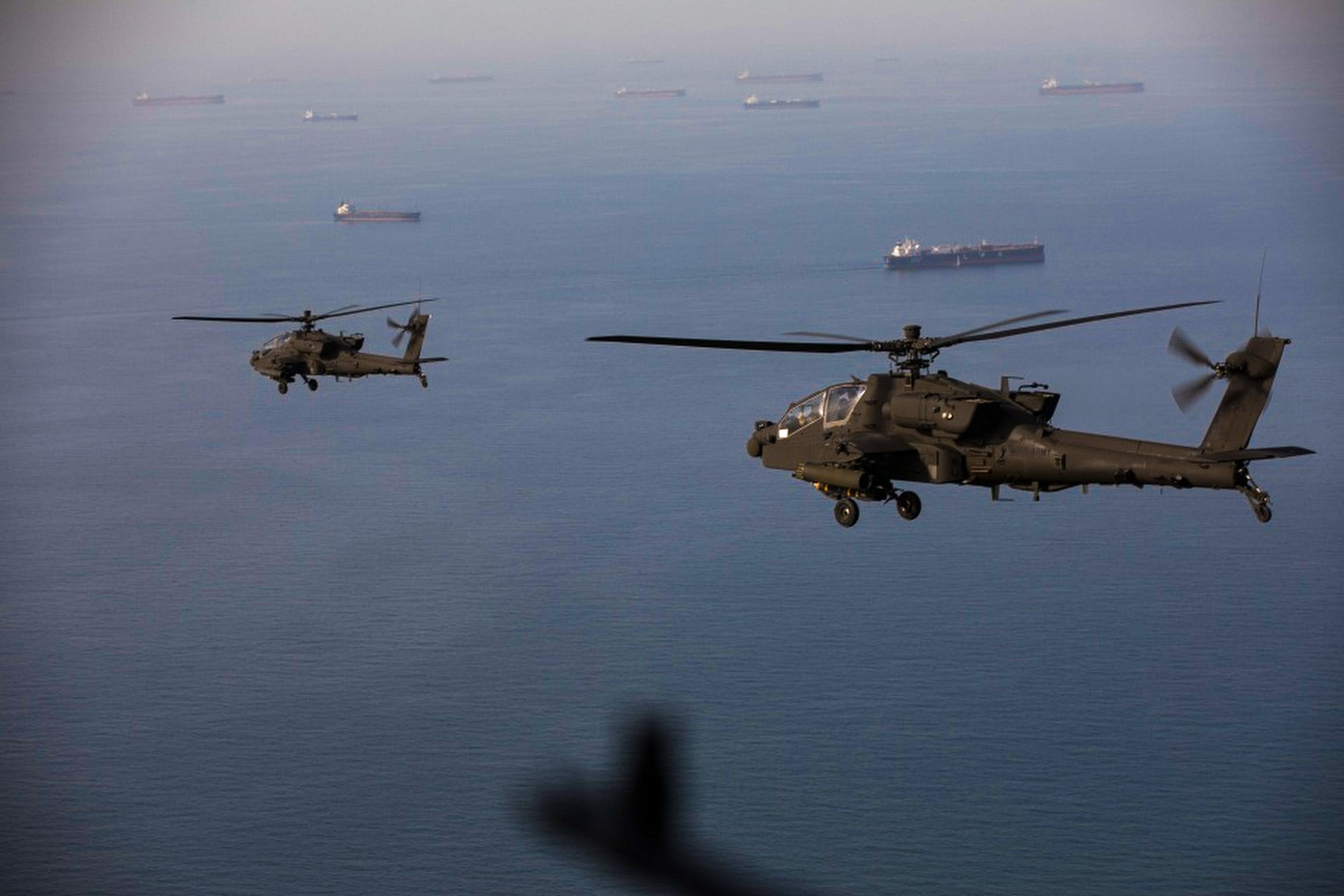
The current situation in the Strait of Hormuz – especially the US naval blockade of Iranian ports – could provide an immediate and high-stakes testing ground for the new rules.
While lanes to neutral ports technically remain open, the blockade has sent marine insurance premiums surging, with many shipping firms unable to secure coverage for transit through the strait, according to analyst reports.
China – the world’s largest crude oil importer – has called for the strait to reopen and said America’s naval blockade was “dangerous and irresponsible” and undermined an already fragile ceasefire in the US-Israeli war on Iran.
Wang said the new regulations were deliberately broad and avoided naming any specific country or crisis, but they were clearly aimed at scenarios where secondary sanctions disrupted energy trade, shipping insurance, payment clearing or port access.
“In practical scenarios, a shipping insurer withdrawing cover due to US sanctions, or a logistics firm refusing services, could face civil claims or administrative consequences in China, even if fully compliant with foreign law elsewhere. That legal squeeze is intentional,” he said.
Mitchell agreed, saying if a foreign insurer restricted a policy for a Chinese vessel due to US pressure, China could now label that insurer a malicious entity.
He said despite the hardline approach, the new regulations included “moderating elements”.
A “rectification” mechanism allows targeted foreign firms to seek removal from the Malicious Entity List if they change their behaviour.
Mitchell said that created an “off-ramp” that motivated foreign companies to lobby their governments for de-escalation.
In addition, Article 13 allows Chinese citizens and companies to apply for exemptions if they have no choice but to comply with foreign laws.
“Having an escape valve like this could help to avoid major liabilities for Chinese companies or their employees, and could make less likely the outbreak of diplomatic crises such as the Meng Wanzhou incident,” he said.
Huawei Technologies CFO Meng was arrested in Canada in 2018 at the request of the US on fraud charges stemming from alleged violations of US sanctions on Iran through actions taken in Hong Kong – a conflict of extraterritorial jurisdiction. Meng remained trapped in Canada for nearly three years in the high-profile diplomatic stand-off.
The exemptions clause of China’s new rules allows Chinese citizens or companies to apply for permission to comply with foreign laws where unavoidable.
Along with the other provisions, this will help clarify the options for companies navigating the requirements of domestic and foreign laws, according to Mitchell. He said that could ultimately prevent individuals from being trapped between two legal systems and stop the escalation of such cases into state-to-state confrontations. -- SOUTH CHINA MORNING POST


