HANOI/SINGAPORE: Nguyen Thanh Giang and other rice farmers in Binh Thanh in Vietnam’s southern An Giang province harvested their spring crop earlier in April.
As the province lies on the Mekong River Delta, they usually grow three crops a year back to back, making use of the fertile soil brought by the mighty river.
“We have yet to sell our rice, but so far, the buying prices have stayed the same as in 2025, while production costs are much higher,” said the 50-year-old, pointing to the doubling of diesel prices, as well as increased prices of other commodities.
“Some of us are seriously considering not growing the next crop,” said Giang.
Similarly, rice farmers and exporters in Thailand – one of the top three rice exporters in the world along with Vietnam and India – are also feeling the strain from rising prices.
Thailand’s target is to export seven million tonnes of rice globally in 2026 but the Middle East war has turned the world topsy-turvy with supply disruptions, high oil prices and economic uncertainty.
“We are so worried,” Chookiat Ophaswongse, honorary president of the Thai Rice Exporters Association, told The Straits Times.
Iraq is Thailand’s largest rice importer, buying one million tonnes of the Thai grains in 2025 alone.
But Thai rice exports have “totally stopped” since the war, Chookiat said, because vessels are unable to sail through the Strait of Hormuz.
He hopes that Thailand will be able to export more rice to neighbouring countries such as Malaysia, Indonesia and the Philippines instead.
In Vietnam, experts have also warned that a prolonged war would disrupt the country’s exports.
The impact on Vietnam’s rice exports is not yet severe, said Do Ha Nam, president of the Vietnam Food Association (VFA) and general director of Intimex Group – one of Vietnam’s leading exporters of agricultural products.
“Vietnam has not been strongly affected immediately because its export structure remains focused on nearby markets like China and the Philippines, so the logistical pressure isn’t too great yet.”
The Philippines is Vietnam’s biggest customer, importing around 40 per cent of total rice exports, but the market is shrinking due to many factors, including logistics costs driven by the Middle East conflict.
“If the situation persists, the impact will become fundamental to production,” Nam added, “When costs rise and selling prices do not keep pace, leading to decreased efficiency, it’s inevitable that rice farmers will consider switching crops.”
The Middle East conflict has meant increased freight costs for food exporters.
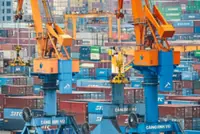
Gary Dale Cearley, managing director of Red Wolf Global, a logistics firm with offices in Vietnam, said: “Rice is shipped almost entirely by sea from the Mekong Delta via major ports in the Ho Chi Minh City area. Ships leaving these ports are now seeing transit times extended by a staggering week to 15 days as they navigate around conflict zones.
“For Vietnamese food exporters, the most painful metric is sea freight cost, which has been soaring by 25 per cent to 35 per cent. This is being compounded by rising insurance premiums, and even climbing inland logistics costs here in Vietnam, up roughly 80 US cents (S$1) to US$1.20 per tonne.”
Yet, the negative impact of the war is somewhat delayed.
Dr Hoang Trong Thuy, an agricultural expert who currently advises national broadcaster VTV, said: “Rice exports have actually increased in volume, as most export contracts were signed last year, with 1.74 million tonnes exported by mid-March, up 2.3 per cent compared with the same period of 2025.
“However, prices have decreased and many Vietnamese companies have to accept this in order to compete with strong exporting countries like India and Thailand.”
The profit margins of not only farmers, but also trading companies have consequently narrowed.
Vietnam had a national food reserve of half a million tonnes in 2025 and has set a target of 420,000 tonnes for 2026, according to the country’s Ministry of Finance.
Analysts generally agree that, at present, Vietnam is not facing significant risk to food security.
“However, a broader perspective is needed,” urged VFA’s Nam.
“As profits from rice decrease, farmers will switch to other crops. If this trend intensifies, the rice supply could be significantly impacted in the coming years.”
In his view, adjustments to export policies are “possible”; Vietnam, however, will not drastically halt exports but adopt a flexible approach to ensure domestic needs and maintain its role as a top rice supplier globally.
“Food security is not just about having enough rice today, but also about ensuring that rice farmers continue to grow rice tomorrow,” Nam said.
Dr Le Anh Tuan, a lecturer at Can Tho University and a well-known environmentalist, told ST that food shortages are not a big concern for Vietnam.
“No other delta in the world has the capacity to produce approximately seven million tonnes of rice in just 100 days like the Mekong Delta,” he said.
The river delta in south Vietnam, spanning some 40,000 sq km, is home to more than 17 million people, most of whom are farmers. Ninety per cent of Vietnam’s rice exports of more than eight million tonnes – worth US$4.1 billion in 2025 – comes from there.
Dr Thuy suggested that farmers could try to reduce the use of chemical fertilisers and replace them with organic ones, optimise irrigation and increase low-emission rice cultivation to open up the market for high-valued rice varieties.
Vietnamese 5% broken rice currently sells for around US$460 per tonne on average, but some special varieties can fetch up to US$630 per tonne or more.
Low-emission rice, also known as low-carbon footprint rice, is worth 10 per cent to 25 per cent more than conventional rice, thanks to demand for clean, environmentally friendly products.
Back in An Giang, Giang the rice farmer, who heads a small farming cooperative, told ST that he wants to pioneer the use of modern technologies in farming to save on labour costs and other expenses.
His group of farmers was the first in the country to use drones for sowing, watering, fertilising and detecting any problems in the rice field.
“I support cutting down from three to two crops per year,” Mr Giang said. “We’d rather produce less but sell for better prices.”
Giving up rice farming, however, is not something that 57-year-old Thai farmer Boontham Khlaiphueak is able to do.
The owner of almost 1ha of land in north-eastern Khon Kaen has been trying to cope with the hike in fuel prices since the US-Israel war against Iran broke out some two months ago.
He told ST that every rai – or 0.16 ha – that he ploughs with his tractor, costs him 250 baht (S$10). But that cost has now doubled to 500 baht per rai.
The rice farmer has no choice but to persevere as “all we can do is wait for the right time to plant rice, even if it means making a loss”. - The Straits Times/ANN