JAKARTA: The Home Ministry has walked back a new regulation scrapping tax exemptions for electric vehicles after a backlash, with critics saying it had undermined the country’s push for EV adoption over the past few years.
The ministry issued earlier this month Home Ministry Regulation (Permendagri) No. 11/2026 on motor vehicle tax, mandating EVs as taxable regional assets, and therefore, a subject for local taxation.
The regulation was welcomed by regional heads including West Java Governor Dedi Mulyadi and Jakarta Governor Pramono Anung, saying that they would implement the taxation immediately.
Amid greatly reduced central government transfers to regions, local administrations have been scrambling to create new sources of income, including by levying new local taxes.
Car manufacturers and consumers, along with economists, have been puzzled by the sudden emergence of the regulation, describing it as inconsistent with the national programme that started under former president Joko “Jokowi” Widodo to push the energy transition and support the growth of an EV battery industry in Indonesia.
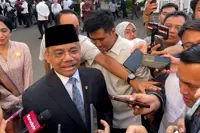
As the controversy grew, Home Minister Tito Karnavian issued a circular signed on Wednesday (April 22) in which he called on regional administrations to provide fiscal incentives in the forms of “exemptions” for EV taxes, citing global economic pressures, volatile oil and gas prices that also affected the country’s economy and the need to support renewable energy adoption.
“Governors [are instructed] to report the fiscal incentives as proven by governor decrees [stipulating the incentives] by May 31, 2026,” the circular said in a copy received by The Jakarta Post.
Leaving Jokowi's legacy?
Indonesia began promoting electrification in 2019, aiming to position itself as a global EV hub by leveraging its vast nickel reserves, supported by a range of tax incentives to attract investment and accelerate domestic adoption.
Several incentives have expired, including subsidies for the purchase of new electric motorcycles, which ended in late 2024, and incentives for four-wheelers that expired in late 2025, with no signal that either will be reinstated.
The latest ministerial regulation would have been the final blow to the remaining support for the EV push initiated by Jokowi.
This lack of support contradicts the market, which has shown signs of taking off. Data from the Association of Indonesian Automotive Industries (Gaikindo) showed that EV sales rose 95.9 per cent in the first quarter this year to reach 33,150 units, compared with the same period last year.
The surge lifted the EV market share to around 15.9 per cent, with total sales of 209,021 units, up sharply from 8.2 per cent, 205,539 units, in the first quarter of 2025.
Hybrid electric vehicles also gained ground, with their share rising from 6.8 per cent to 8.1 per cent over the same period.
Andry Satrio Nugroho, who heads the Industry, Trade and Investment Center at the Institute for Development of Economics and Finance (Indef), said the ministerial regulation had already raised concerns over inconsistency within the broader policy framework and the release of the circular seemed to be a form of “panic” response to the growing controversy over the poorly prepared regulation.
Indef estimates that a fully developed EV ecosystem could add Rp 225 trillion (US$13.05 billion) to the country’s gross domestic product and create 1.9 million jobs by 2030 through the expansion of domestic manufacturing.
Such uncertainty could threaten EV investment, which amounted to $2.73 billion over the past three years, and risk eroding confidence in incentives meant to boost EV adoption, Andry added, warning that removing guaranteed tax breaks could further deter consumers from switching.
It is not clear why Tito issued the ministerial regulation in the first place.
Tito, a retired police general who had been known as close to Jokowi, is regarded as loyal to the former president.
Industry Minister Agus Gumiwang Kartasasmita, who also served in the Jokowi administration, said on Tuesday that higher costs resulting from the new motor vehicle tax policy would directly affect market demand and could weigh on EV sales.
The reversal also jars with the government’s own push for electrification. President Prabowo Subianto has in recent weeks called for a sweeping shift to EVs, alongside plans to add up to 100 gigawatts of solar capacity and convert 120 million motorcycles within four years.
He renewed calls for electrification earlier this month as global oil prices surged above $100 per barrel amid the escalating conflict in the Middle East, now in its eighth week, well above the country’s 2026 budget assumption of $70.
'Regulatory regression'
Finance Minister Purbaya Yudhi Sadewa gave an assurance that what consumers pay to the government would remain the same and the central government is not planning to issue any new taxes.
“Until there is a meaningful recovery in purchasing power and the broader economy, we will not introduce new taxes or raise existing rates,” he said.
The Institute for Essential Services Reform (IESR) has urged a review of the ministerial regulation, calling the removal of the tax relief for EVs a “regulatory regression” that contravenes higher-level laws and threatens national energy independence targets.
The group stressed that sustained investment in the EV sector depended heavily on regulatory stability, calling for alignment between the new Permendagri and Law No. 1/2022 on central-regional fiscal relations.
“We see an urgent need for synchronisation so that the regulation remains aligned with the law, ensuring EVs retain their ‘non-taxable object’ status,” said IESR executive director Fabby Tumiwa in a statement.
He said that if the regulation was not revised, it risked being challenged at the Supreme Court and would further erode consumer and investor confidence.
Indonesia is aiming for 15 million EVs on the road by 2030, comprising 13 million two-wheelers and 2 million cars. Meeting that target could save up to Rp 49 trillion in fuel import costs and cut fuel subsidies by Rp 18.3 trillion annually, the IESR estimates. - The Jakarta Post/ANN