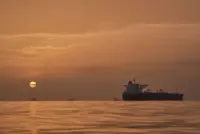
SEOUL: A crude oil tanker carrying about 1 million barrels is currently heading to South Korea after passing through the troubled Strait of Hormuz, marking the first such shipment in weeks since the Middle East crisis in Iran broke out.
According to Maeil Business Newspaper, a Suezmax-class tanker, the Odessa, is en route to Daesan Port in South Chungcheong Province after loading crude in the United Arab Emirates.
The vessel is expected to arrive on May 8, with the cargo reportedly destined for HD Hyundai Oilbank under an existing supply contract.
The shipment is notable as oil transport through the Strait of Hormuz — a key global energy chokepoint — has been largely closed in recent weeks amid escalating tensions involving Iran, the United States and Israel.
The tanker is understood to have exited the strait before Iran’s military reimposed navigation restrictions on Saturday, just a day after announcing a temporary reopening.
Foreign media reported that several tankers passed through during that brief window, though it remains unclear whether the Odessa was among them.
Since late March, crude shipments through the route have effectively stalled, with several Korea-bound tankers unable to pass and the government seeking alternative supply routes.
The last known tanker to reach Korea via the strait carried about 2 million barrels of oil and arrived in March.
Since then, concerns over supply security have grown, as nearly 70 per cent of South Korea’s crude imports come from the Middle East and typically pass through the narrow waterway.
On Friday, the Foreign Ministry in Seoul announced that a South Korea-owned vessel had successfully navigated through the Red Sea, describing it as the first Korean ship to use the route as an alternative for transporting crude oil.
President Lee Jae Myung praised the officials and crew involved, calling the development a positive step in securing energy supply routes.
Although some oil has previously been shipped to South Korea via the Red Sea, exporters have traditionally preferred the Strait of Hormuz, partly due to security risks along the alternative route, including potential attacks by Yemen’s Iran-backed Houthi rebels. - The Korea Herald/ANN