SINGAPORE: Three Sri Lankan leopard cubs that were born at the Singapore Zoo on Jan 1 have now made their public debut at the facility.
The two males and one female, born to mother Yala and father Asanka, are the first of their species to be born at the Singapore Zoo. The last successful birth in Singapore was recorded at the Night Safari three decades ago.
The triplets, which are the pair’s first litter, are among around 80 Sri Lankan leopards in zoos worldwide.
The species is listed as vulnerable on the International Union for Conservation of Nature (IUCN) Red List, with fewer than 800 individuals estimated to remain in the wild.
Visitors can now see the triplets at the Wild Africa exhibit, said the Mandai Wildlife Group in a statement on Thursday (April 16).
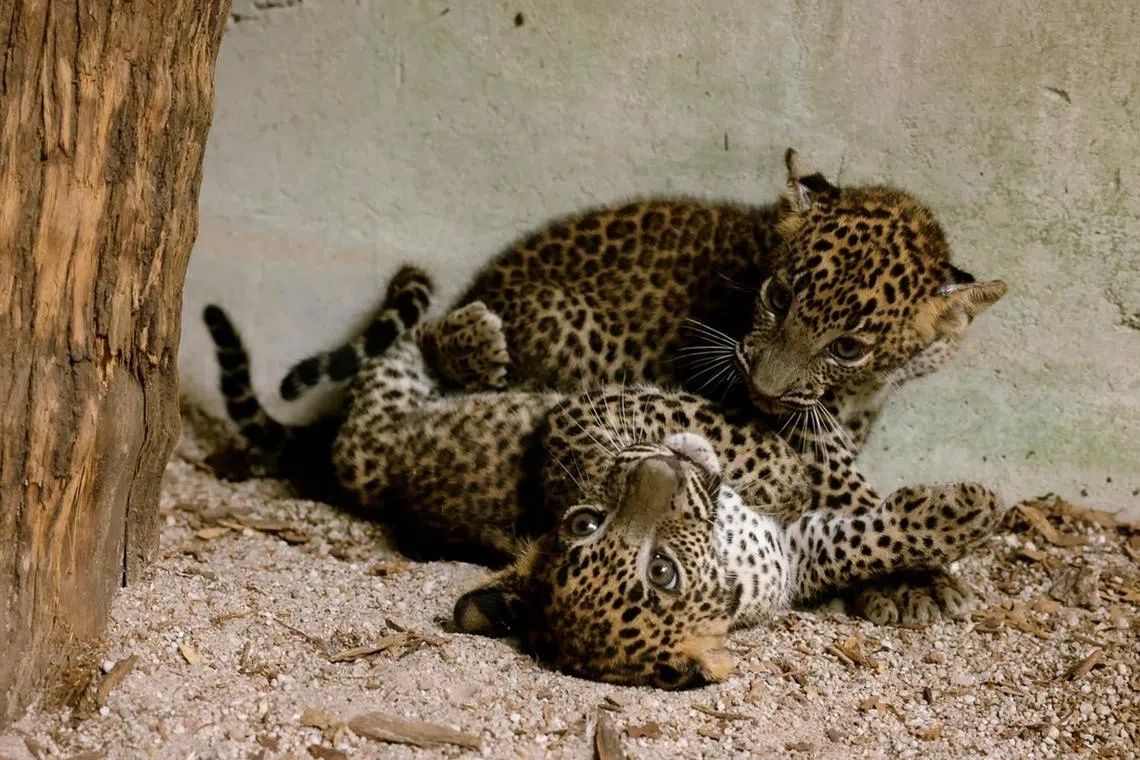
The cubs can be found in the exhibit with their mother daily until mid-May and, subsequently, every Wednesday, Saturday and Sunday.
Mandai Wildlife Group curator Anand Kumar said it took nearly three years and close collaboration across continents to bring together a compatible pair of Sri Lankan leopards.
“To see three healthy cubs thriving and developing their own personalities is incredibly rewarding,” he said.
Anand added that the cubs have started showing distinct personalities, with the two males having a tendency to be more laid-back, while the female is observed to be feistier.
“We can already tell them apart by their demeanour and the spot patterns on their forehead, like fingerprints,” he said.
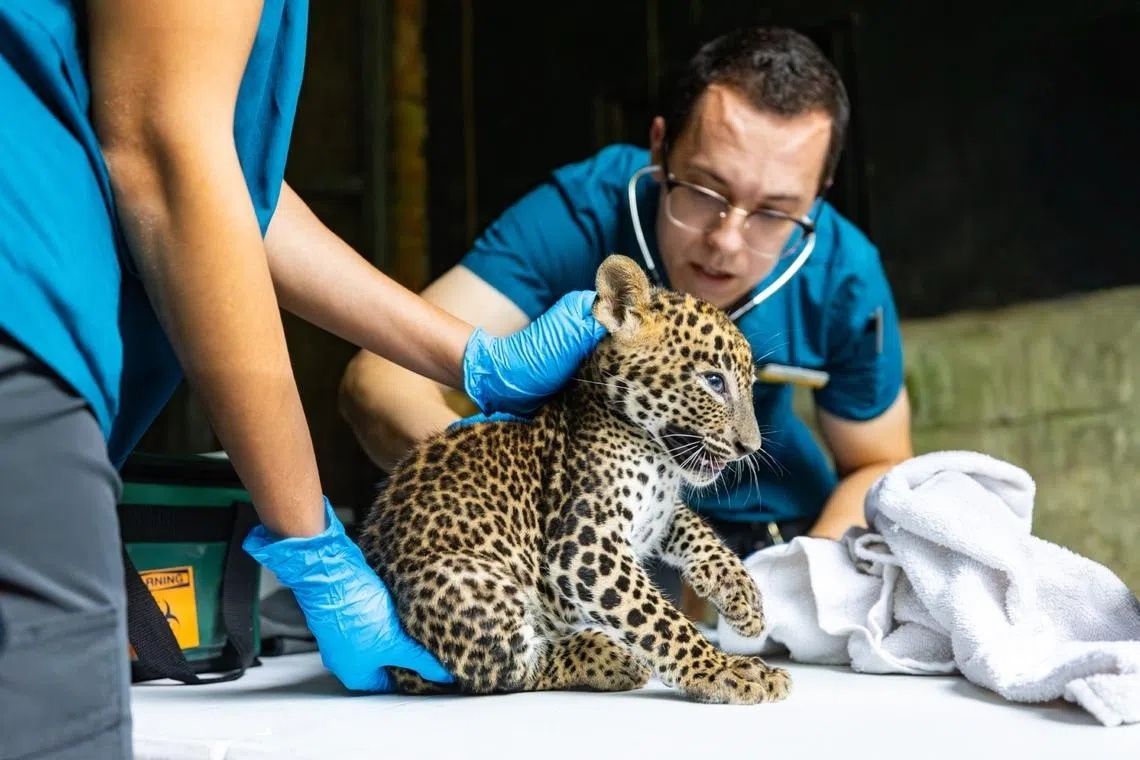
The cubs were found to be healthy during their first veterinary checks in February, said the Mandai Wildlife Group. They have also received vaccinations against common feline diseases and deworming treatment as part of preventive care.
Mandai Wildlife Group has welcomed a number of newborns in the first four months of 2026. On March 23, the Singapore Zoo welcomed a Bornean orang utan baby. The orang utan is classified as critically endangered by the IUCN.
On March 1, a baby pangolin, also a critically endangered species, was born.
The wildlife reserve had also announced in January that Singapore’s wildlife parks welcomed close to 1,000 newborns in 2025.
Among the new additions are the critically endangered red-shanked douc langur and Huulien leopard gecko.
Other first-time milestones include the L’Hoest’s monkey, wattled crane and Chinese fire belly newt. - The Straits Times/ANN