Whether the US-Israeli war on Iran wraps up quickly or drags on, the repercussions will be felt for years, reshaping warfare, geopolitics and energy security as well as how the world sees the United States and its tactical and strategic capabilities. In the second of a three-part series, we examine some of the implications likely to unfold over months and years, affecting the future of conflict in an increasingly unstable world.
As the United States and Israel wage war on Iran, they are also operating a real-time laboratory of military lessons for Beijing, which has been closely taking notes on how Washington exercises power and sustains a costly and politically fraught campaign.
Now in its sixth week, the conflict is a rare window for China to gauge American wartime resilience and holds implications for Beijing’s strategic assessment and decision-making.
The US and Iran announced a two-week ceasefire deal on Tuesday, with negotiations to begin on Friday in Pakistan’s Islamabad. The outcome of the talks remains to be seen, and the temporary ceasefire does not amount to a formal end to hostilities.
Analysts cautioned that US advantages in intelligence, technology and rapid operational adaptability on display in the conflict would not automatically translate into sustained warfighting capacity.
Constraints that were structurally undermining Washington’s capacity to remedy vulnerabilities included a shrinking defence industrial base, the high costs of asymmetric warfare and growing international and domestic disquiet, they said.
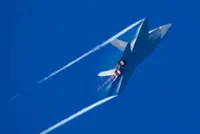
Iran has proved more resilient than expected, continuing its missile attacks on targets in the region, and the loss of an F-15E fighter jet – despite the recovery of its crew – has undercut US claims of total dominance over Iranian airspace.
Beijing would be studying how artificial intelligence (AI) was reshaping combat, notably in unmanned systems, as well as the broader effects of the war on regional stability and global supply chains, according to experts, who also signalled strategic opportunities for China.
Li Lingqun, an associate professor at Nanjing University’s School of International Studies, said Beijing’s assessment of US wartime resilience mainly focused on battlefield performance and material support, along with political backing and international impact.
She noted that the US had shown its intelligence and technological edge through the targeted strikes against Iran’s top leadership and precision air strikes, while also maintaining an advantage in allied cooperation and battlefield flexibility.
Experts have observed similarities between the war on Iran and the conflict in Ukraine, where a powerful military armed with expensive, high-end weapons has confronted the asymmetric threat of a smaller state deploying low-cost, expendable uncrewed systems.
While Iran has launched large numbers of drones at targets across the Persian Gulf, Operation Epic Fury has seen the US unleash its own low-cost one-way attack systems for the first time in combat, as well as AI-enabled interceptors, to counter Tehran’s asymmetric attrition tactics.
Historically, US forces have struggled in protracted conflicts against asymmetric opponents, as seen in Vietnam and Afghanistan, where conventional military strength ultimately did not achieve decisive victory when faced with persistent guerrilla resistance.
The Iran war has highlighted structural bottlenecks in the US defence industry, which contracted after the Cold War ended, leaving fewer factories, thinner supply chains and limited surge capacity.
Li said the Russia-Ukraine war and US-Israel strikes on Iran last June had exposed slow replenishment of American weapons and munitions stocks, while the redeployment of key US military assets from Asia, such as relocating the Terminal High Altitude Area Defence (THAAD) systems, signalled further strains on its defence industry.
Her reference was to the large volumes of US arms supplied to Ukraine for its war against Russia, and the Pentagon’s precision strikes on Iranian military and nuclear targets alongside Israel in last year’s 12-day war.
The US defence industrial base, built around Cold War and deterrence logic, has relied on nuclear weapons, precision strikes, stealth and networked technologies to maintain an edge. But the question is whether this system is suitable for protracted high-intensity conflicts characterised by a hybrid of conventional and unmanned weaponry.
“I think the US has yet to fully grasp or adapt to the logic of AI-enabled unmanned warfare and its disruptive potential,” Li said.
The US fired more than 850 Tomahawk cruise missiles in the first four weeks of Operation Epic Fury, at an estimated cost of up to US$3.6 million per shot, from existing stockpiles said to be above 3,000 as of late March, according to a research note from the Centre for Strategic and International Studies.
Another note it posted earlier said there appeared to be sufficient munitions for the war on Iran, but the reduced inventories created risks, particularly in the western Pacific and Ukraine.
There have been media reports in the US that nearly the entire inventory of stealthy JASSM-ER air-launched cruise missiles had been diverted to the Middle East from stockpiles in the Pacific and other regions.
Only about 425 of the pre-war inventory of 2,300 of the long-range missiles remain available, according to the reports.
US President Donald Trump last Friday requested congressional approval for a 44 per cent increase in the defence budget that would take it to an all-time high of US$1.5 trillion for the next financial year.
The Pentagon also sought an additional US$200 billion last month, while the cost of the war was estimated to have exceeded US$11 billion in the first six days alone since the first strikes on February 28.
If Congress approves the boosting of the defence budget, it could add nearly US$7 trillion to the national debt over the next decade, including interest costs, according to the Committee for a Responsible Federal Budget, a non-partisan fiscal watchdog.
According to Fu Qianshao, a retired PLA Air Force equipment specialist, the US and Russia were mistaken in assuming that superiority in the skies – once defined primarily by fighter jets and other aircraft – continued to guarantee battlefield control.
That assumption no longer held in modern warfare reshaped by drones, he said.
“You can no longer grasp total air superiority. So long as the adversary’s air assets remained active, full control of the skies would be elusive. This fundamentally changes the concept of air dominance.”
Fu added that a reliance on outdated assumptions had constrained US decision-making, with Washington believing that limited air strikes could achieve its goals while avoiding prolonged entanglement and casualties.
The realities on the ground had proved otherwise, he noted.
It would be unrealistic to rapidly scale up American defence production during a prolonged conflict, as stockpiles could not be massively expanded, Fu said. New weapons would not be produced immediately and the US also lacked manufacturing capacity, having outsourced production of many advanced arms.
Like the US, China has intensified its military-civilian fusion strategy in recent years, integrating civil technologies and private tech firms into the defence supply chain, with AI and drones as prominent examples.
Beijing has also pushed state-owned enterprises to cut waste and improve efficiency, with the aim of bolstering economic endurance and their ability to organise and mobilise resources to counter crises.
Experts noted that declining domestic political and public support for the war on Iran could further undermine American wartime resilience in a prolonged conflict.
The Trump administration has faced internal divisions over the air strikes and potential ground deployments. Public concerns have grown, driven by rising costs and the risks of a prolonged conflict, prompting thousands of “No Kings” protests across the US.
Internationally, the war has led to widespread energy security and economic stability worries and a global backlash, with countries such as Nato ally Spain closing their airspace to US planes involved in attacks on Iran.
There has also been pressure on some jointly operated facilities, with Italy – another Nato member – refusing to allow a military base to be used for operations against Tehran, for example.
“Echoing the Afghanistan and Vietnam cases, the US has pursued military action against Iran without clear strategic objectives, with domestic economic pressures and international backlash mounting,” Li said.
“If the conflict drags on, it could trigger backlash at home and abroad, undermining American resolve and wartime resilience.”
Zhao Hai, a director of international politics at the Chinese Academy of Social Sciences, said Beijing could be studying aspects of the Iran war such as air defences, how to break potential blockades in key waterways and precision strikes against high-value targets.
But while these may offer points of reference, their overall relevance is limited, according to Zhao. Beijing’s military development was focused on defence, whereas US operations involved projecting power abroad, which meant different battlefields, he said.
“The resilience of a war depends crucially on the nature of the conflict itself. Central to that is whether the war is perceived as just,” Zhao added.
“Even if the US has technological superiority and works to remedy its shortcomings, I think the efforts are not sufficient to offset the political setbacks caused by the loss of public support and moral legitimacy.”
According to Zhao, the US is facing a possible “strategic deficit” as it struggles to maintain a balance between sustaining its forces in the Persian Gulf and preserving global military readiness.
“When the US concentrates a vast portion of its military resources in the Middle East, it inevitably exposes its shortcomings and vulnerabilities in other strategic regions – particularly with its [limited] defence industrial capacity and declining global long-range deployment capabilities.”
James Char, an assistant professor with the S. Rajaratnam School of International Studies in Singapore, said the US build-up in the Middle East had drawn down its resources in the Indo-Pacific, such as the THAAD missiles from South Korea.
“This has rattled some US allies here as well as placed less military pressure on Beijing,” he said, noting that a similar Washington distraction after the September 11 attacks had “opened a window of opportunity” for Beijing to grow its strength “unimpeded”.
“Should the current US administration fail to learn from Iraq and Afghanistan, Trump’s America risks benefiting China again,” Char said.
Analysts have also considered the implications for Taiwan if the US struggles to project sustained power in the strait, with prominent political scientist Zheng Yongnian pointing out recently that Beijing had reached an “historic peak” in its ability to address the issue.
This was driven by a massive industrial base and strong supply chain that the US could no longer match, with a particularly large gap in shipbuilding capacity, according to Zheng, dean of the School of Public Policy at the Chinese University of Hong Kong, Shenzhen.
Tong Zhao, a senior fellow at the Carnegie Endowment for International Peace, said that China’s strong confidence in its industrial capacity could reinforce Beijing’s belief in its own resilience relative to the US in a protracted war.
One US vulnerability was the depth of its strategic munitions stockpiles, particularly stand-off precision strike weapons, and air attack and missile-defence interceptors, he said.
According to Zhao, rough air dominance over Iran had allowed the US to conserve these expensive munitions by relying on cheaper direct-attack bombs.
Achieving similar dominance in a Taiwan contingency would be far harder, significantly increasing US reliance on exquisite stand-off missiles that are “both limited in stockpile and difficult to replenish”, he said.
Beijing sees Taiwan as part of China, to be reunited by force if necessary. Most countries, including the US, its top international backer, do not recognise self-governed Taiwan as an independent state. However, Washington is opposed to any attempt to take the island by force and is committed to supplying it with weapons.
Zhao noted that the People’s Liberation Army’s larger and more advanced theatre-range missile arsenal would pose a far greater challenge compared with Iran’s response, considering the scarcity of US missile defence interceptors.
The cost-exchange ratio of defending against PLA air and missile attacks would be likely to impose unfavourable asymmetric costs on the US, deepening doubts in China about US endurance in a long-term struggle, he said.
“Beijing is likely to come out of this [Iran war] with heightened scepticism about US war resilience in a protracted conflict.”
-- SOUTH CHINA MORNING POST