



China and Cuba held talks on expanding agricultural cooperation in Beijing on Tuesday, the latest in a series of moves by Beijing to shore up support for the Caribbean island as Washington intensifies a campaign of sanctions, criminal indictments and military posturing against Havana.
Chinese Vice-Minister of Agriculture and Rural Affairs Zhang Zhili met Cuban Deputy Agriculture Minister Telce Gonzalez to review joint projects and explore new areas of collaboration in the sector.
The Cuban embassy in China said both sides discussed opportunities to deepen ties as part of the construction of a “community of shared future” between the two countries, and described agriculture as a priority area in the bilateral relationship.
The meeting added a practical dimension to what has become an increasing Chinese effort to back Cuba at a moment of acute vulnerability for the island’s government.
Over the past week, Washington has moved against Havana on several fronts. On Thursday, acting US Attorney General Todd Blanche announced criminal charges against former Cuban leader Raul Castro over his alleged role in the 1996 shooting down of two civilian aircraft operated by Brothers to the Rescue, a Miami-based exile group. The incident killed four people.
The indictment, unsealed in Miami, included charges of conspiracy to kill US nationals and four counts of murder against the 94-year-old former president and younger brother of the late revolutionary leader Fidel Castro, and five co-defendants.
It was the first time Washington had brought criminal charges against either of the Castro brothers.
“This isn’t a show indictment,” Blanche told reporters. “We expect that he will show up here by his own will or by another way and go to prison.”
Cuban President Miguel Diaz-Canel dismissed the charges as politically motivated and said Cuba had acted in “legitimate self-defence” during the 1996 incident.
The indictment was accompanied by broader rhetoric from the Trump administration framing Cuba as a security threat linked to China and Russia.
US Secretary of State Marco Rubio said during remarks on Friday in Homestead, south of Miami, that Cuba hosted “Russian and Chinese intelligence presence” on the island.
“Cuba has consistently posed a threat to the national security of the United States,” Rubio said, adding that Washington’s preference was “always a negotiated diplomatic settlement” but that the president had “a right and an obligation to address that threat”.
US President Donald Trump described Cuba as “a failed country” and suggested his administration would act where others had hesitated.
“Other presidents have looked at this for 50, 60 years, doing something. And it looks like I’ll be the one that does it,” Trump told reporters.
The US military also expanded its presence in the region, with the US Southern Command confirming the aircraft carrier USS Nimitz and its strike group entered Caribbean waters, though officials did not explicitly link the deployment to Cuba.
How China is helping Cuba’s food security amid US pressure
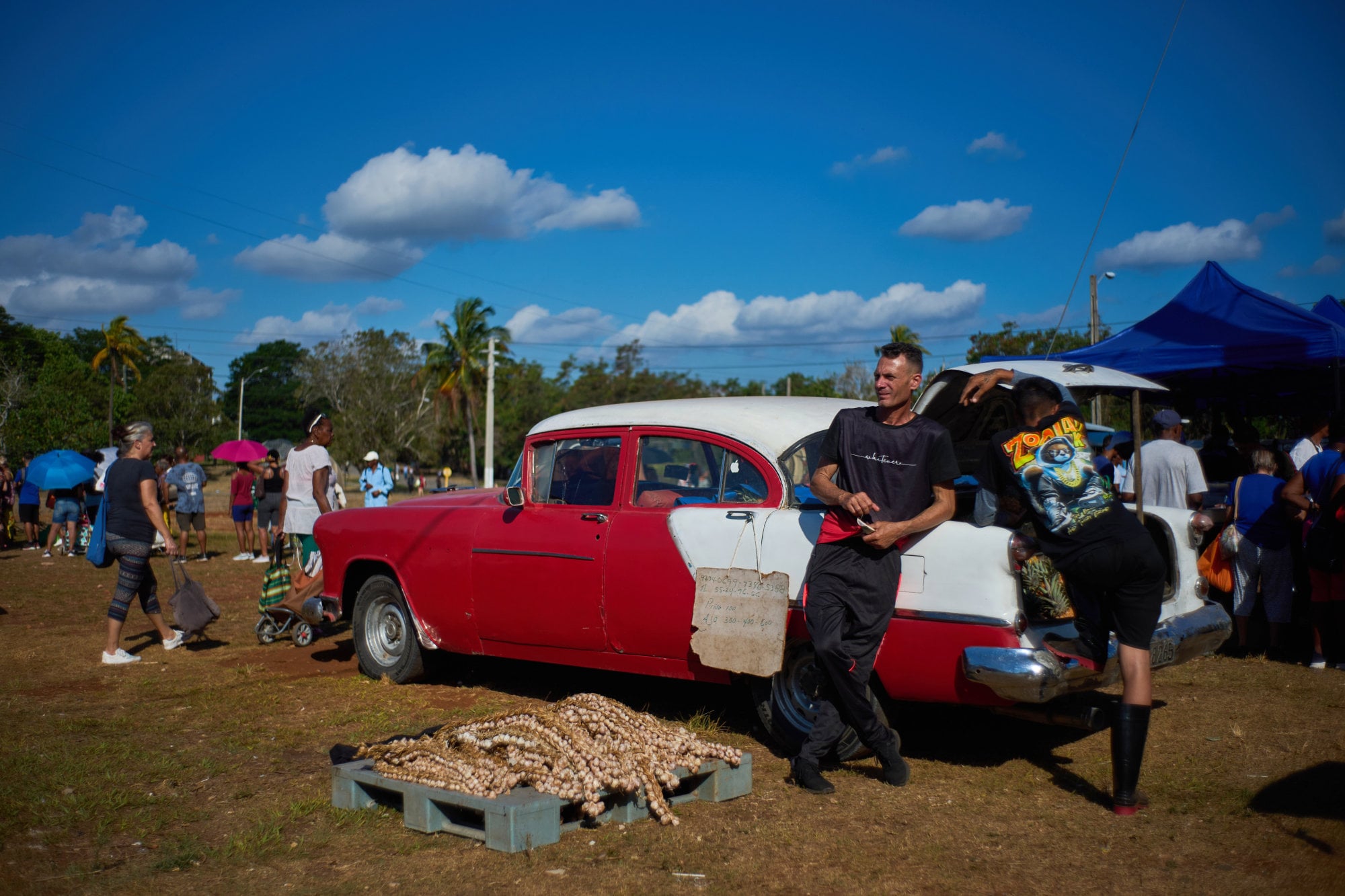
Meanwhile, China has combined material assistance with diplomatic backing. Also on Tuesday, Cuba confirmed the arrival of the first 15,000 tonnes of rice from a 60,000-tonne Chinese donation announced in January.
Foreign Minister Bruno Rodriguez called the shipment “a new display of solidarity and brotherhood between both nations in the current difficult context for Cuba and the world”.
Diaz-Canel thanked Beijing publicly, writing on social media that the rice had been received “in the spirit of the firm political will to jointly build the Cuba-China Community of Shared Future”.
Cuba’s Minister of Internal Trade, Betsy Diaz, said the grain would be distributed across all provinces and in the special municipality of Isla de la Juventud. The remaining 45,000 tonnes are expected over the coming months.
At the Chinese foreign ministry, spokeswoman Mao Ning returned to the topic during her regular press conference. Asked to comment after Rodriguez denounced US military threats against Cuba at the UN Security Council during a session chaired by China, Mao reaffirmed Beijing’s position.
“China always advocates respecting countries’ sovereignty and territorial integrity, opposes the use or threat of force in international relations, and opposes violation of other countries’ sovereignty and interference in other countries’ internal affairs under any pretext,” Mao said.
“China firmly supports Cuba in safeguarding its sovereignty, security and development interests.”
It was the second time in a week that the Chinese foreign ministry had spoken out on Cuba.
Spokesman Guo Jiakun had earlier criticised what he called US “unilateral sanctions” and urged Washington to end “its blockade and all forms of coercion and pressure” against the island. -- SOUTH CHINA MORNING POST


