




Shortly before the evening rush hour recently, chaos erupted at Hong Kong’s Wu Kai Sha MTR station when a wild boar stormed through the concourse.
The animal, about 1.2 metres long and weighing around 40kg, knocked down an elderly man. The charging boar left a trail of blood on the station floor, injuring three other residents in a frenzied dash towards a nearby bus terminus and housing estates.
“I saw it rampaging at the bus terminus while residents followed, snapping photos,” a woman working at a nearby bakery recalled.
“The boar looked even more panicked than the people.”
The animal ran wildly onto the road to evade capture as scores of police officers equipped with shields and Agriculture, Fisheries and Conservation Department (AFCD) staff tried to corner it. One department worker suffered a leg injury in the process.
The subadult male boar was anaesthetised about three hours later and euthanised.
The chaotic episode on February 27 caused shock and concern among residents, providing a jarring snapshot of a larger problem – Hong Kong’s more frequent collision with animals that once only roamed the hills but now move to the edges of people’s daily lives with unsettling ease.
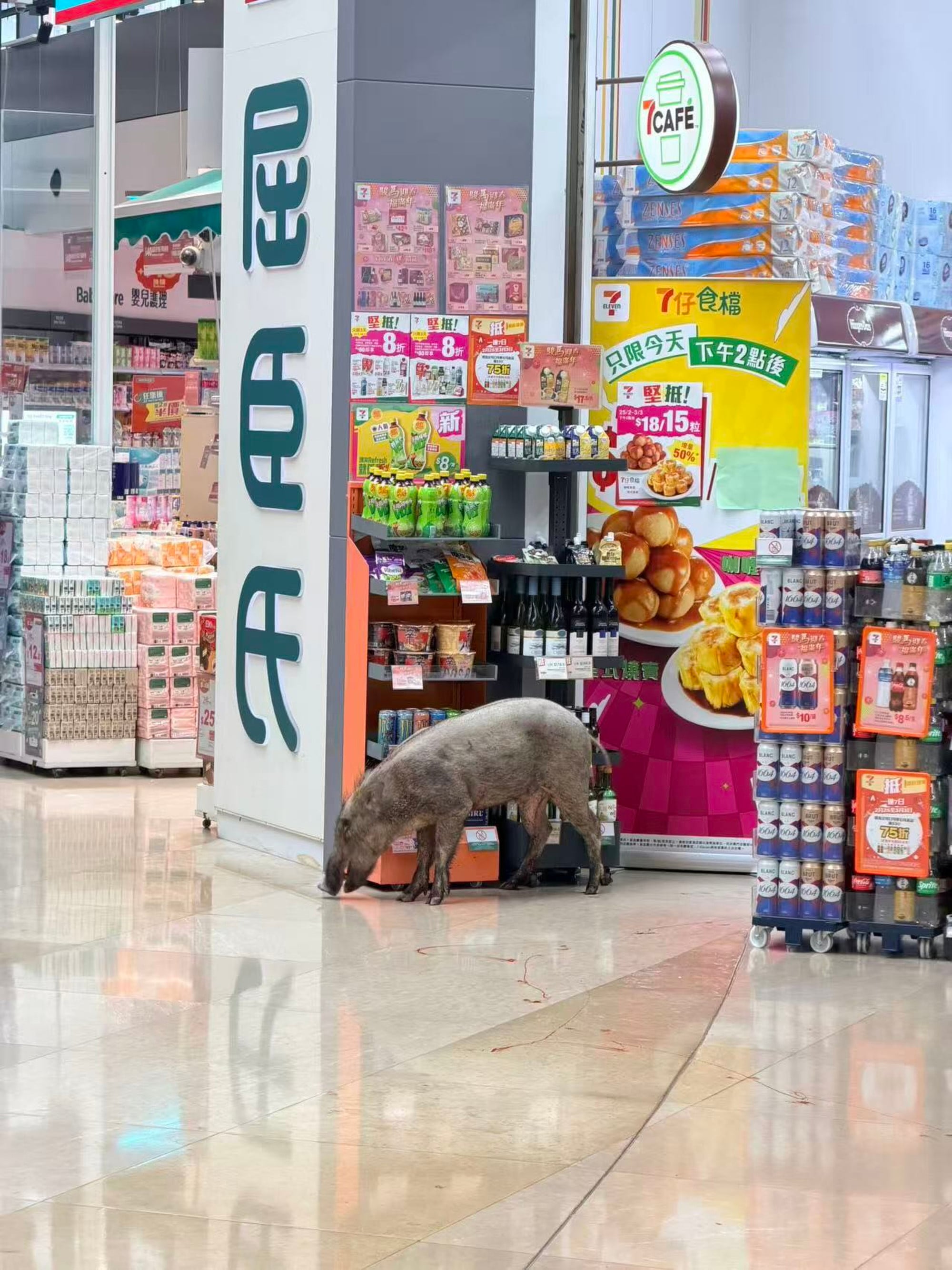
Wildlife experts blame loss of habitat due to urban expansion and illegal feeding for the rise in human-boar conflicts, which have prompted authorities to resort to aggressive control measures, including culling.
The latest department statistics show that the overall wild boar population decreased from 2,000 in 2021 to 1,830 in 2022 and 1,360 in 2023. The number further plunged to 900 in 2024. More than 2,200 wild boars were culled between 2021 and 2025.
As boar numbers continue to decline, the government’s strategies have come under scrutiny for their long-term sustainability, with wildlife experts and advocates calling for a policy review to balance public safety, animal welfare and ecological integrity in Hong Kong, one of the world’s most densely populated cities.
“Sustainability is the main concern,” said Gary Ades, head of the fauna conservation department at Kadoorie Farm and Botanic Garden.
“We have to make sure that we don’t reduce the population to a size which is then not sustainable because these are our native animals and they do have a benefit in our forests.”
A dilemma
In Hang Hau’s Sheung Yeung Village, nestled on a hillside surrounded by greenery, wild boars constantly root through rubbish bins in search of food.
Lau Kai-hong, chairman of Hang Hau Rural Committee and resident representative of the village, said the animals were spotted searching bins about 20 times a month on average.
He said some of the 400 to 500 villagers were afraid of running into wild boars at night when taking out their rubbish.
“Because the areas next to the rubbish stations are quite dark, some residents or domestic helpers who are scared of boars will place the waste next to the station but not inside the rubbish bins, causing boars to find food waste,” he said.
Larger boars could knock over bins in their hunt for food, he said, adding that while such waste was a major attraction for the animals, they also fed on crops like taro or sweet potatoes planted by residents.
But most boars were afraid of people and would retreat into the woods, he noted.
“Normally boars don’t attack people, but some boars are not scared and continue munching food waste even when a car flashes their headlights at them,” he said.
Lau said some villagers supported a cull to protect them from boars, while others were more sympathetic towards the animals. He added that one resident was fined after leaving food to lure boars away from cages set up to trap them.
Sightings are not confined to rural villages, with a string of incidents recently recorded of wild boars venturing into urban areas.
Two adult wild boars and six piglets were spotted near Chuk Yuen (North) Estate in Wong Tai Sin on March 17 before they were captured and put down.
In the same area last Friday, authorities captured another five wild boars before relocating them away from residential areas.
Ades noted that one reason for the recent increase in sightings was the difficulty boars faced finding food during the dry season, which led them to wander into urban areas in search of it.
“In the dry season, which is our winter, wild boars have some kind of feeding hardship because they like to eat worms, beetles, snails, slugs and plant tubers,” he said.
“During the winter in Hong Kong, the ground in the forest is very dry and hard. So it’s a little bit more difficult for them to dig up this food.”

Despite that, he said, the primary causes were human feeding and the city’s unfriendly urban design towards the animals. The lack of consideration for wildlife in infrastructure planning had led to boars becoming easily trapped in urban centres when they strayed out of forests, he added.
“The railing design in Hong Kong is such that wild boars tend to get their heads stuck because the distance between the railings only considers humans,” he said.
“Fences and railings are so badly designed that the animals can’t get back into the forest.”
Further encroachment of forests and hills due to urban expansion also played a role in bringing people closer to wild boars, he said.
Ades added that the animals were mainly acting in self-defence during their encounters with people, which could be triggered by human behaviour such as getting too close to young ones or blocking their escape routes.
He highlighted the importance of not feeding the animals and keeping a safe distance, advising residents to move away slowly if they encountered a wild boar, or to try to get behind a tree or wall for protection if being chased.
To cull or not to cull?
For years, Hong Kong tried a coexistence model after suspending civilian hunting operations for wild boars in 2017 and shifting to a capture, contraception and relocation programme, focusing on moving nuisance animals and sterilising them rather than killing them.
Between late 2017 and late 2021, over 1,090 wild boars were captured, with more than 450 undergoing sterilisation or being administered contraceptives before relocation to remote areas.
But authorities later concluded that sterilisation lagged far behind the animals’ high breeding rate and relocated boars often returned to urban areas for food.
In November 2021, the government replaced the programme with a capture and dispatch policy that humanely culls problem boars.
Official statistics showed that 2,219 wild boars were culled between 2021 and 2025. Last year, 719 were put down. Authorities also recorded 1,130 reports of wild boar sightings or nuisance last year, down from 1,417 in 2021, while four human injury cases related to the animals were recorded last year, down from 20 in 2021.
Ades of Kadoorie Farm said the current culling policy had been successful in cutting the population but stressed the need for a review to ensure it was not reducing the number of boars to an unsustainable level.
He said a systematic scientific study was needed to determine the optimal boar population.
“The culling has helped to reduce the population to a more manageable size,” he said. “The problem with doing this without a scientific study to actually determine how big the population is, is a bit dangerous because we’re making assumptions.”
He added: “We need to know what is the right number of wild boars that can live in the area, happily feeding on the fruits, the plants and the worms without having to stray. If we’ve reached that number, we shouldn’t be culling any more.”
Brian Wong Shiu-hung, a researcher at the Liber Research Community, an NGO focusing on development issues, noted a shift in the public’s perception of animal welfare, with more people questioning the necessity of culling boars amid recent incidents.
He argued that, unlike in Hong Kong, the aggressive measure of culling was typically used as a last resort in some other places and was limited to situations posing immediate threats to people.
“When the policy reaches a point where the animals no longer pose a severe threat to humans, shouldn’t there be a bit more flexibility or a more relaxed approach?” he said.
As the core policy dilemma centres on balancing public safety, animal welfare and ecological integrity, experts called for a comprehensive management plan.
As a start, some suggested stricter no-feeding enforcement as a sustainable way to address one of the causes of the problem.
“If people didn’t proactively feed them, the boars wouldn’t come down [to the urban areas],” Wong said.
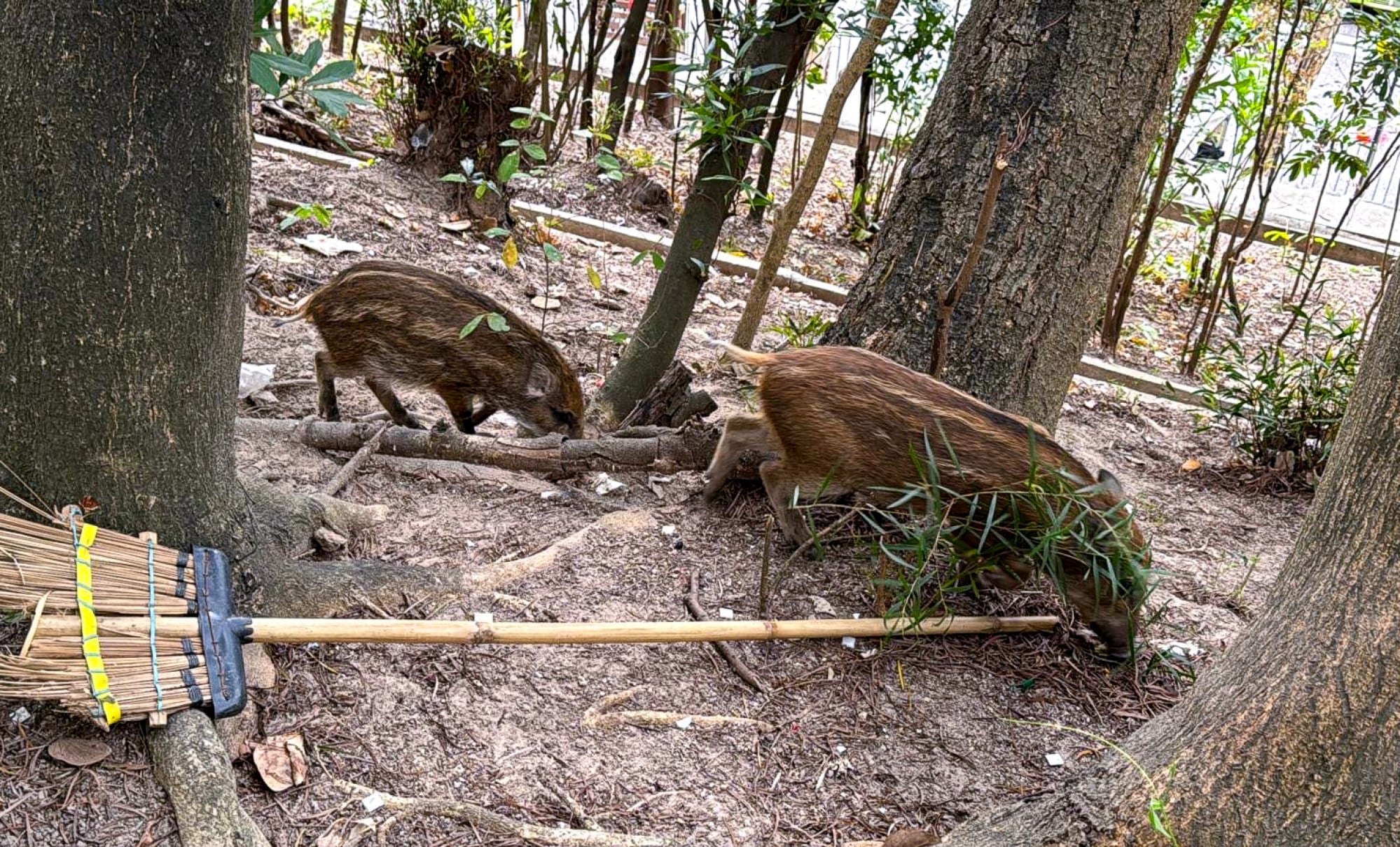
The government amended the Wild Animals Protection Ordinance twice – in December 2022 and May 2024 – expanding the feeding ban area of wild animals from monkey habitats to the whole of Hong Kong to combat people feeding boars and feral pigeons.
Authorities introduced a fixed penalty of HK$5,000 for illegal feeding, while the maximum penalty for the offence in serious cases, such as repeated violations, was increased from a fine of HK$10,000 to HK$100,000 and imprisonment for one year.
Since August 2024, only 41 fixed penalty notices and two summonses had been issued for illegal feeding of wild boars until February this year.
Experts also raised a range of other suggestions and urged the city to draw from the experiences of places such as mainland China and Singapore. They included designing wildlife-friendly infrastructure, such as bridges and tunnels allowing wild boars to cross safely without running into people.
Other measures included installing fences around forests to prevent wild boars from entering residential areas, ensuring the designs do not trap them, and adopting rubbish bins across the city that were resistant to being pushed over by the animals.
The AFCD said about 690 animal‑proof refuse collection facilities had been installed at wildlife nuisance black spots in districts such as Central and Western, Southern and Sai Kung.
‘Dual-track approach’
Lawmaker Peter Douglas Koon Ho-ming noted the dilemma policymakers faced between ensuring residents’ safety and safeguarding animal welfare, emphasising the need to strike a balance.
“If a boar actually injures someone, then culling is something we can understand and accept, otherwise, the public will complain that we are being ‘too soft’ or overly merciful. We understand that boars can be dangerous, they have tusks.”
Koon, who often comments on animal rights, urged the government to adopt a “dual-track approach”, culling boars that injured people while relocating those that were non-aggressive and merely wandering in urban areas.
The AFCD said capture and humane dispatch operations remained one of the key measures in managing the wild boar population, adding that it was essential to sustain the operations to prevent a rebound in the population and maintain overall effectiveness.
“The AFCD will continue to make reference to relevant experience on the Chinese mainland and overseas, and will keep its management measures under review with a view to refining them as necessary,” a spokesman said.
“Our aim is to address the wild pig issue in a prudent and humane manner, while safeguarding public safety.”
Roni Wong Ho-yin, founder of the Hong Kong Wild Boar Concern Group, said given the blurring lines between urban and rural areas, such as the Northern Metropolis megaproject, people should learn to live with wildlife harmoniously.
He called for a return to milder control measures that tranquillised urban area-bound boars and returned them to the mountains before deciding on whether culling was necessary.
Wong called the authorities’ decision to relocate five boars last Friday rather than cull them a “good beginning”.
Ades, highlighting the importance of coexistence, said wild boars played an important role in maintaining Hong Kong’s biodiversity.
By turning over the soil while looking for worms, wild boars effectively aerated and ploughed it, like farmers did when preparing land for planting, allowing seeds to germinate more easily and supporting the growth of new trees and shrubs, he noted.
Wild boars also helped disperse seeds through their dung as they moved around, he said.
“There are good reasons for all of us to want to keep wild boars in the forests because of the role that they play in ecology,” Ades said. -- SOUTH CHINA MORNING POST


