




As the war in Iran disrupts global oil and chemical supplies, China’s coal-heavy energy sector is seizing an unprecedented opportunity. Dannie Peng visited the Changji Hui Autonomous Prefecture in northern Xinjiang – one of China’s four major bases for large-scale, modern coal-chemical production. In the second of a two-part series, she discovers how China is leveraging coal chemicals to offset oil shocks.
It is late April, and northern Xinjiang is already gripped by scorching heat. Salt flats stretch to the horizon, barren and lifeless, until the monotony breaks at Wucaiwan – a boomtown in Changji Hui autonomous prefecture that has risen swiftly on the back of energy development.
Here, the rhythmic roar of machinery shatters the long-standing silence of the Gobi Desert. Dozens of industrial giants cluster tightly in this landscape, including open-pit mines with annual outputs in the tens of millions of tonnes, massive thermal power plants and sprawling chemical enterprises.
This industrial forest of towering chimneys and intricate pipelines forms the heart of the Zhundong National Economic and Technological Development Zone, which sits atop estimated coal reserves of 390 billion tonnes – eclipsing the oil riches of the Persian Gulf in terms of weight.
The zone is also one of China’s four primary bases for modern, large-scale coal-chemical production.
In the country’s far west, a “new Middle East” centred on energy extraction, power generation and chemical processing is undergoing rapid development – only with coal instead of oil. Here, some of the world’s largest and most advanced facilities are converting coal into liquid fuel, clean gas, plastics, chemical fertilisers and more.
For the better part of the past century, oil – nearly 60 per cent of which is concentrated in the Persian Gulf – has been the undisputed backbone of global industrial and economic development, particularly in the transport and petrochemical sectors.
However, the war against Iran launched by the United States and Israel this year has profoundly destabilised this foundation. This geopolitical shift has presented China with a strategic window to pivot towards a coal-based industrial system.
Fuelled by monumental reserves and decades of breakthroughs in chemical engineering and applied technology, China’s coal-to-chemical industry is poised to exert a transformative global impact.
Coal chemicals as a strategic alternative to conventional petrochemicals trace their origins back to around the time of the second world war. However, industrial experts note that China remains one of a few countries still betting heavily on this technological route.
“Over the past two decades, China has been the only country globally to sustain investment in both research and industrial capacity expansion in the coal-chemical sector,” said Kevin Tu, managing director of Agora Energy China, a Beijing-based energy and climate research organisation.
After decades of sustained research and development investment and large-scale industrial expansion, China has emerged as the global leader in coal chemicals, dominating both scale and technological advancement.
This strategic energy layout has provided the country with an unexpected cushion against external disruptions and generated a global impact – particularly as the US-Israeli conflict with Iran threatens international oil and petrochemical supplies.
In late March, a goods train loaded with polyvinyl chloride (PVC) – the world’s third-most widely produced synthetic plastic – set off for the first time from a station in the Zhundong energy hub. Heading south, it passed through Guangxi province on the Vietnam border, bound for markets in Southeast Asia.
The producer of the cargo, Xinjiang Yihua Chemical Co Ltd, sits just north of Wucaiwan. Utilising coal as a primary feedstock, the company produces essential chemicals such as urea, melamine and PVC. While its products previously flowed mainly to eastern and southern China, they have become the “new darlings” of international markets this year, as the Iran war destabilises oil and gas supplies and sends prices soaring.
Urea, the world’s most widely used nitrogen fertiliser, is another example of how China’s coal-based approach is helping it to weather the storm of the Middle East crisis. While the war has pushed global urea prices up by 30 to 40 per cent to roughly US$700 a tonne, supply and pricing have remained stable in China, largely due to long-term policy planning.
While other major exporters like Russia, Qatar and Saudi Arabia rely on oil and natural gas to produce urea, coal-rich China has developed an alternative system that now accounts for roughly 80 per cent of its production capacity. According to industry analysts, this has allowed China to maintain annual urea exports of around 5 million tonnes, supplying major agricultural economies such as India and Brazil.
By the end of 2025, Xinjiang’s raw coal output growth had ranked first among China’s major coal-producing provinces for four consecutive years. While some of this coal is shipped directly to other parts of China, most of it is used locally for power or chemical production.
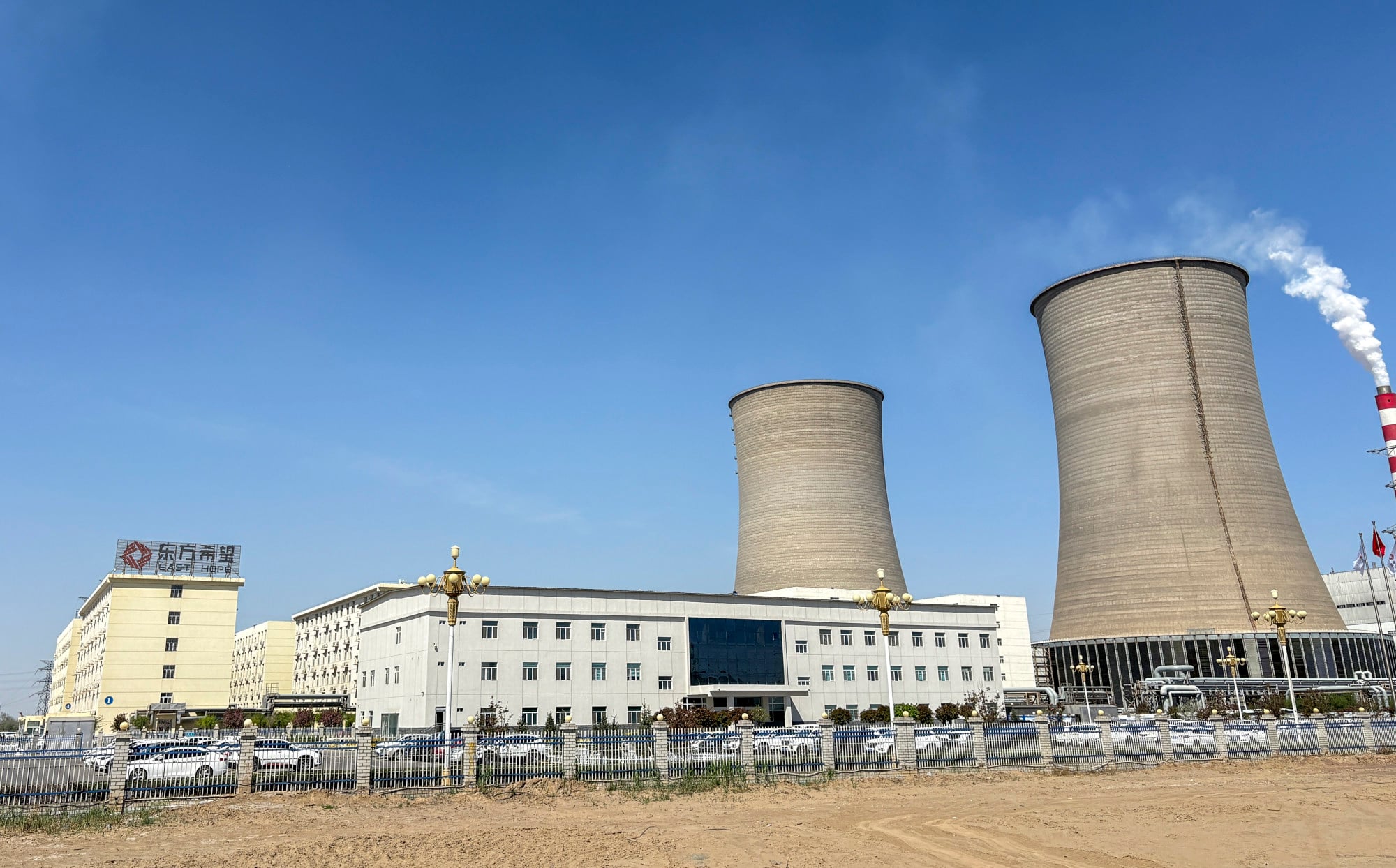
The local government is stepping up efforts to develop modern coal-chemical industries, promoting the clean and efficient use of coal.
On March 20, construction began on the world’s largest coal-to-ethylene glycol project in the Turpan prefecture in eastern Xinjiang. State media reported that the project was expected to produce 2.4 million tonnes of ethylene glycol per year.
Ethylene glycol, a toxic alcohol, is used as an industrial antifreeze for vehicles and aeroplanes and as a raw material in plastics manufacturing.
According to state news agency Xinhua, the plant will produce coal-based ethanol and other high-value chemicals as by-products, and will be equipped with green electricity coupling and carbon capture and storage technologies. It is expected to be completed in 2028.
Also in March, the Zhundong development zone announced it was accelerating a 1.6 million tonne annual coal-to-olefins project, with total investment nearing 40 billion yuan (US$5.9 billion).
At the same time, the energy hub is fast-tracking three coal-to-gas projects, each with an annual capacity of 2 billion cubic metre (70.6 billion cubic feet) and led by developers including the state-backed National Energy Group.
Once these are completed, Xinjiang will become the nation’s largest coal-to-gas production base, with fuel piped to power the developed cities of eastern China.
In Hami, a prefecture-level city in eastern Xinjiang, construction is under way on the world’s first project applying the most cutting-edge direct coal-to-liquid (CTL) technology. Direct and indirect coal liquefaction both convert coal into liquid fuel, which can be refined into petrol, diesel and other hydrocarbons.
Its first phase includes a mine and facilities for coal-to-oil conversion and wind-solar power generation. Phase two will involve the co-production of paraxylene for use in textile manufacturing and other chemicals.
The Hami project builds on the successful implementation of a similar project in northern China’s Inner Mongolia autonomous region. In 2008, the world’s first million-tonne CTL commercial plant was commissioned in Ordos, Inner Mongolia. Relative to Ordos, the Hami project delivers superior efficiency, lower energy use and improved operational reliability.
“China’s coal-chemical industry leads the world in both scale and technological level,” Wang Xiujiang, a deputy secretary general with the China Petroleum and Chemical Industry Federation, a national non-profit organisation based in Beijing, said in an interview.
Wang, who started researching the industry in 2005, described China’s progress in the sector as “huge”.
Over the course of his 20-year career, he has witnessed numerous technologies transition from laboratory to large-scale industrial application, with some achieving production levels of millions of tonnes.
“This remarkable achievement is built on China’s decades of consistent scientific research,” he noted.
Perhaps the best example is the breakthrough and mass application of coal-to-olefins technology stemming from a Chinese laboratory.
Driven by energy security concerns following global oil shocks, post-reform China sought to reduce its reliance on oil by pioneering coal-based olefin production – a strategy mirrored by several other nations.
Dubbed “industrial grain”, olefins are a vital raw material used in the production of tens of thousands of products, including plastics, synthetic fibres and rubber.
While synthesising methanol from coal was relatively mature by the 1980s, the second step – converting methanol to olefins – remained a global challenge. At the time, two research teams at the Dalian Institute of Chemical Physics – affiliated with the premier Chinese Academy of Sciences (CAS) – were tasked with joint development.
After years of scientific progress despite economic setbacks, the Dalian team finally partnered with the state-owned mining and energy company Shenhua Group to build a million-tonne project in Baotou, Inner Mongolia, in the early 2000s. This marked the world’s first industrial-scale coal-to-olefins demonstration and entered commercial operation in 2011.
Over the last four decades, the institute has continuously refined its technology, known as Dalian Methanol-to-Olefins (DMTO), to drive large-scale, low-carbon development. It has now evolved into the world-leading third generation stage, as widely reported by Chinese news outlets.
Thanks to new catalysts and innovations in reactors and processes, single industrial units can now double their methanol throughput. Meanwhile, the researchers from Dalian are experimenting with integrating artificial intelligence to optimise processes autonomously and shorten R&D cycles.
In 2025, the world’s largest coal-to-olefins project came fully online in Ordos, using third-generation DMTO to produce over 3 million tonnes of olefins annually. The project employs coal gasification, purification and methanol synthesis processes to produce olefins, which are ultimately processed to manufacture everything from plastic goods, luggage and apparel to aerospace materials.
According to a January report by the state-owned China Science Daily, Beijing has approved a total of 36 DMTO projects countrywide. Twenty of these are already in operation, with total annual capacity exceeding 24 million tonnes in coal-rich areas such as Shaanxi and Inner Mongolia.
“[This] technology has led and supported the rapid development of China’s coal-to-olefins industry. It plays a significant role in alleviating oil supply shortages and ensuring energy security and the stable operation of the petrochemical industry chain,” Liu Zhongmin, a scientist leading the innovation and director of the Dalian Institute, told China Science Daily.
“Compared with traditional coal use, such as combustion, [the technology] reduces carbon dioxide emissions by about half,” said Liu, who is also a member of the Chinese Academy of Engineering.
Beijing has every reason to back its coal-based industries.
As Tu at Agora Energy put it: “China’s dependence on crude oil imports exceeds 70 per cent, while natural gas import dependence is around 40 per cent. In this context, external market volatility and geopolitical uncertainties naturally reinforce the importance of energy security.”
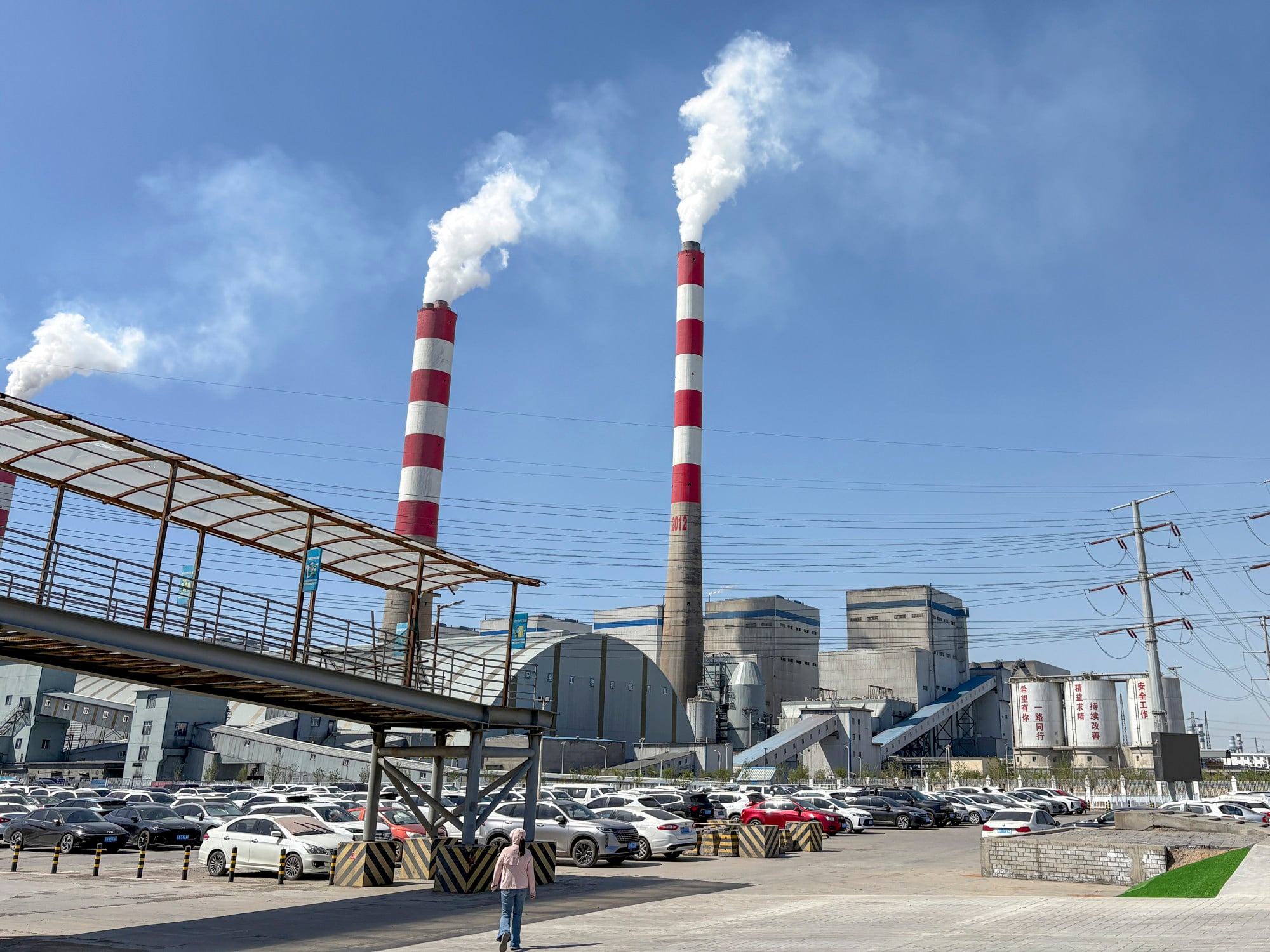
Yet Tu also emphasised that there was little cause for undue alarm, noting Beijing’s long-term, multidimensional strategy to bolster energy resilience.
“China is pursuing a broad portfolio of measures, including expanding strategic petroleum reserves, diversifying import sources, boosting domestic oil and gas production, accelerating transport electrification and improving energy efficiency,” he said.
“The development of coal-chemical industries should be understood as one component within this broader strategy.”
Tu also cautioned against unchecked industrial expansion, stressing the need to balance development objectives with environmental and resource constraints. “Future development of the sector should fully account for factors such as water availability, carbon emissions and overall system efficiency,” he said.
Indeed, despite its scale, coal-based output cannot yet fully replace petrochemical routes in China, according to Wang Xiujiang, an expert from the China Petroleum and Chemical Industry Federation, a trade body.
He noted that China’s coal-to-oil industry accounted for less than 5 per cent of national output, while coal-based production supplied under one-fifth of the country’s total olefins. Consequently, these chemicals still rely partly on imports.
Wang echoed Tu’s concerns, emphasising that while China’s modern coal chemical industry had made remarkable progress, critical challenges regarding water, the environment, technology and standards could not be ignored.
He especially highlighted the industry’s high water demand, noting that China’s coal-rich areas, mainly in the north, suffered from water scarcity, which inevitably constrained the sector’s sustainable development.
“The coal industry’s reliance on quantity, speed and extensive growth models is over,” he warned. “The sector must shift towards innovation-driven transformation.” -- SOUTH CHINA MORNING POST


