
A Chinese military research team has released what it described as the first publicly available visible light-infrared ship detection data set, a resource that could sharpen maritime target recognition for drones, missiles or surveillance systems operating at night or in environments where radar is degraded or suppressed.
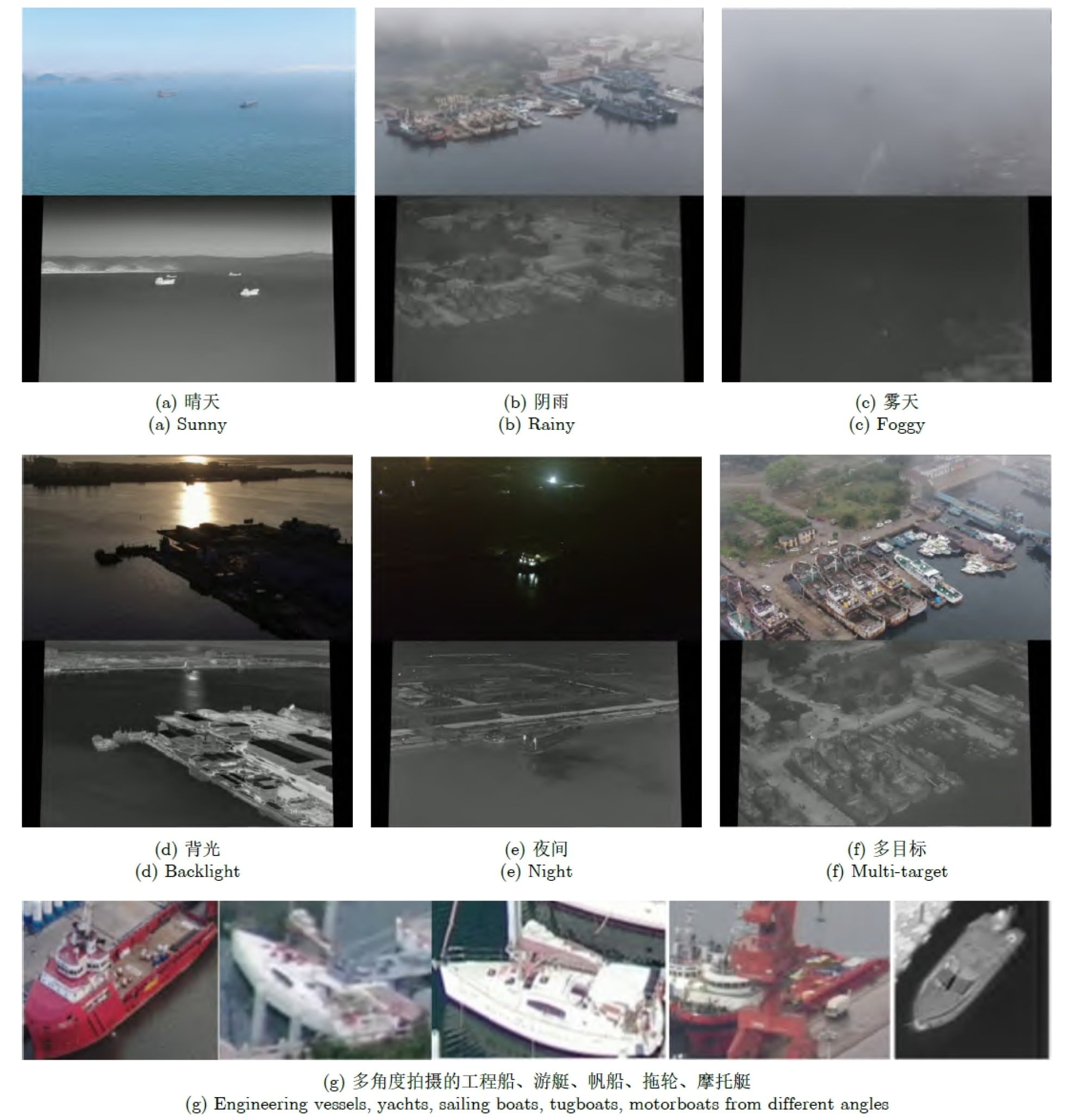
The dual-modal ship detection (DMSD) data set contains more than 2,000 paired visible and infrared vessel images and nearly 20,000 annotated instances, according to the peer-reviewed study published in January by the Chinese-language Journal of Radars.
Ship recognition at sea is markedly harder than object detection on land. Maritime environments are shaped by glare, shifting weather, long-range imaging degradation and cluttered backgrounds, all of which can undermine classification accuracy.
The challenge was illustrated in February when an Iranian claim of a successful strike on aircraft carrier USS Abraham Lincoln near the Strait of Hormuz was dismissed by Washington, which said the missiles or drones involved did not come close.
The episode underscored a familiar problem: reaching the vicinity of a ship is one thing, but reliably detecting, identifying and tracking a moving naval target under contested conditions is another.
The study was led by researchers from the Naval Aeronautical University in Yantai, Harbin Engineering University and the Chinese Academy of Sciences’ Institute of Computing Technology.
Earlier multimodal data sets, such as the TNO image fusion data set and the large-scale lowlight visible-infrared person collection, only focus on urban settings or pedestrian detection.
Existing maritime data sets are all unimodal. MassMIND, for example, contains 22,364 ship-detection instances but provides only infrared imagery at a resolution of 640×512, the researchers said.
In contrast, DMSD has been designed specifically for maritime environments, pairing high-resolution visible-light images at 1920×1080 with aligned infrared images at 640×512, according to the paper.
“Data were acquired using [synthetic aperture radar or SAR], radar, visible-light cameras, infrared cameras and other sensors mounted on shore-based and airborne platforms,” corresponding author Long Gao wrote.
The images were collected in coastal waters off Yantai, in the eastern province of Shandong, and range from clear skies to overcast weather, rain, fog and other lowlight conditions.
The data set includes observations captured at noon, dusk and during the night – introducing significant variation in illumination angles and contrast, a key factor in training robust detection algorithms.
The researchers plan to release additional modalities, including radar, SAR and inverse SAR to build a broader multimodal resource for maritime target detection, according to the paper.
The release of the data set – an unusual move for research with clear dual-use implications – was presented as a contribution to computer vision and remote-sensing research, aimed at easing a persistent bottleneck in all-weather maritime surveillance.
The authors did not explain why such a strategically relevant resource was being released, nor did they comment on possible military applications. -- SOUTH CHINA MORNING POST