Chilean President Gabriel Boric left La Moneda presidential palace for the last time on Wednesday, ending a four-year term with a call for national unity that most observers took as a reference to the Chinese undersea cable dispute that defined his final weeks in office.
“I wish success to the incoming government, success for Chile, and may our homeland always come first, above any interest, above any disagreement,” Boric said from the palace courtyard, where he arrived with his partner, Paula Carrasco, shortly after 8am.
Boric handed power to Jose Antonio Kast, a far-right lawyer and former congressman who won the November election with 58 per cent of the vote. Kast is seen as ideologically close to US President Donald Trump and was among the first Latin American leaders to congratulate him after his 2024 victory.
The Chilean president’s remarks calling for union “above any interest ... [and] disagreement” came after a weeks-long public feud between the two men over a Chinese cable that almost derailed the transition entirely.
The dispute centred on the Chile-China Express, a fibre-optic cable project backed by China Mobile International that would have linked the Chilean port city of Concon to Hong Kong.
Washington sanctioned three Chilean officials over the project, calling it a national security threat.
The move enraged Kast, who demanded a public apology from Boric and announced the suspension of the transition task force, halting more than 40 meetings between the outgoing and incoming government teams. Santiago eventually shelved the cable project.
The delegations sent by China and the United States to the inauguration each reflected that tension.
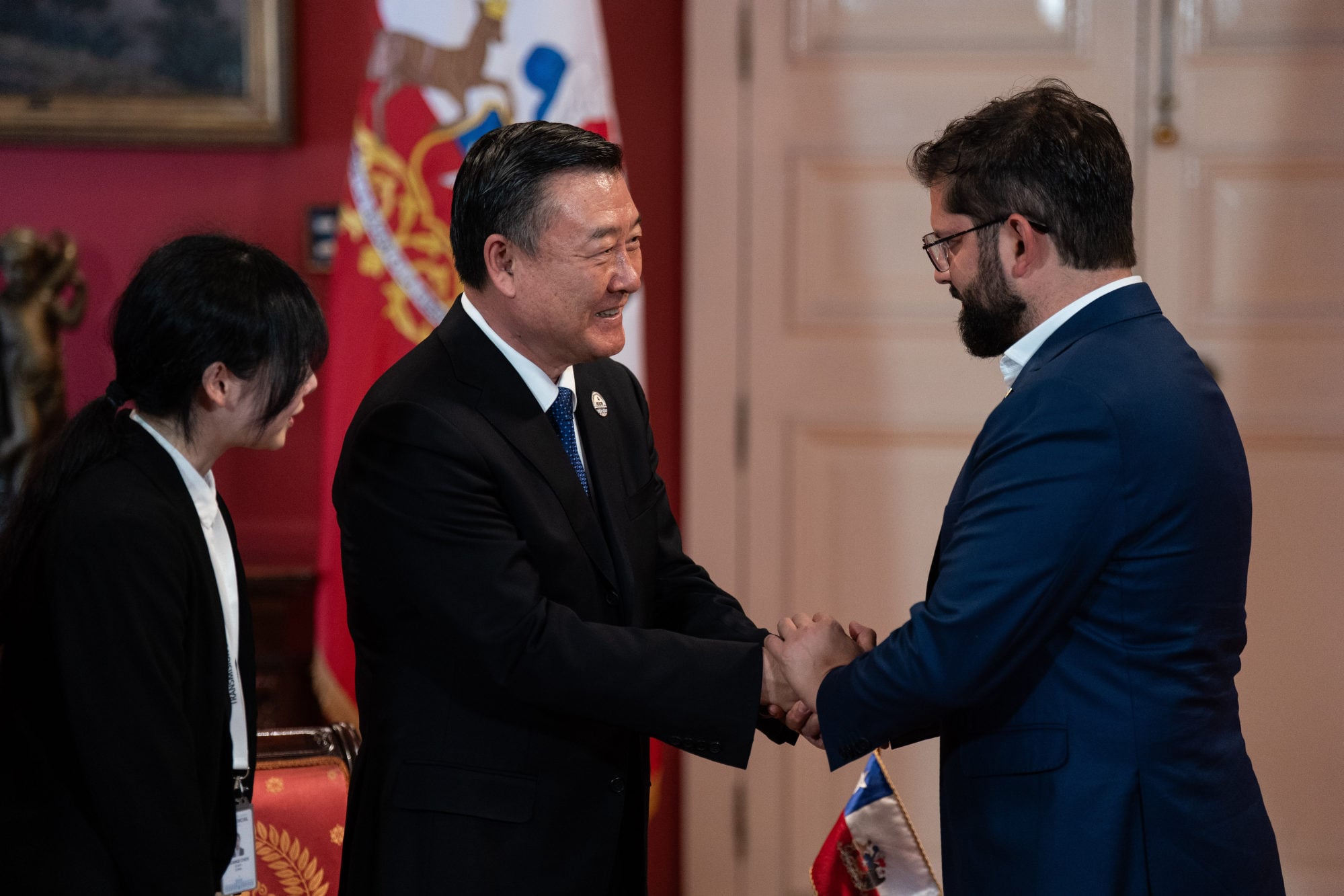
China sent Ni Hong, its Minister of Housing and Urban-Rural Development, as Xi Jinping’s special envoy. At recent inaugurations elsewhere in Latin America, Beijing sent higher-ranking officials.
For Luiz Inacio Lula da Silva’s return to power in Brazil in January 2023, for example, Xi sent Vice-President Wang Qishan. For Argentine leaders Alberto Fernandez and Javier Milei, Beijing sent a vice-chairman of the National People’s Congress.
Ni holds no seat on the Politburo Standing Committee or the Central Committee of the Communist Party. The appointment was read in Chile as a deliberate step down from those precedents, given the state of Chile-US relations over the cable.
But on the eve of the handover, Boric met with Ni at La Moneda, one of the few bilateral meetings held among the more than 80 foreign delegations attending the ceremony. Neither Santiago nor Beijing released a readout of the discussion.
Beijing also moved to contain the diplomatic damage before the ceremony. Chinese Ambassador to Santiago Niu Qingbao said on Tuesday that his country had “full confidence that the friendship and cooperation between China and Chile will continue”.
China is Chile’s largest trading partner, accounting for 32.7 per cent of the country’s total trade in 2025, worth roughly US$65 billion. The United States ranked second at 17 per cent.
The US delegation also changed at the last minute. Secretary of State Marco Rubio had been expected to lead it, but Washington announced on Tuesday it would send Deputy Secretary of State Christopher Landau instead.
Officials cited Rubio’s schedule following Iran’s weekend military offensive.
Landau has family ties to Chile. His father, George Walter Landau, was the US ambassador to Santiago from 1977 to 1982, during the Pinochet dictatorship.
Christopher Landau wrote on social media on Tuesday that it was “an especially emotional trip” for him, and that he planned to “launch a new phase in our bilateral relations”.
He was one of the first US officials to criticise Boric publicly. In November, Landau said it was “a shame” that ties between the two countries had not been stronger, and called Boric’s public criticism of Trump a sign of “how low the relationship has fallen”.
In a sign that the controversy surrounding the project is far from over, US ambassador to Chile Brandon Judd said on Wednesday, en route to a lunch with president-elect Jose Antonio Kast in the coastal city of Valparaiso, that Washington will continue to demand that the government explain how information and intelligence shared with Chile will be protected.
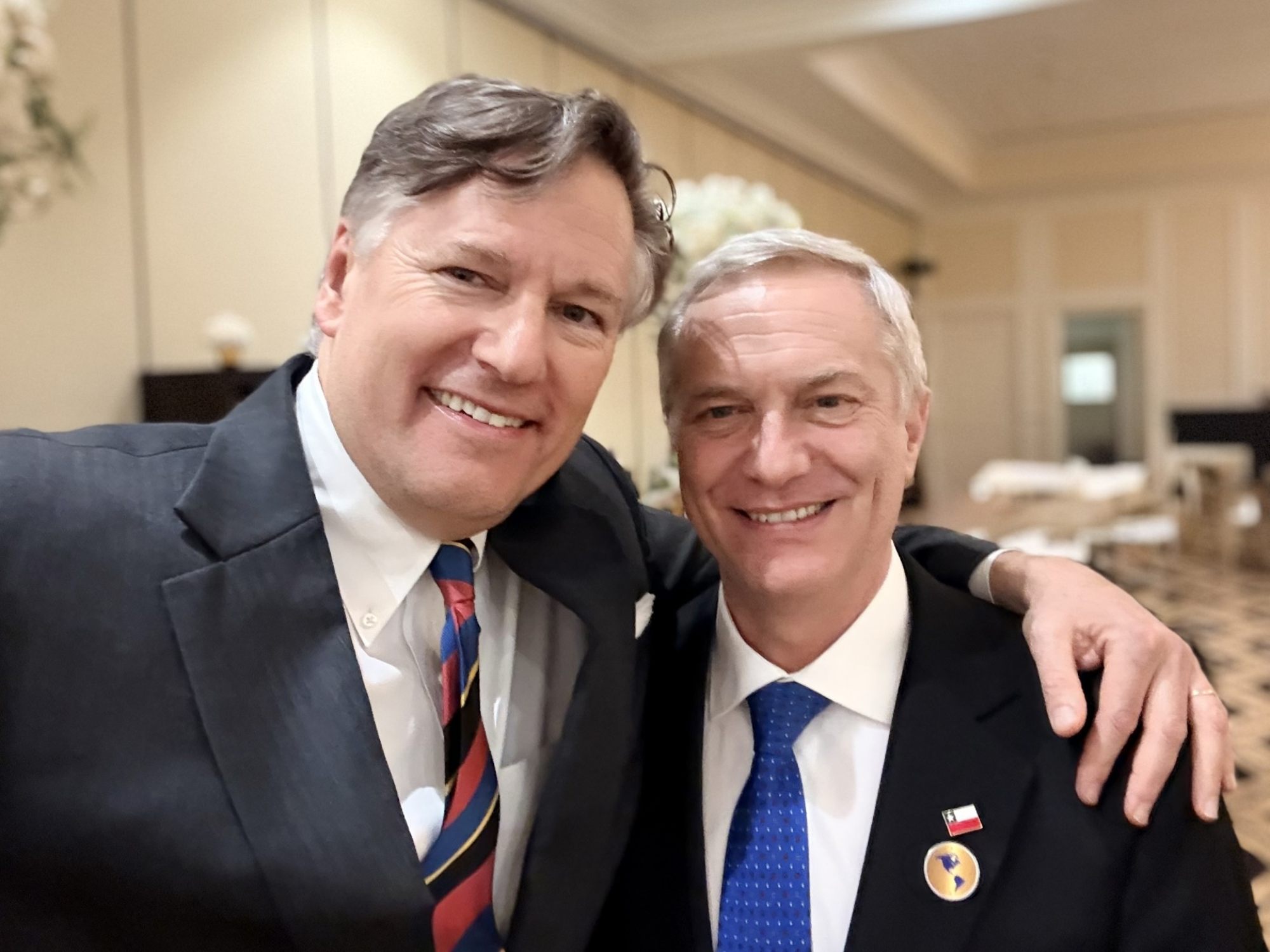
Judd, a former Mormon missionary who worked in Chile before becoming a US Border Patrol agent and was appointed to the ambassadorship last year, told reporters that the submarine cable issue would remain on the agenda with the incoming administration.
“We know that the owner of this cable is not Chile; the owner will be another country. [Chilean] sovereignty will be lost, and we will never be able to work together as long as we have to worry about the security of the information we share,” Judd said.
Seeking to mend the diplomatic rift, Kast travelled to Miami last week to attend Trump’s “Shield of the Americas” summit, a gathering experts believed aimed at countering Chinese influence in Latin America.
There, he refused to comment on the cable controversy but said that close ties with both Washington and Beijing are “not incompatible”, vowing to keep trade commitments with China. -- SOUTH CHINA MORNUNG POST