Chinese Premier Li Qiang has called on Hong Kong to boost its governance efficiency and leverage its “unique strengths” in connecting with the world while being supported by the rest of the country.
In the government work report he delivered at the opening session of the National People’s Congress (NPC) in Beijing on Thursday, the country’s No 2 official also stressed the need to transform the Greater Bay Area into an international innovation and technology (I&T) hub.
Li underscored the need to enhance the governance efficacy of Hong Kong and Macau in accordance with the law to drive economic and social development, while ensuring the two cities were ruled by patriots.
Beijing supported both cities in better integrating with overall national development and making contributions to its advancement, he said.
“Hong Kong and Macau should leverage their unique advantages and important roles of maintaining close connections with both the mainland and the world, thus fostering long-term prosperity and stability there,” Li said.
Last year, the premier encouraged Hong Kong to deepen international exchanges and cooperation, grow its economy, improve people’s livelihoods and faithfully safeguard the constitutional order stipulated in the country’s constitution.
This year was the first time Li, who assumed office in 2023, used the annual work report to clearly call on the city to improve its governance.
Xia Baolong, director of the Hong Kong and Macau Affairs Office, urged the city to improve its executive-led governance model in January.
The NPC is the country’s highest organ of state power and a legislative body that formally approves decisions made by the Communist Party of China. The institution, which meets annually for the “two sessions”, functions to set national economic targets and implement legal frameworks.
Li told the NPC session that the central government had stepped up support for I&T innovation, including efforts to develop the bay area into a world-class incubator for technology.
“[The central government will] promote the integration of technological innovation with industrial innovation, build Beijing, Shanghai and the Guangdong-Hong Kong-Macau Greater Bay Area into international innovation and technology hubs, and create a world-class incubator for I&T,” Li said.
Highlighting Beijing’s efforts to advance national I&T development, Li said the central government had backed the construction of pilot-scale testing platforms and strengthened intellectual property (IP) protection for emerging industries.
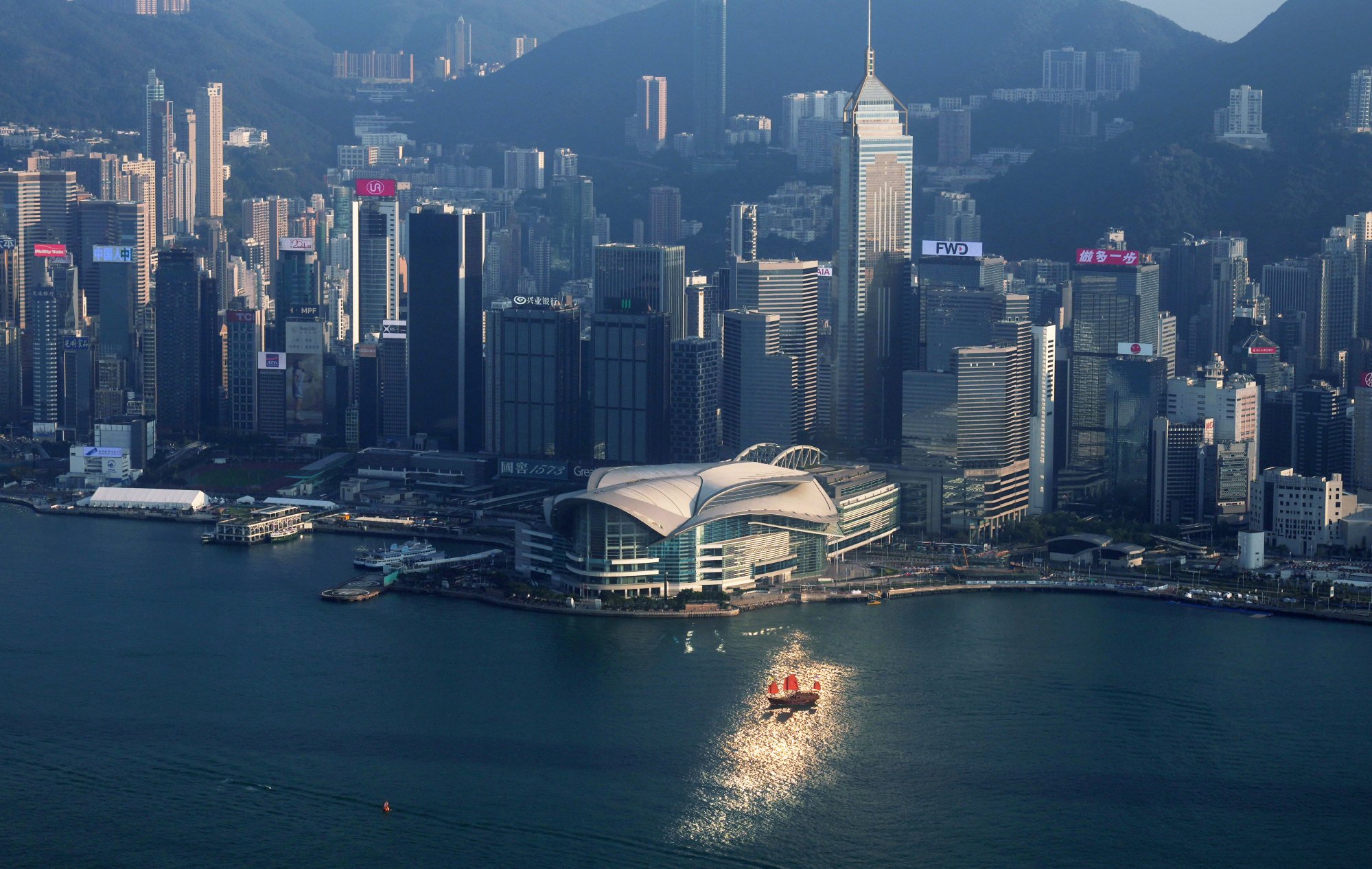
Separately, the National Development and Reform Commission’s report on the country’s economic and social development in 2025 and outlook for this year emphasised the need to strengthen cooperation between Hong Kong and mainland China in the areas of the economy, trade, technology and culture, while refining policies to facilitate the daily lives of Hongkongers living over the border.
The report underlined the importance of consolidating Hong Kong’s status as an international financial, shipping and trade centre, and supporting its development into a global I&T hub.
Tam Yiu-chung, formerly the city’s sole delegate to the NPC Standing Committee, said the call for Hong Kong to improve its governance reflected that Beijing found room for the city administration to do better.
He said the call could be seen to be prompted by the various administrative hiccups in the government over the past year, though Beijing would not spell them out explicitly.
Lau Siu-kai, a consultant to the semi-official Chinese Association of Hong Kong and Macau Studies think tank, echoed that Li’s work report focused on improving the city’s governance efficiency and its economy.
“Hong Kong has to effectively implement its five-year plan, promote industry transformation and resolve social conflict amid complex and volatile international geopolitics,” he said.
“Beijing hopes that the Hong Kong administration’s governance efficiency can be enhanced to complete the missions it is tasked.”
Lau said the work report also required Hong Kong to better serve the country, noting the city could leverage its strengths as an international metropolis with extensive global networks.
“As China has been suppressed and isolated by the West, China needs to build economic and trade relations with different countries, especially when many suffer from the US’ protectionism and tariffs and wish to strengthen ties with China,” he said.
“Hong Kong can help China, such as drawing capital and helping mainland enterprises expand their overseas business, especially when Middle East capital may flow into the city and mainland China to avoid risk in light of the US-Israel war on Iran.”
Alfred Wu, associate professor at the National University of Singapore’s Lee Kuan Yew School of Public Policy, said Beijing expected Hong Kong to enhance governance efficiency to better implement the 15th five-year plan.
“There was always some sense that the issue is about lagging behind [because of] bureaucracy, and in terms of understanding the whole country’s development,” he said.
Wu added that Beijing required Hong Kong to leverage its global connections to better serve national interests amid China-US rivalry, including bringing more foreign investment to support the “inner circulation” of the domestic economy.
Jonathan Choi Koon-shum, a member of the Standing Committee of the National Committee of the Chinese People’s Political Consultative Conference and chairman of the Chinese General Chamber of Commerce in the city, said Beijing expected Hong Kong not only to integrate into national development but also to maintain and deepen its global ties.
Choi identified Hong Kong’s adherence to international standards as a core strength, particularly in high-end service industries such as ship sales and purchase, and insurance.
Frank Chan Fan, an NPC deputy and former Hong Kong secretary for transport and housing, said the city should leverage its strengths to connect with the international community and support national development.
“A very advantageous strength of Hong Kong is that it can connect to the world because historically Hong Kong has had very close ties with foreign countries and overseas regions,” he said.
Chan said the city government needed to fully advance technological innovation and education to serve the broader economic strategies of the country.
Separately, Sun Qingye, deputy director of Beijing’s Office for Safeguarding National Security in Hong Kong, said on the sidelines of the two sessions that “tremendous work” lay ahead in national security.
“The focus is on finance security, technological security and talent security; these are areas where we must make strong efforts,” Sun said, highlighting cybersecurity in particular. “These are shortcomings that we must fix.”
Chinese Vice-Premier Ding Xuexiang is expected to meet Hong Kong delegates in Beijing on Friday, while Wu Qing, chairman of the China Securities Regulatory Commission, reportedly attended a discussion with the local delegation on Thursday. -- SOUTH CHINA MORNING POST