
As a first-year computer science student in Hanoi, Hoang Le started trading crypto from his university dorm room, egged on by his gamer friends who were making a killing.
At one point his digital holdings swelled to US$200,000 (RM785,00) – around 50 times the average annual income in Vietnam.
But they crashed to zero when the bottom fell out of bitcoin and other cryptocurrencies in recent months.
Getting wiped out “hurt a lot”, he said, but he also learned a valuable lesson: he has come to think of the losses as “tuition fees”.
“When profits were high, everyone became greedy,” said Le, now 23, adding that “it was too good to be true”.
Unlike neighbouring China which has banned cryptocurrencies outright, Vietnam has allowed blockchain technology to develop in a legal grey area – barring its use for payments but letting people speculate unimpeded.
As a result the young-and-upwardly mobile country of 100 million has been at the forefront of crypto adoption, with an estimated 17 million people owning digital assets.
Only India, the United States and Pakistan have seen more widespread usage, according to a 2025 ranking by the consultancy Chainalysis.
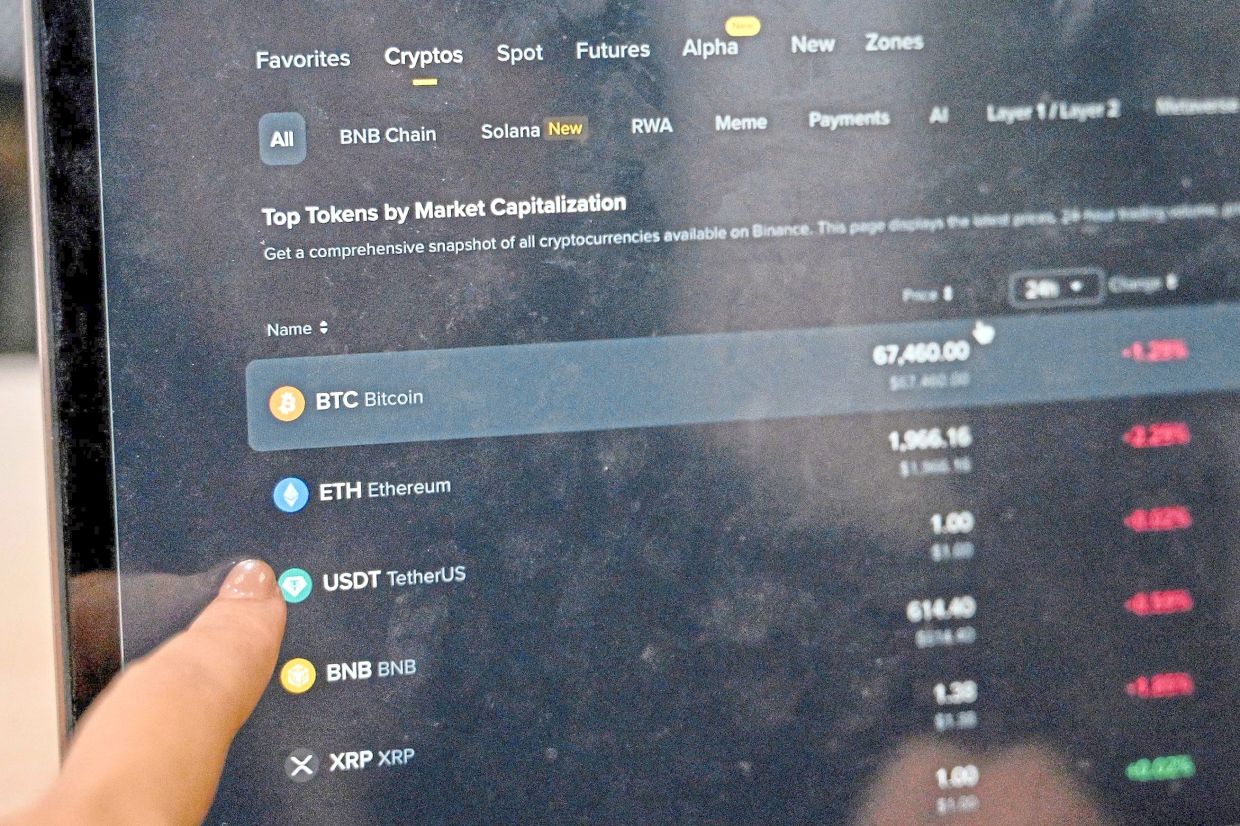
But what once looked like first-mover advantage increasingly looks like a liability as investors stare down a crypto winter.
The price of bitcoin has almost halved since hitting a record high above US$126,000 last October, and other digital tokens have slid even further.
Vietnamese crypto startups hawking everything from Ts to blockchain-based lending and trading services have been hammered, with bankruptcies and layoffs roiling the industry.
“Many companies have shut down because of this crisis,” said Tran Xuan Tien, head of Ho Chi Minh City’s blockchain association.
He added that others are “downsizing and conserving capital to extend their runway”.
Nguyen The Vinh, co-founder of blockchain firm Ninety Eight, said his company has laid off nearly one-third of its staff.
There was more “restructuring” to come, he added, given the gloomy outlook.
“The market will likely remain difficult for years, not just months, so we need backup plans.”
Until recently, Vietnam’s crypto scene was a wild west, with highly speculative ventures and outright Ponzi schemes flourishing alongside startups offering legitimate products.
The government warned about the dangers of crypto and broke up several huge scam operations, including one that allegedly swindled nearly US$400mil (RM1.57bil) from thousands of investors. But it did not move to crush the industry as Beijing did, instead opening “a window for domestic businesses to experiment”, according to Tien.
Under top leader To Lam, who has pursued growth-oriented reforms, Vietnam has formally embraced the blockchain industry and is gradually asserting control over the estimated US$100bil (RM390bil) market.

Last year it passed a law recognising digital currencies, bringing them under a regulatory framework for the first time.
It came into effect in January but investors have questions about how it will be implemented.
Hanoi has also announced a five-year crypto trading pilot programme, which will allow Vietnamese firms to issue digital assets.
But lingering regulatory ambiguity has kept many firms based in the country from formally registering there, opting instead to file paperwork in places such as Singapore and Dubai.
Vinh says some firms are folding and others downsizing or pivoting because of both the “prolonged downturn and an unclear legal framework”.
And new entities are struggling to gain traction as investor sentiment sours.
Huu, 24, said fundraising for his crypto-product startup has suddenly become much harder, and asked that only his first name be used for fear of hurting his business.
Foreign investors were once enticed by promises of 400% and 500% returns, he said, but were now discovering they “might lose everything”.
“Over the past few months, things have gone downhill badly.”
Founders including Huu and Vinh said the current downturn is part of a natural business cycle, and stronger firms would eventually emerge offering better products.
But that is cold comfort for the nearly 55% of individual Vietnamese crypto investors who according to one market analysis reported losses last year.
“In Vietnam, a lot of people trade crypto,” Huu said. “When prices fall, people complain about losses and the overall mood becomes very gloomy.” — AFP