




Combine three wary nations, deep historical mistrust, rapid technological change, the most destructive weapons ever developed and a US unwilling to extend Thursday’s last formal nuclear weapons guardrail, and you have the ingredients for much worse geopolitical tension, if not a slide towards global disaster, warn nuclear weapons negotiators, analysts and former government officials.
While Moscow has offered to formally extend its New Strategic Arms Reduction Treaty (New Start) with the US for another year, US President Donald Trump has refused, arguing he can forge a “better agreement” that includes China, a move many, including Beijing, see as a non-starter.
“Rather than extend ‘NEW START’ (A badly negotiated deal by the United States that, aside from everything else, is being grossly violated), we should have our Nuclear Experts work on a new, improved, and modernised Treaty that can last long into the future,” Trump said on Thursday on social media.
But experts fear that could spell the death of arms control efforts at a time of great global tension, given the president’s other priorities and short attention span. This week, for the first time in half a century, the world is without a legally binding agreement to hold nuclear weapons in check.
“There is growing pressure in the United States to build up the US arsenal in response to a variety of factors, including the build-up of China’s arsenal,” said James Acton, nuclear policy co-director with the Carnegie Endowment for International Peace.
A worst-case scenario sees a US nuclear build-up prompting Russia to respond, Acton said, heaping pressure on China to accelerate its expansion, causing the US to bolster its weapons cache as the downward spiral continues. “We are on the verge of a new arms race,” he added.
Will risks be ignored in favour of more immediate gains?
At one level, little has changed, experts said, with any tit-for-tat moves likely to play out over months and years.
But problems weighing on the world’s three largest nuclear powers – from midterm elections and military purges to national party congresses, wars and wobbly economies – also make it easy to all but ignore these risks in favour of more immediate demands.
Amid expert debates over silos, delivery systems and payload calculations, there is a parallel war of words as Moscow and Beijing work to score points over Washington’s aversion to a treaty extension.
China’s foreign ministry has framed Moscow as a trustworthy player doing everything possible to avoid an unfettered arms race, even as the US fails to consider “constructive Russian proposals” and exhibits a “lack of political will” to extend the limits.
Moscow “will act in a measured manner and responsibly” after the expiration, Russian President Vladimir Putin told Chinese President Xi Jinping on Wednesday, according to Kremlin aide Yuri Ushakov.
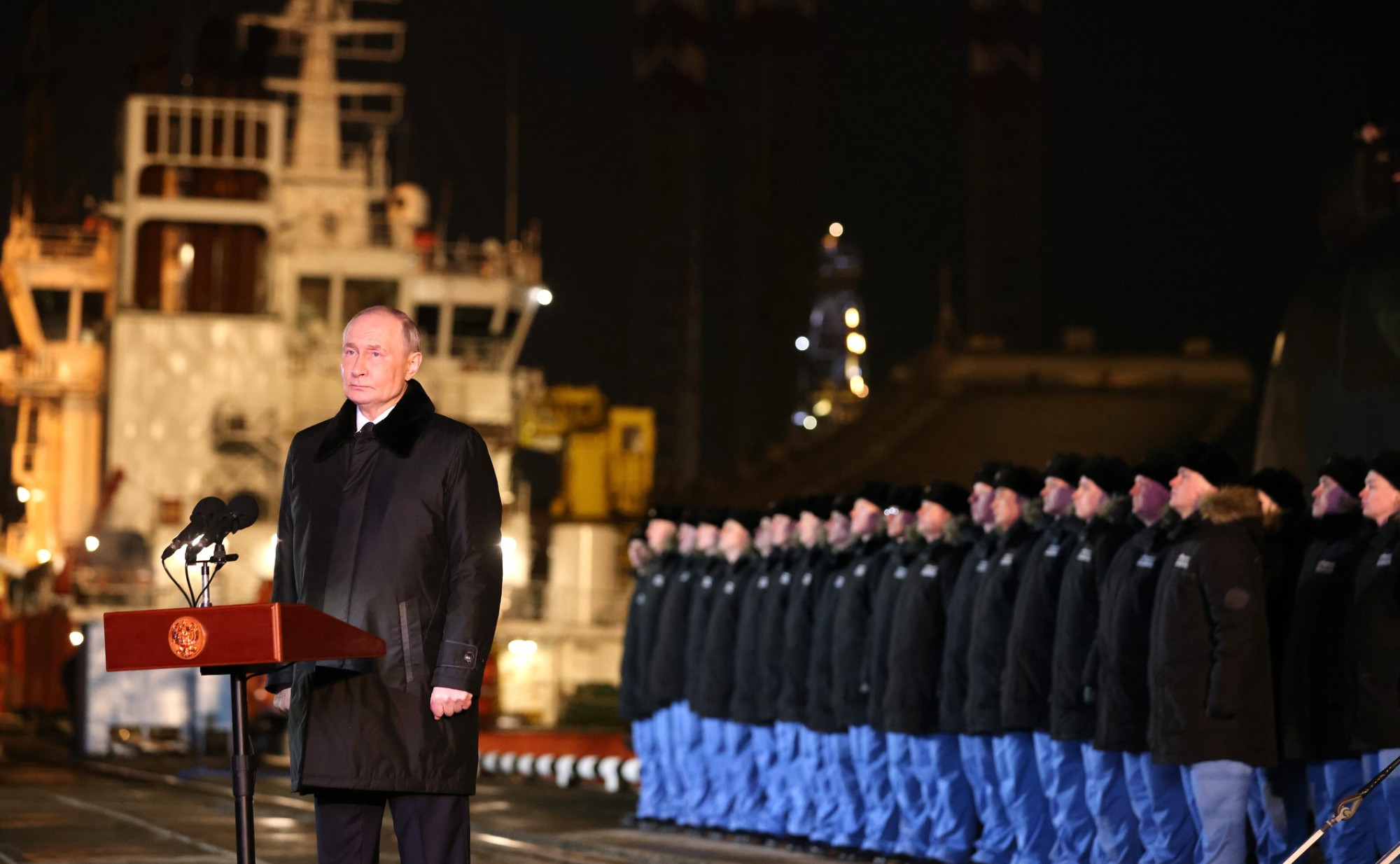
This comes as both authoritarian states contrast their behaviour against Trump’s volatile tariff increases, Venezuela attack, threats against Greenland and Canada and distrust of Nato and traditional US allies.
One factor behind Washington’s stance reflects the administration’s limited number of decision makers, analysts said, as real estate developer and US special envoy Steve Witkoff struggles to carry out Trump’s mandate: to “win” the peace in the Russia-Ukraine and Israel-Gaza conflicts and enforce his “locked and loaded” threats against Iran.
“You see Witkoff flying all around the world every other day to put down wars and negotiate a bunch of agreements,” said Joseph Rodgers, a nuclear weapons expert with the Centre for Strategic and International Studies. “It’s also really difficult to negotiate something like that when you fire all your negotiators in the government.”
Arms agreements at the best of times take patience and a commitment to incremental progress, analysts add, qualities that the headline-grabbing president has not always embraced, not to mention what some see as his conciliatory stance towards Russia.
Experts said the dynamics of a nuclear arms race would likely roll out in fits and starts.
Russia and the US have significant numbers of disabled or mothballed warheads that can be relatively quickly “uploaded”. More warheads can replace existing single-missile warheads, allowing them to hit separate targets independently.
The number and range of versatile dual-use strategic aircraft, such as the US B-21 bomber, could be expanded. And submarines whose nuclear missile tubes have been rendered inoperable under the treaty could be dry-docked to restore their ability to fire.
But the US, with its ossified, bureaucracy-laden defence industrial base, faces significant challenges relative to its more agile counterparts in China and Russia.
Other factors, meanwhile, are fuelling tension and strategic uncertainty, analysts said.
China no longer adheres to its ‘no-first strike’ doctrine
Beijing, long content to avoid the Cold War mud wrestling between Moscow and Washington under its decades-long “no-first strike” doctrine, has pivoted in recent years in favour of a rapid nuclear build-up.
That’s seen it resist arms-control talks, with the Foreign Ministry arguing this week that these are “neither fair nor reasonable”, presumably until Beijing reaches rough parity.
The US Pentagon estimates Beijing now has some 600 warheads, with 1,500 projected by 2035, compared with 1,550 deployed warheads and 700 active missile launchers each for the other two under New Start limits.
“To have true arms control in the 21st century, it’s impossible to do something that doesn’t include China, because of their vast and rapidly growing stockpile,” US Secretary of State Marco Rubio told reporters Wednesday.
Analysts said behind China’s no-talks stance is a belief that a large nuclear arsenal is essential for an aspiring global power and provides China with leverage and options in any showdown, including over Taiwan.
“Xi Jinping has decided that a larger nuclear arsenal is necessary to get China respect,” said Acton.
Further impeding any treaty extension are divisions within US administration ranks and among nuclear weapons experts, analysts said.
Hawks, including many in the administration, say an extension would only worsen US disadvantages by freezing warhead totals even as Moscow and Beijing widen their lead in “exotic” missile launching systems.
After 1990, believing nuclear weapons were obsolete and that it had all but “won” the Cold War, Washington essentially stopped innovating.
China, meanwhile, doubled down on fourth-generation fast-breeder reactors, hypersonic missiles and fusion energy advances; and Moscow focused on “doomsday” strategic weapons, nuclear-powered cruise missiles able to stay airborne for days and Poseidon “mega-torpedo” underwater drone that could detonate and cause a tsunami, devastating enemy coastlines.
“The United States took and enjoyed a pretty long nuclear holiday,” said Philip Sheers, a defence expert with the Centre for a New American Security. “We’ve been behind the eight ball.”
Furthermore, even if the three nuclear powers agreed to negotiate, their asymmetric arsenals complicate efforts to impose equitable limits compared with the Cold War, when the US and Soviet Union had roughly comparable weapon systems.
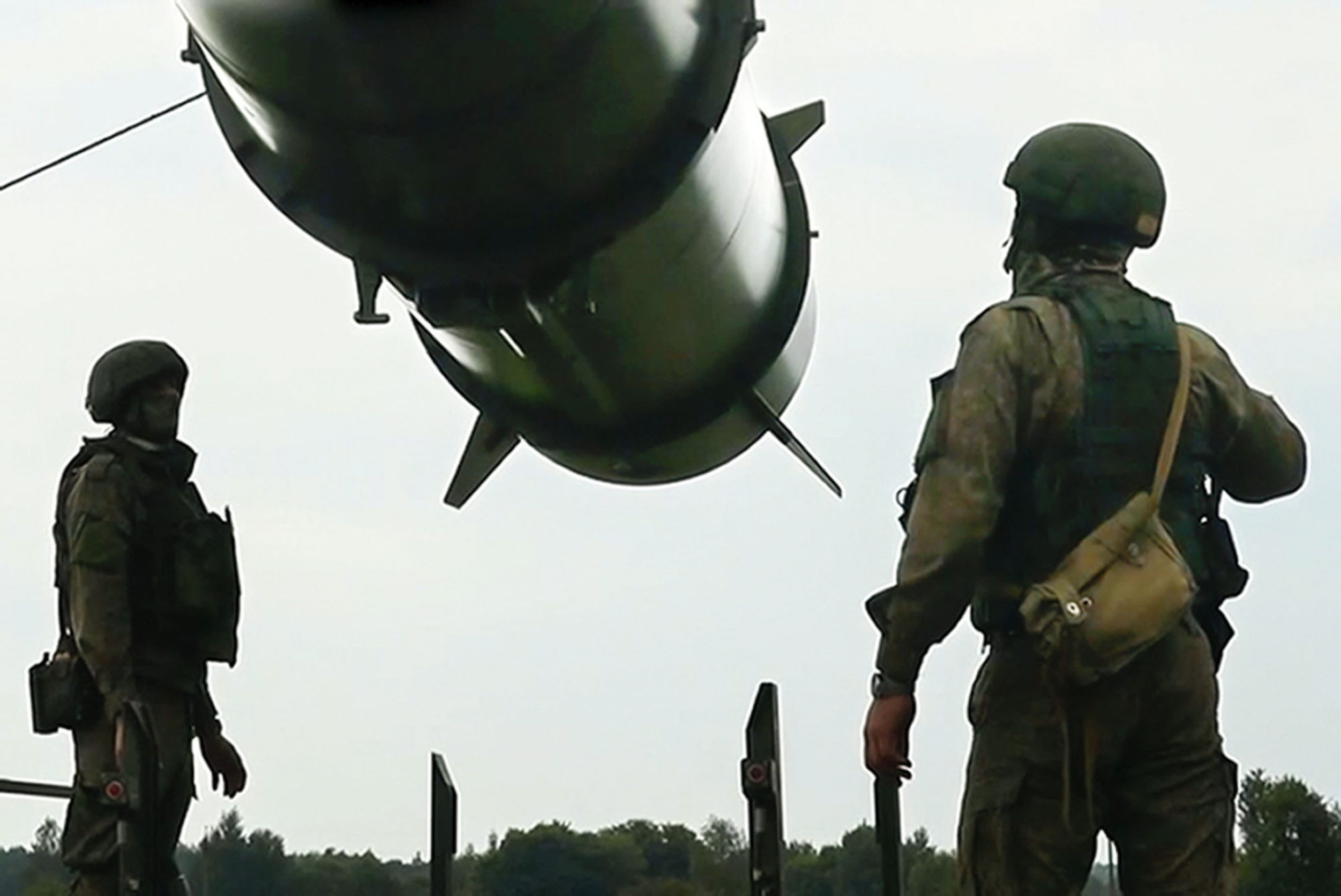
Some of this gets too into the weeds, however, say others.
“As somebody who’s living relatively close to the Pentagon, in the event of a nuclear war, I’m entirely indifferent whether I’m incinerated by a traditional [intercontinental missile] or some newfangled hypersonic,” said Acton. “I would question whether that makes any sense in the real world.”
There’s also a numbers game.
Even if Beijing and Moscow accepted warhead limits on par with Washington’s, the Pentagon would want more than either China or Russia has individually – a likely non-starter for those two – fearful they might combine, forcing the US to deter a potential two-front nuclear war.
There have been signs of cooperation. In recent years, Moscow has shared early-warning systems and exported technology, fuel and technical expertise to China for fast-breeder reactors used to amass plutonium stockpiles. The two also conducted dual-use strategic bomber exercises off Alaska in July 2024 and the South China Sea in December 2025.
Opposing US views on a treaty extension were aired in the Senate Armed Services Committee testimony this week during a hearing titled: “Strategic Competition in an Unconstrained, Post-New Start Treaty Environment.”
Retired Navy Admiral Charles Richard, former commander of US Strategic Command, argued that extending the ban was worse than useless and instead advocated a rapid build-up of warheads and new delivery systems to bolster deterrence and intimidate adversaries. Talks should not be held unless China participates and all weapon systems are included, he added.
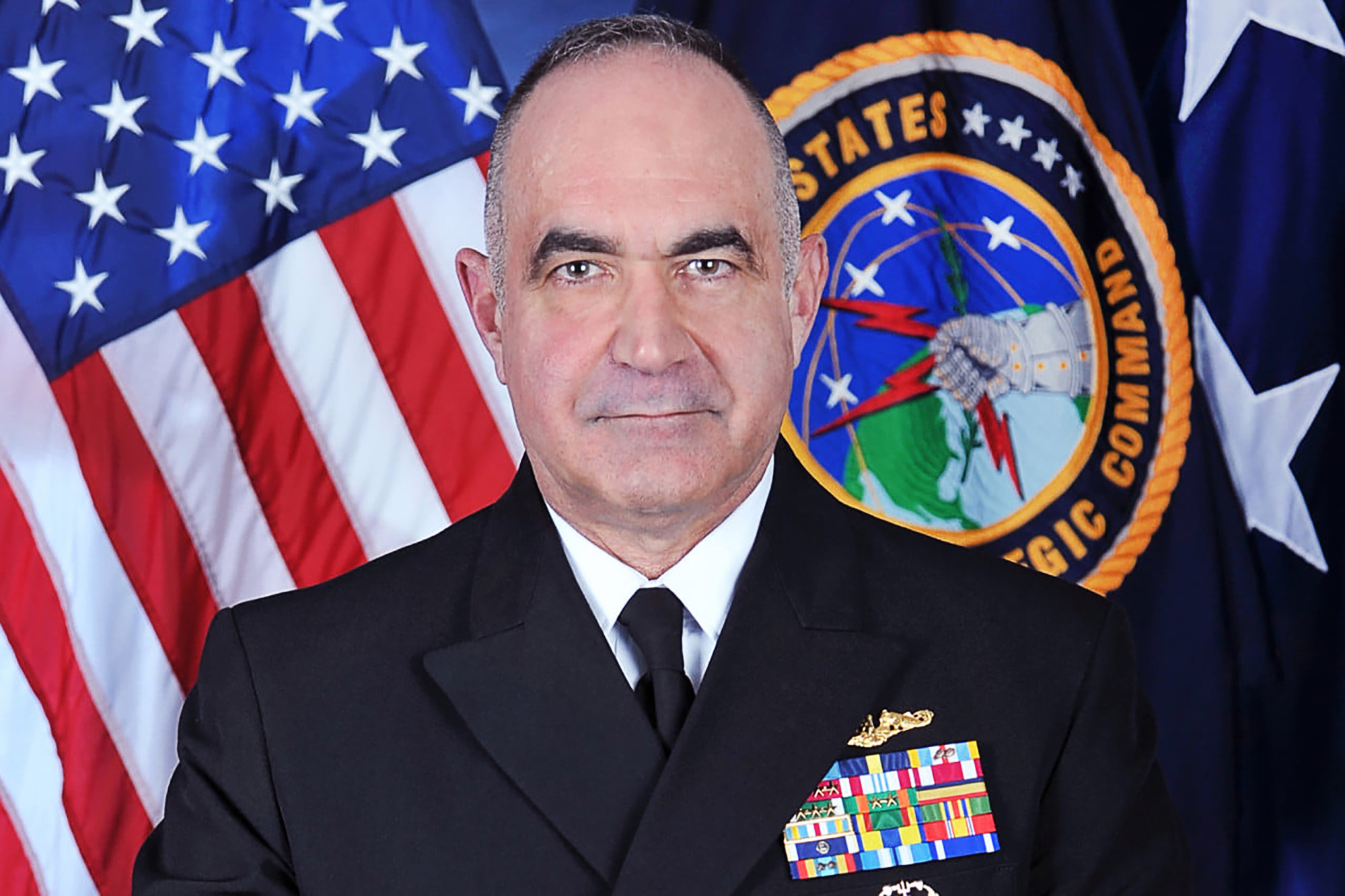
“Russia is not a friendly potential partner. China is not a lesser threat,” he said. “China is growing its nuclear arsenal ... at breathtaking pace.”
“We cannot allow the credibility of our nuclear deterrent to erode.”
Hammering out details will take time, so early discussions are essential
Others argued that this all-or-nothing approach is doomed to fail and does not reflect how the world works.
New Start limits were not achieved in an instant but were hammered out in stages over decades, said Rose Gottemoeller, the lead US negotiator for the New Start deal, through a series of agreements covering the size of test explosions, the size and subsequent banning of above-ground testing, and eventual cuts in warhead numbers.
“We have to be self-confident in our ability to work this problem over the next decade,” she argued. “As long as China is approached to wrestle with notions of nuclear risk that it is concerned about, I think that we can get into early discussions with them.”
“We can make progress with Russia and with China on parallel tracks,” she added.
Another huge concern is the risk of proliferation given the potential number of rogue actors, and the risk that Trump’s pressure on traditional allies to pay more for their defence could see Japan, South Korea and some European states pursue their own programmes.
“Burden sharing is fine, percentage of GDP is fine,” said Angus King, an independent senator from Maine. “But when it intimates a withdrawal of extended deterrence under the nuclear umbrella, so-called, it invites proliferation to currently non-nuclear states.”
The depth of distrust and the enormous stakes are seen, perhaps most poignantly, in the unwillingness of the big three to even forge a legally binding agreement to ensure that humans are part of any artificial intelligence decision-making when using the fearsome weapons.
“Fortunately, the world hasn’t seen their use in warfare since 1945,” said Rodgers. “There is hope if we keep pushing. But the door for diplomacy is still largely closed.” -- SOUTH CHINA MORNING POST


