
Mexican President Claudia Sheinbaum on Thursday defended her government’s decision to impose new import tariffs, hours after the Senate approved legislation allowing duties of up to 50 per cent on more than 1,400 products from Asian countries.
The measure, widely seen as aimed at curbing Chinese imports, comes as Mexico prepares for a review of its trade agreement with the United States and Canada next year.
Sheinbaum described the move as part of her administration’s plan to strengthen domestic production and protect small and medium-sized businesses.
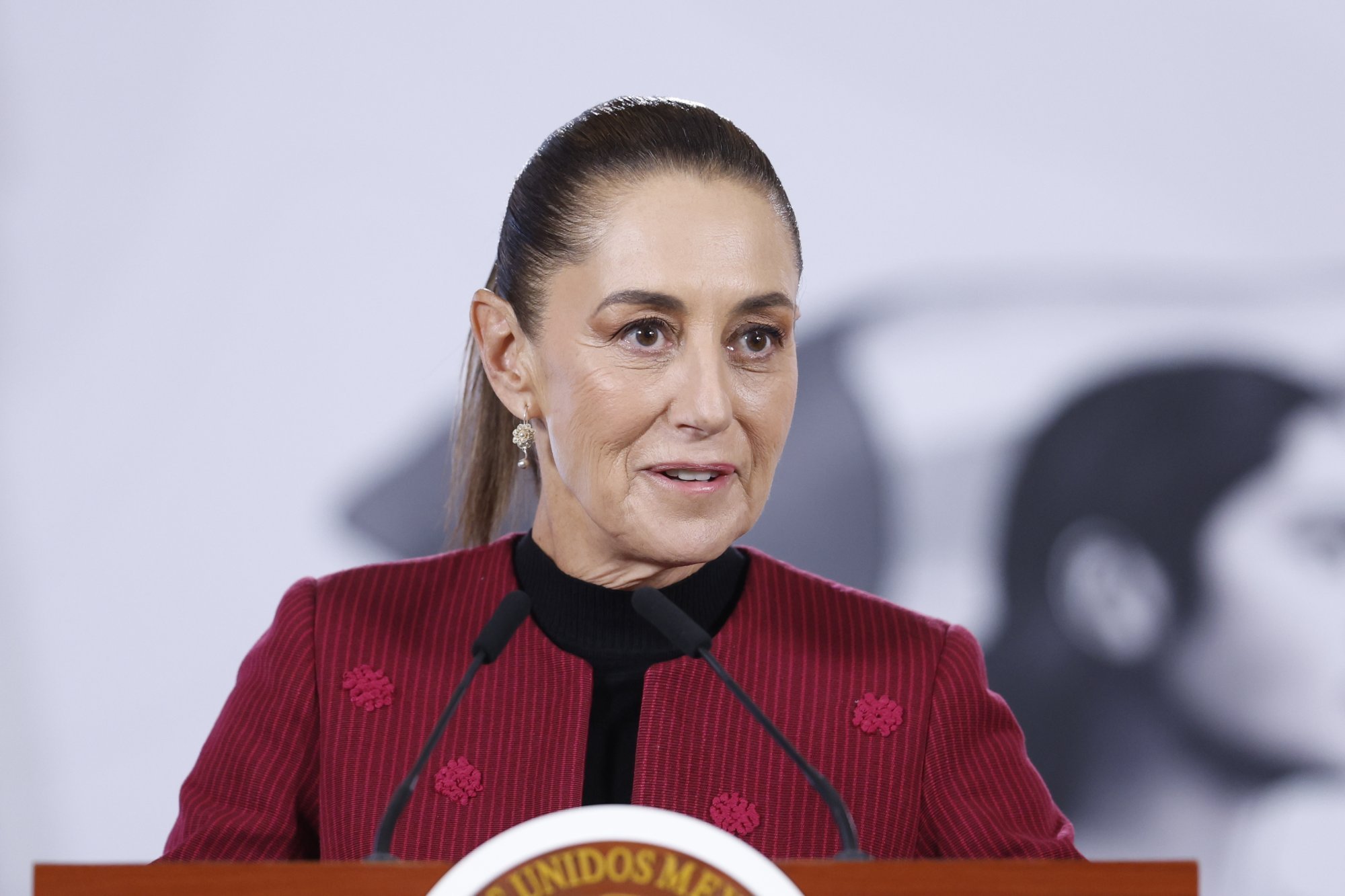
“We want Plan Mexico to be fulfilled without causing a problem for the national economy, and within that framework Congress approved these tariffs,” she told reporters at the National Palace.
“They are aimed at countries with which Mexico does not have a trade agreement. It is not about restricting trade between nations.”
The Senate passed the reform with 76 votes in favour, five against and 35 abstentions, after the Chamber of Deputies endorsed it earlier in the day.
The law applies to 1,463 products ranging from textiles and footwear to household appliances, vehicles, auto parts, plastics and metals, with tariffs set between 5 and 50 per cent.
According to the Finance Ministry, the measure could raise about MXN$52 billion (US$2.88 billion) next year. Officials noted the goal is to protect local industries and reduce dependence on cheap imports from countries without trade agreements with Mexico.
China’s Ministry of Commerce responded on Thursday, criticising the new duties and warning that they would harm Chinese exporters.
A spokesperson in Beijing urged Mexico to “correct its erroneous practices of unilateralism and protectionism as soon as possible”.
The ministry stated that an investigation launched in September into trade and investment barriers in Mexico remains ongoing.
In its written statement, the ministry acknowledged that some tariff rates were reduced compared with the original draft, particularly for certain components, but said duties on light industrial products and textiles would still damage Chinese commercial interests.
“China welcomes countries resolving their differences through trade agreements, but no agreement should be conditioned on harming the development of world trade, nor should it damage China’s legitimate interests,” the spokesperson said.
“We hope Mexico will attach great importance to this and act with prudence.”
Sheinbaum explained that her government held meetings with both Mexican and foreign business leaders before finalising the measure, seeking to avoid sudden increases in prices or supply disruptions.
“Our interest is not to create conflict with any country. We have a good relationship with China and we respect them,” she commented.
“The reason for these adjustments to the law has to do with strengthening the national economy. The goal is to keep the dialogue going.”
Economy Secretary Marcelo Ebrard is expected to outline in the coming days which industries stand to gain most from the new tariffs.
The measure coincides with preparations for the 2026 review of the United States–Mexico–Canada Agreement.
The pact, which replaced Nafta in 2020, requires a joint review every six years, giving each member the option to extend it for another 16 years or seek changes.
US officials have previously raised concerns that Chinese manufacturers use Mexico to assemble goods later exported to the American market under preferential conditions.
Washington has also called for stricter rules in sectors such as steel, aluminium and automotive parts to prevent Chinese inputs from entering North American supply chains.
Both the Biden and Trump administrations have maintained or expanded tariffs on Chinese goods.
Earlier this year, US President Donald Trump reinstated duties on imported metals and warned that Mexico and Canada should not become export platforms for China or other Asian economies.
Sheinbaum noted that Mexico intends to keep communication open with all affected countries.
“Our position is to continue working with the government of China, South Korea and other countries with which we do not have a trade agreement,” she remarked.
Mexico’s government maintains that the tariffs comply with its international commitments and are intended to support industries weakened during the pandemic.
Officials explained that the policy also aims to preserve jobs in the textile and automotive sectors and narrow Mexico’s trade deficit with countries that lack bilateral accords.
Sheinbaum concluded that her government’s priority is to expand production within Mexico.
“What we want is to recover the textile industry, which has lost a lot, mainly since the pandemic,” she noted. “And as with the textile industry, we also want to strengthen the automotive industry in Mexico.” -- SOUTH CHINA MORNING POST