
An emotional message scribbled on a paper trash bag left on a high-speed train by a mother, expressing her frustration over her teenage child’s addiction to electronic devices, has sparked widespread discussion about parenting on mainland social media.
The message resonated with a young passenger days later.
This “message in a bottle” was written by a passenger from Ningbo, in eastern China’s Zhejiang province, on October 29.
The trash bag, containing the handwritten note, went unnoticed by cleaners in time and was discovered two days later by a university student who sat in the same seat, according to the Ningbo Evening News.
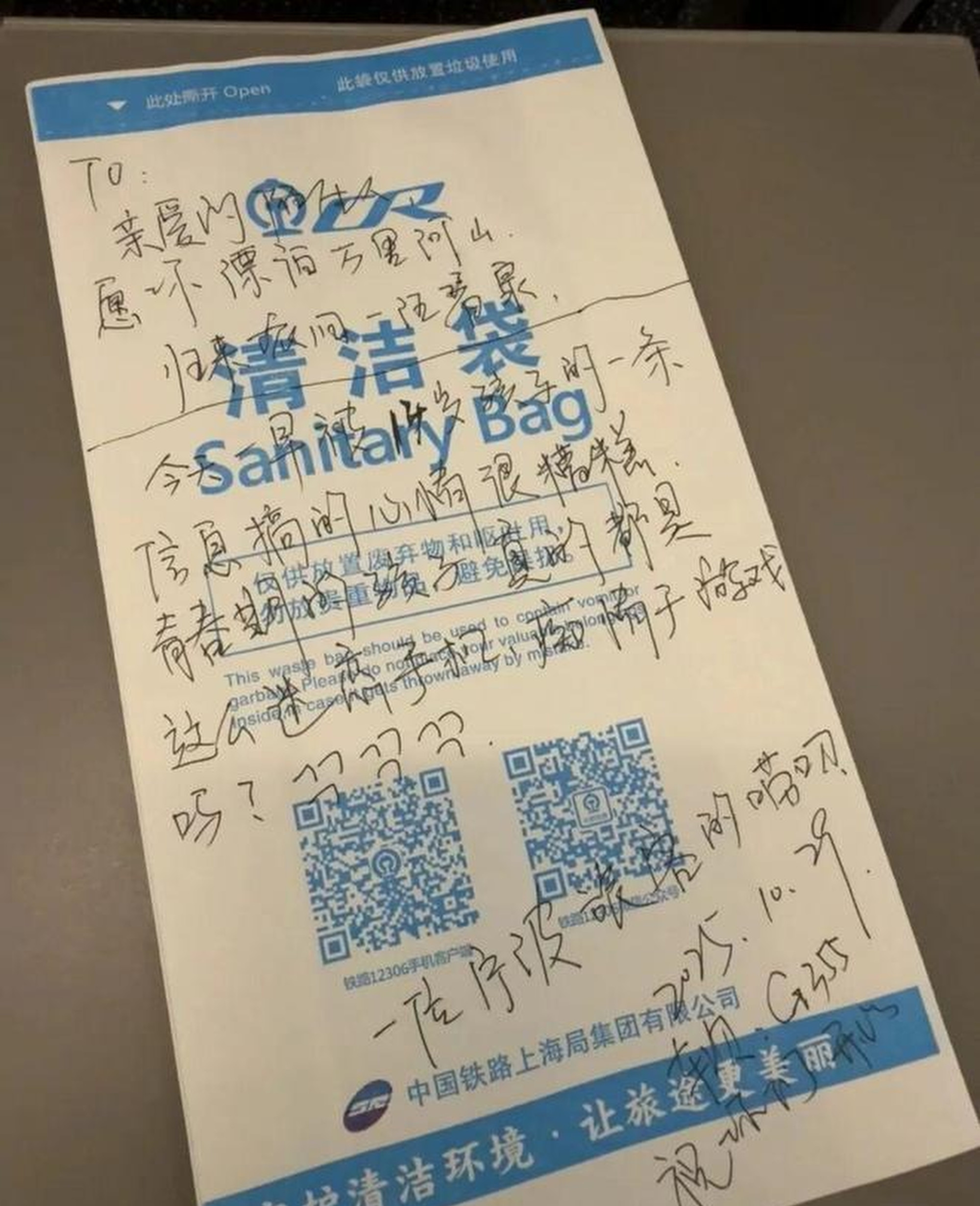
“A message from my 14-year-old child this morning has made me feel terrible,” the mother wrote.
“Are all adolescent kids addicted to playing on mobile phones and gaming?” she questioned.
The mother did not reveal the gender of her child.
The 21-year-old university student took the trash bag home before sharing it on social media, having experienced a similar moment of frustration herself when she vented her feelings on a trash bag during a train ride last year.
“I haven’t started working, nor have I become a mother yet. Please forgive me for not being able to see the issue from a mother’s perspective. However, I can share my insights from a child’s standpoint,” she expressed in her viral post.
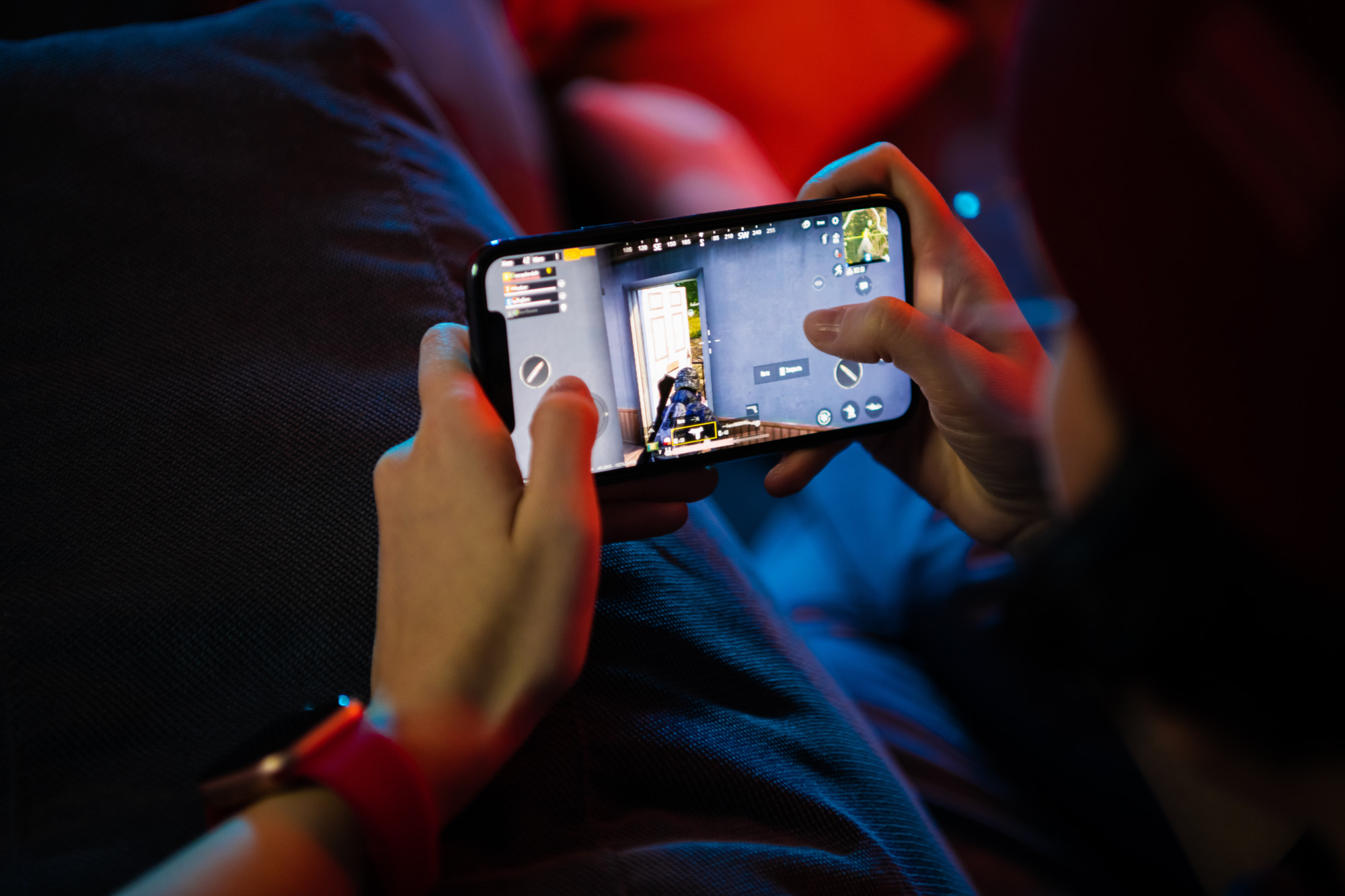
The student reflected on her own struggles with electronic gadgets as a teenager, recalling her fondness for TV dramas, novels, and games.
“Now I find myself questioning why I was so obsessed with gadgets, but I can’t pinpoint a specific reason. Perhaps they were once considered rare items for me,” she continued.
Although her secondary school prohibited students from bringing mobile phones, she secretly managed to do so. Once, her father caught her but chose to keep her secret.
The student credited her father’s “silent respect” for prompting her to reflect on her behaviour, leading her to refrain from taking her phone to school after that.
Her parents implemented an effective strategy to help her limit her phone use: they refrained from checking their own devices and instead spent their evenings reading books at home.
“Gradually, I also reduced my phone usage,” she said. “Leading by example alongside verbal instruction was most effective for me. I’m not sure if this approach would work for your child as well.”
The story has captivated mainland social media, with many users sharing their thoughts on this parenting dilemma.
“I agree with this university student. Parents’ behaviour significantly shapes how a child grows into adulthood,” one online observer commented.
Another added: “It’s common for young children to be drawn to mobile phones. Even my two-year-old loves playing on it and doesn’t want to part with the device.”
A third user shared: “I also struggle with managing my son. Completely prohibiting him from using a mobile phone seems impossible; otherwise, he can’t socialise with his peers. Yet, once he starts playing, it’s hard to regain control.”
Incidents of students excessively using mobile phones often become viral stories.
In July, a secondary school graduate in central Hunan province was kicked out of his home by his parents, who halted their financial support due to their frustration with his poor performance on the national college entrance exam.
Once an elite student, the teenage boy had spent recent years absorbed in his mobile phone instead of studying, disregarding his parents’ repeated pleas to quit the habit. -- SOUTH CHINA MORNING POST