Even for the anti-graft era of President Xi Jinping, the wave of investigations into alleged corruption in the Chinese military over the past three years has been exceptional.
Last month, nine senior People’s Liberation Army (PLA) officers were expelled from the Communist Party and the military, including He Weidong, formerly China’s second-highest-ranking military officer.
They are accused of having “violated party discipline and allegedly committed serious crimes related to their duties” – both euphemisms for corruption.
“The amounts involved are particularly huge, the nature of the offences is extremely severe and the impact is exceptionally negative,” the defence ministry said.
He Weidong is the highest-ranking general to fall in the anti-corruption storm in recent years and the first serving member of the Politburo – the party’s inner circle – since 2017 to face an investigation while in office.
He is also the third general from the current Central Military Commission (CMC) – which started off with seven members in 2022 – to be disgraced.
Yet, there are signs all around that China’s hunt for corrupt generals is here to stay.
The biggest is the party’s rare recommendation last month that the next five-year plan, covering the years 2026 to 2030, prioritise “political rectification” in the military, a phrase that means both fighting corruption and upholding political loyalty.
For outsiders looking in, the focus now is on whether this high-intensity anti-corruption campaign will persist and whether it has implications for the PLA’s combat readiness, particularly in relation to Taiwan.
Some US observers have suggested that the downfalls of the generals will affect the military’s preparedness for conflict and trust between China’s leadership and the military, but analysts speaking to the South China Morning Post assert that the drive precisely shows Xi’s strengthened control over the armed forces.
“Xi’s demonstrated ability to purge even the most influential and powerful ‘tigers’ is evidence he is in control and shaping the PLA into a military he can trust – a difficult task that will take time,” said Graham Allison, founding dean of Harvard University’s John F. Kennedy School of Government.
Allison noted that He’s removal might be “the beginning of a new round of anti-corruption investigations”, with the general’s colleagues and subordinates potentially becoming new targets.
Many of the top generals brought down in the past three years were promoted after Xi took the helm of the party and the military in 2012. These include two consecutive former defence ministers who fell from grace in 2023: Wei Fenghe and his successor, Li Shangfu.
This was also the case with He and former CMC member Miao Hua, the PLA’s ideological and personnel chief, whose investigation was disclosed a year ago and expulsion from the party was also announced last month. Both men served in the PLA’s 31st Group Army based in Xiamen in the southeastern province of Fujian where Xi held various positions, including vice-mayor of the coastal city.
Anti-corruption investigations into senior generals, particularly those promoted during Xi’s tenure and those with notable links to him – such as the Xiamen connection – have raised questions about the party’s control over the military.
The investigations may “erode” trust between Xi and the military, Joel Wuthnow, a senior research fellow at the National Defence University in Washington, told The New York Times in August.
The article also quoted former US assistant secretary of defence Ely Ratner as saying “the purges may have affected the working of the bureaucracy”.
However, Xie Maosong, a senior researcher at Tsinghua University’s National Institute of Strategic Studies, said the ability to conduct such a sweeping anti-corruption campaign among the top brass demonstrated Xi’s “firm overall control of the PLA”.
“It also shows the party’s unwavering political will to remove all the stumbling blocks in China’s military modernisation and other critical missions,” Xie said.
Song Zhongping, a mainland military analyst and former PLA instructor, said the changes at the CMC were meant to strengthen the commission and were not a threat to the leadership.
“The downfall of senior commanders, including personnel adjustments within the Central Military Commission, will not undermine the authority of the central leadership,” Song said.
“Purging the military’s upper echelons is a more effective means of upholding the authority of the CMC and maintaining the prestige of the armed forces.”
Mark Cozad, a professor at the Rand School of Public Policy, said the investigations were “a clear signal of Xi’s tighter control”.
The investigations and removal of senior personnel “are very closely aligned to his [Xi’s] earliest efforts as chairman of the CMC to assert the party’s authority over the PLA and ensure that the PLA reliably carries out the party’s objectives and policies”, he said.
The importance of the He and Miao investigations in this mission was spelled out in a PLA Daily commentary on Thursday.
The article described the investigations as part of “a resolute struggle to safeguard the political foundation of the party’s absolute leadership over the military, and an imperative requirement to eradicate the breeding ground and conditions for corruption”.
Corruption had exerted a “real” and “direct” impact on the PLA’s pursuit of its centenary goals, undermining the objective of building a strong military in “multiple dimensions and at a profound level”, it said.
The commentary echoed a message Beijing has sent consistently in recent weeks.
At last month’s gathering of the Central Committee, known as the fourth plenum, the party highlighted the need to fight corruption in the military as an objective for the next five years.
According to the full text of the proposal released by state news agency Xinhua, the PLA must “uphold the party’s absolute leadership over the armed forces and implement the system of the Central Military Commission chairman’s responsibility”.
Over the next five years, the PLA will “continue to deepen political re-rectification, promote fine traditions, and strengthen rectification and governance in key industries and sectors”, according to the proposal.
Following the plenum, Zhang Youxia, China’s top uniformed officer and member of the Politburo, pledged to crack down on “fake loyalty” and “two-faced men”, and to accelerate weapons development over the next five years.
Zhang Youxia called for the military to comprehensively eliminate “poisonous influences and long-standing problems”, although he did not provide any further information or name individuals.
“At the same time, the military must resolutely carry the anti-corruption struggle through to the end, intensify the simultaneous rectification of both corruption and misconduct, and resolutely curb indecent manners among officers and soldiers,” he wrote.
The PLA Daily, the military’s mouthpiece, has also accused expelled officials of a “total collapse of their beliefs” as party members and of being “disloyal” and losing their “chastity”. The newspaper has recently launched a series of reports focusing on “political rectification”, linking it to the concept of ideological purity of the PLA.
Military commentator Song said the purpose of continuous political rectification was to make the PLA “more orderly, more aware of boundaries and more understanding that the military must absolutely obey the party’s leadership, submit to and respect the party’s authority”.
“The party’s absolute leadership over the military must remain unshaken. Only through such measures can the combat effectiveness and support capabilities of the troops be genuinely established,” Song said.
A Beijing-based military researcher, who requested anonymity because of the sensitivity of the subject matter, said “anti-corruption and strengthening supervision will be a key task for the CMC in the coming years”.
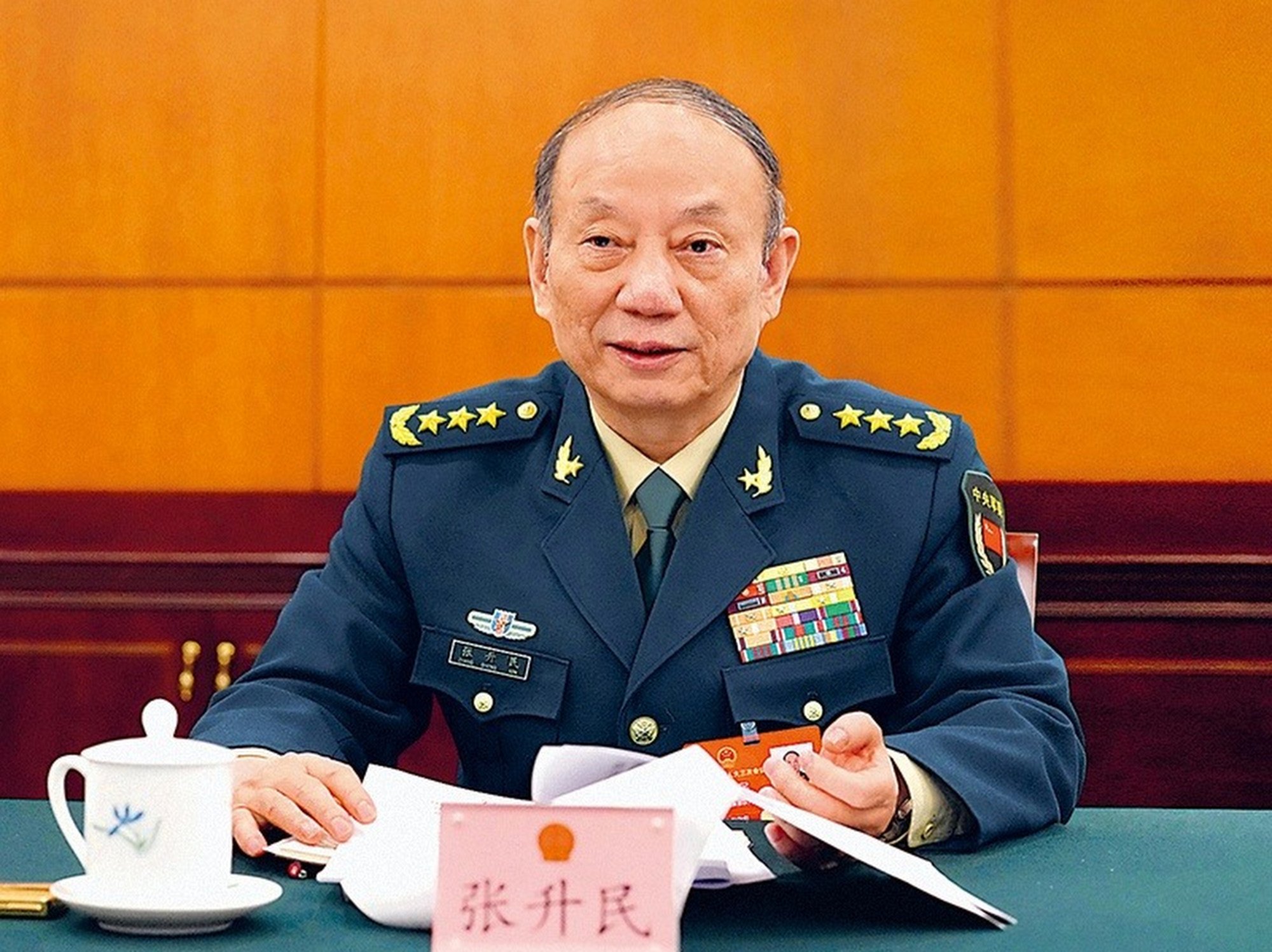
Another sign that the anti-corruption campaign is here to stay is the promotion in He’s wake of Zhang Shengmin to CMC vice-chairman.
Zhang has arguably the greatest anti-graft credentials of any general to fill the CMC role in decades. He became a CMC member in 2017, has led the CMC’s discipline inspection commission and has been a key enforcer of the anti-graft push over the past three years.
The Beijing-based military researcher said Zhang Shengmin’s main job would include “an overall campaign to improve military loyalty and the conduct of senior officials, as well as restoring the PLA’s fine traditions and catching corrupt elements”.
According to Deng Yuwen, former deputy editor of Study Times, the official publication of the Central Party School, Zhang’s promotion was “a reward for his anti-corruption efforts and results” and “means that anti-corruption and enhanced internal supervision will be a key priority for the PLA for the next five years”.
Allison agreed that Zhang’s promotion reinforced the message that “Xi is serious about anti-corruption” but he cautioned against “overanalysing” the appointment.
“Xi did not have many options to fill He Weidong’s vice-chairman spot, and Zhang was an obvious candidate,” he said.
The renewed anti-corruption push has raised questions about implications for Beijing’s military pressure on Taiwan.
He and Miao both spent years of their careers in Fujian, the province that is central to the PLA’s war readiness for military operations on Taiwan.
Lin Xiangyang, another general whose disgrace was made public in October, was brought down from the position of commander of the Eastern Theatre Command – the PLA’s division central to its capacities in the Taiwan Strait.
It was under Lin’s watch in 2022 that the PLA, in response to then US House speaker Nancy Pelosi’s visit to Taiwan, started staging massive drills near Taiwan to warn the island’s ruling Democratic Progressive Party, with the military manoeuvrings live-streamed on national TV.
While some observers have raised concerns that the downfall of He, Miao and Lin, may lead to the loss of some Taiwan-related military experience, Song said more capable commanders would emerge in their place.
“By purging the harm caused by these senior officers, more capable personnel can emerge. I believe this is precisely a positive development as it allows the military’s integrity and discipline to improve,” he said.
Rand’s Cozad said the investigations might aid the military’s reliability, which was key for Beijing’s military options. He said that if the party lacked confidence in the PLA, “it limits the options available to them in the future and poses risks if they have to rely on them in high-stakes situations”.
Despite the suggestion by some US officials – including John Aquilino, a former admiral and head of the US Indo-Pacific Command, and former CIA director William Burns – that the PLA could act to take Taiwan by 2027, Beijing has repeatedly stressed that “peaceful reunification” with Taiwan remains its preferred option.
Allison said: “Xi’s highest priority is domestic stability and control. While Taiwan is a special issue, stability remains No 1 – something that could be seriously threatened by a major military operation to retake Taiwan.”
Beijing sees Taiwan as part of China to be reunited by force if necessary. Most countries, including the US, do not recognise Taiwan as an independent state, but Washington is opposed to any attempt to take the self-governed island by force and is committed to supplying it with weapons.
As well as rooting out corrupt individuals, Beijing has indicated its intent to regulate military procurement, a focus of the PLA’s anti-corruption efforts in recent years.
In proposals for the next five-year plan, the party leadership said the PLA should improve the procurement process through better decision making and oversight, and better budget management. The military should also apply “the principle of building the armed forces through diligence and frugality, and pursue a path of high efficiency, low cost and sustainable development”.
Expanding on those recommendations, Qiu Yang, deputy director of the General Office of the Central Military Commission, called for a higher quality, more efficient and sustainable development model for military modernisation.
Qiu said the military should improve its procurement system and reduce training, management and equipment support costs, urging the military to prepare to “live a tight life”.
Analysts agreed that there was still much more work to be done to the military as an institution.
Xie, of Tsinghua, said the PLA would “need to not only deepen its anti-corruption drive, but also show significant improvement in its systematic supervision of the formulation and allocation of the budget, the research and production of military equipment and the promotion of personnel”.
The unnamed military researcher said that, as a follow-up to the wide-ranging anti-corruption campaign, the CMC would need to put in a “major effort to institutionalise internal governance” over the next five years, adhering to the principle of building the PLA through “diligence and thrift” to ensure that the Chinese military was “efficient, cost-effective and sustainable”.
“After cleaning the house, we should check the faulty wiring and reinforce the structure,” he said. “We have improved the military hardware; now it is time to work on the software.”
The researcher said China’s military budgeting and supervision system faced new major challenges as the country was now “at the forefront of military technology” and had no one to follow.
Cozad from the Rand School noted that corruption and unreliability would “continue to be pervasive problems for Xi”.
“[The problem] is not just with a small number of individuals who have violated rules – it’s much deeper than that and requires a more long-term, systemic set of efforts to change the PLA’s culture,” he said. -- SOUTH CHINA MORNING POST