THE nation and Thailand have agreed to gradually withdraw heavy weapons from their disputed border and cooperate on landmine clearances, key steps toward de-escalating tensions after violent clashes in July killed dozens.
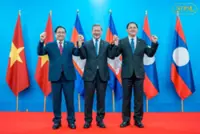
The measures are aimed at bringing peace and stability to their roughly 800km contested frontier and agreed at a special session of the General Border Committee on Wednesday. The panel is one of the mechanisms set up by the two countries to resolve security issues.
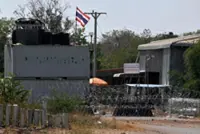
The South-East Asian neighbours have continued to station troops and weaponry along the border more than six weeks after they agreed to a ceasefire brokered by US President Donald Trump.
Five days of intense fighting between Thai and Cambodian forces in July, using fighter jets, missiles, and heavy artillery, killed over 40 people and displaced hundreds of thousands from border areas in both countries.
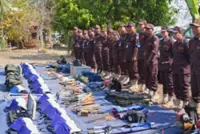
Defence officials will finalize an implementation plan for moving heavy artillery and destructive weapons and equipment back to their normal military installations in three weeks, Thai Deputy Defence Minister Nattaphon Narkphanit said at a briefing on Wednesday. They will also set up a panel to coordinate landmine clearance along the border within a month, he said.
The removal of heavy and destructive weapons will help urgently de-escalate tensions, Cambodia’s Defence Minister Tea Seiha said.
Landmines have played a vital role in the souring of ties between the two countries.
A series of landmine explosions in July injured several Thai soldiers, prompting Thailand to recall its envoy from Phnom Penh and expelling the Cambodian ambassador. Fighting broke out a day later.
The two countries also agreed to prepare a joint action plan to suppress scam centres, with Thailand having provided coordinates of more than 60 such venues in Cambodia for decisive action, according to Nattaphon.
Thailand’s new Prime Minister Anutin Charnvirakul has listed restoring peace with Cambodia as a priority while protecting the country’s sovereignty. He succeeded Paetongtarn Shinawatra, who was removed as prime minister last month for ethical violations over her handling of the border dispute.
The two sides have agreed to consider reopening some border crossings to facilitate trade to mitigate impact on businesses and transport, according to a joint statement.
The Thai-Cambodia conflict traces its roots to long-standing tensions stemming from colonial-era maps and treaties that defined their shared border. — Bloomberg