SINGAPORE: Noor Aishah, Singapore’s former first lady and the widow of the country’s first president Yusof Ishak, died on April 22.
She was 91.
Her death was announced by Prime Minister Lawrence Wong in a Facebook post on April 22, who said he was deeply saddened to learn of her passing.
“With grace and quiet strength, she stood by Encik Yusof Ishak and steadfastly supported him throughout our tumultuous years of nation building,” said Wong in his tribute.
“Beyond the Istana, she dedicated herself to serving others through organisations like the Singapore Red Cross and the Singapore Muslim Women’s Association.
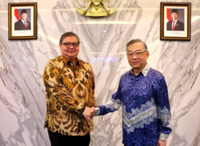
ALSO READ: Anwar offers condolences to family of Singapore's former First Lady
“Her kindness and service touched countless lives – may her legacy continue to inspire us all.”
Noor Aishah died peacefully at the Singapore General Hospital on April 22 at 4.28am, said the Prime Minister’s Office (PMO).
PMO said in a statement that PM Wong and his Cabinet colleagues are deeply saddened by the passing of Puan Noor Aishah, and that they extend their deepest condolences to her family.
The Government will help her family with funeral arrangements, PMO said. She will be laid to rest at Kranji State Cemetery alongside her husband on April 22.
“As a mark of respect, she will be accorded the honour of being borne on the ceremonial gun carriage for her final journey from Masjid Ba’alwie to Kranji State Cemetery,” said PMO.
A steadfast pillar of support to president Yusof throughout his tenure from 1959 to 1970, Noor Aishah was also deeply involved in charitable causes and championed various social initiatives, particularly in support of women, children and the less privileged, added PMO.
In a Facebook post, President Tharman Shanmugaratnam highlighted Noor Aishah’s humble beginnings and how she will always be remembered for her grace, compassion and service to others.
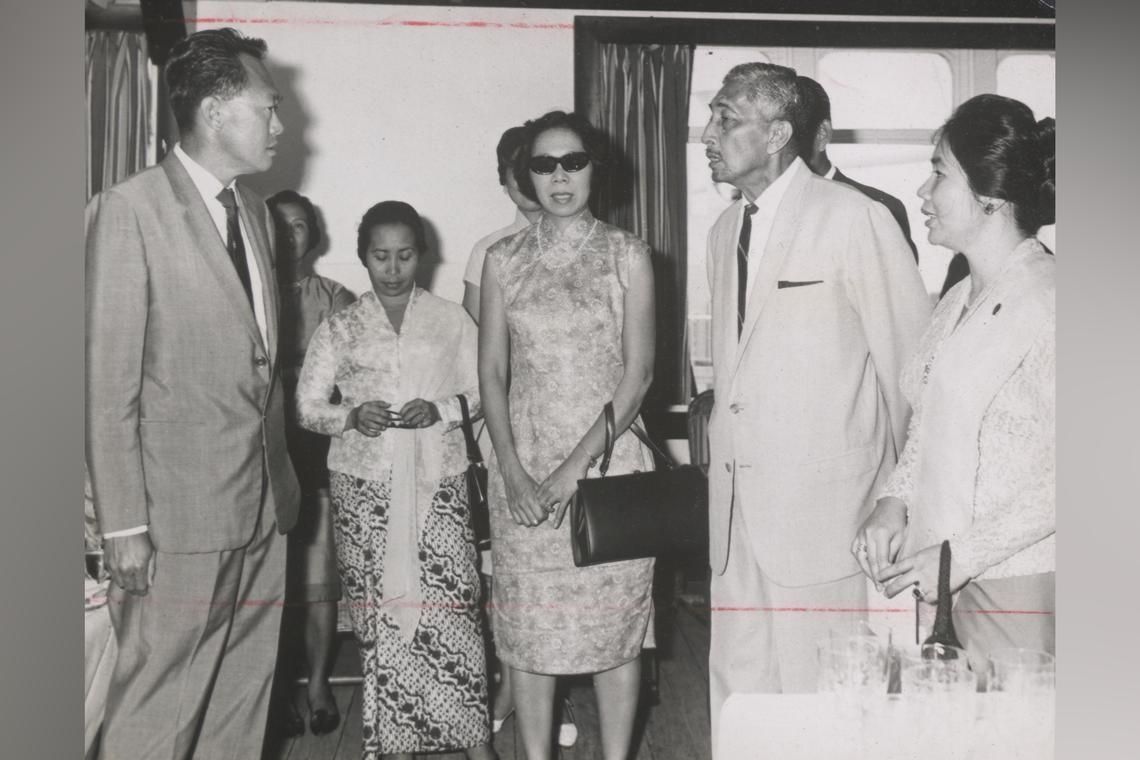
He said that Noor Aishah became an emblem of heritage and local traditions, wearing the sarong kebaya at state events and teaching Istana chefs recipes for local favourites like epok epok and various kuih, which have remained part of Istana cuisine.
Tharman also paid tribute to her dedication to public service, calling her a “force for good in her own right” by championing various social causes and being a dedicated patron to many organisations supporting the disadvantaged.
“Unlike Encik Yusof Ishak who passed away in 1970, Puan Noor Aishah lived to see Singapore’s transformation. She could take pride in her quiet role in our foundational years of self-government and independence, for which she will stay in collective memory,” he said.
Senior Minister Lee Hsien Loong said in a separate post that he was deeply saddened to hear about Noor Aishah’s passing and sent his condolences to her family. He said that the two kept in touch over the years, and that she will be deeply missed.
Thrust into the spotlight young, Noor Aishah carried out her duties with grace and dignity, managing a large household and improving her English to engage visiting dignitaries, said SM Lee.
He added how Noor Aishah played a vital role during Singapore’s formative years, stepping up with quiet determination to support president Yusof Ishak and helping keep the nation united.
“She was committed to a Singapore that was fair and just, regardless of race, language or religion. Her gentle spirit, sense of duty and grit left a deep impression on Singaporeans.”
Former president Halimah Yacob said in a Facebook post that she will remember Noor Aishah as a kind and gentle person who took a keen interest in Yusof Ishak Secondary School located in Bukit Batok East during her time as an MP there.
“She will be remembered for many things but to us she carried out her duties standing at the side of her late husband, president Yusof Ishak, during the nascent stage of Singapore’s development, with grace and pride,” said Halimah.
The Islamic Religious Council of Singapore (Muis) also said that it was deeply saddened by Noor Aishah’s death. In a statement, Muis said that her significant contributions to the community, most notably in supporting people with disabilities and women’s rights, created a deep impact on the lives of Singaporean Muslims and the nation.
The council added how Noor Aishah supported Masjid Yusof Ishak from its planning in 2014 to its consecration, helping with fund-raising and donating plants from her own nursery for its landscaping.
Since the Woodlands-based mosque’s 2017 opening, she remained a prominent and welcomed presence at many of its events, Muis said.
Significant role in nation building
Born on May 21, 1933, in Selangor, Noor Aishah was adopted by Fatimah Ali and Mohammad Salim Jusoh, an Eurasian man originally known as Barney Perkins, who had converted to Islam.
Growing up in Penang during the Japanese occupation, she had limited access to formal education but developed practical skills such as cooking and sewing, which helped her family make ends meet.
At the age of 16, she married Yusof, then the managing director and co-founder of Malay-language newspaper Utusan Melayu. He was 39.
The couple later moved to Singapore, where Yusof was appointed as the Yang di-Pertuan Negara (head of state) in 1959. Subsequently, in 1965, he became Singapore’s first president following the country’s independence.
This meant that Puan Noor Aishah became Singapore’s first first lady at just 26. Stepping into the role was an entirely unfamiliar experience, as she recounted in a book published by Straits Times Press in 2017, Puan Noor Aishah: Singapore’s First Lady.
“I was not given any instructions or briefing at all; no guidelines on how to be first lady. I had no task lists and no one briefed me on things like etiquette, dress codes and protocol. We had to learn and manage on our own,” she said.
Nonetheless, she quickly made an impact. As detailed in the book, she familiarised herself with the workings of the Istana and soon revitalised it, teaching the cooks – who were still preparing English classics like roast beef and pudding – her own recipes for local dishes such as beef rendang.
In the Istana, Noor Aishah kept Malay traditions alive in her own way, from putting Malay dishes and kuih on the Istana menu to wearing the kebaya at state events.
Noor Aishah also became actively involved in the social and welfare sectors, working closely with organisations such as the Singapore Red Cross, the Young Women’s Muslim Association, and the Singapore Leprosy Relief Association.
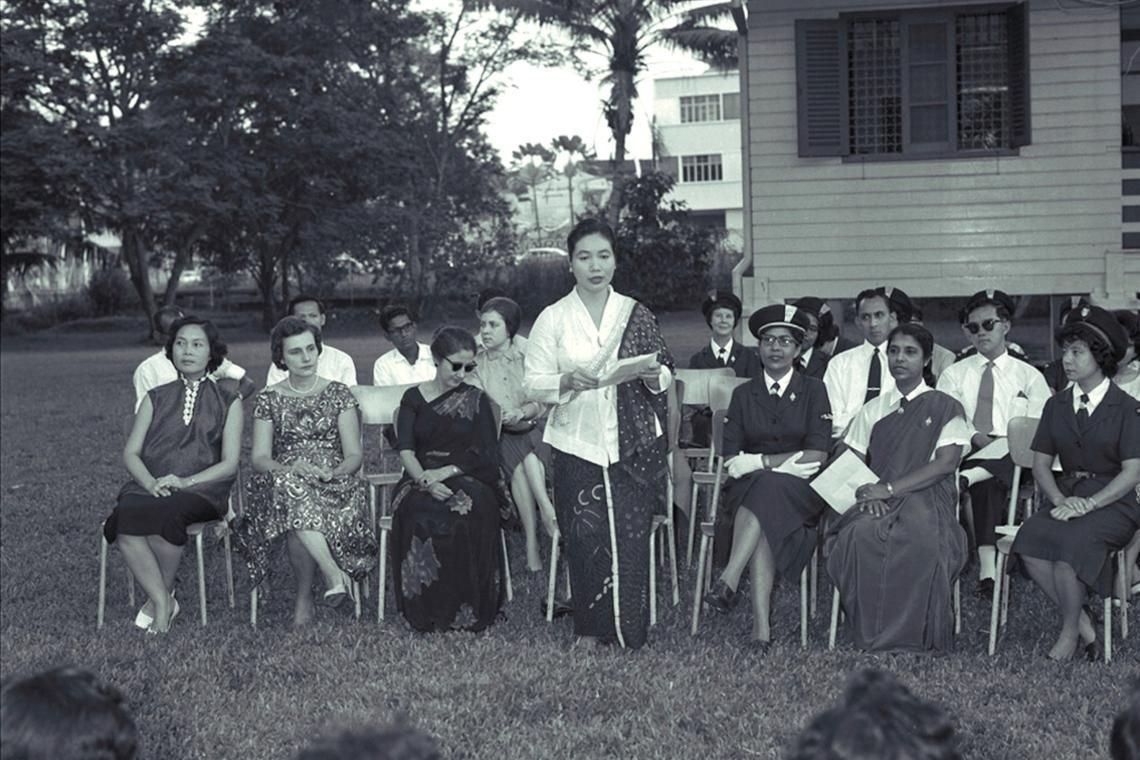
She became a key figure in the Girl Guides movement in Singapore, becoming its first Asian president in 1959 and later serving as its patron.
During her tenure at the Istana, she took steps to make the residence more accessible to Singaporeans by hosting social gatherings, charity events and meetings with community leaders.
In recognition of her contributions, she was awarded the Pingat Bakti Chemerlang (Distinguished Service Medal) in 1964.
When her husband’s health started to decline after a heart attack in 1968, Noor Aishah took on some of his social responsibilities. He died on Nov 23, 1970, of heart failure, and was buried at Kranji State Cemetery.
Following his death, Noor Aishah maintained a low public profile while continuing her involvement in charitable and community work. She remained a patron of several welfare organisations and continued to contribute to social causes.
Her contributions to Singapore’s early years were formally recognised when she was inducted into the Singapore Women’s Hall of Fame in 2018. She was acknowledged for her role in strengthening the country’s social fabric and for her longstanding commitment to voluntary work.
Noor Aishah is survived by her three children – daughters Orkid Kamariah and Zuriana, and son Imran – as well as several grandchildren. - The Straits Times/ANN