China is poised to start building the world’s first fusion-fission hybrid power plant, with the goal of generating 100 megawatts of continuous electricity and connecting to the grid by the end of the decade.
The 20 billion yuan (US$2.76 billion) Xinghuo high-temperature superconducting reactor has entered its first phase with a public tender for an environmental impact assessment, according to zbytb.com, a platform that aggregates bidding and procurement information in China.
The facility will be built on Yaohu Science Island in the hi-tech zone of Nanchang, Jiangxi province, in central China, according to the tender. The environmental report will include baseline studies, impact evaluations on air, water, noise and ecology, as well as risk analyses, pollution control measures and monitoring plans.
Do you have questions about the biggest topics and trends from around the world? Get the answers with SCMP Knowledge, our new platform of curated content with explainers, FAQs, analyses and infographics brought to you by our award-winning team.
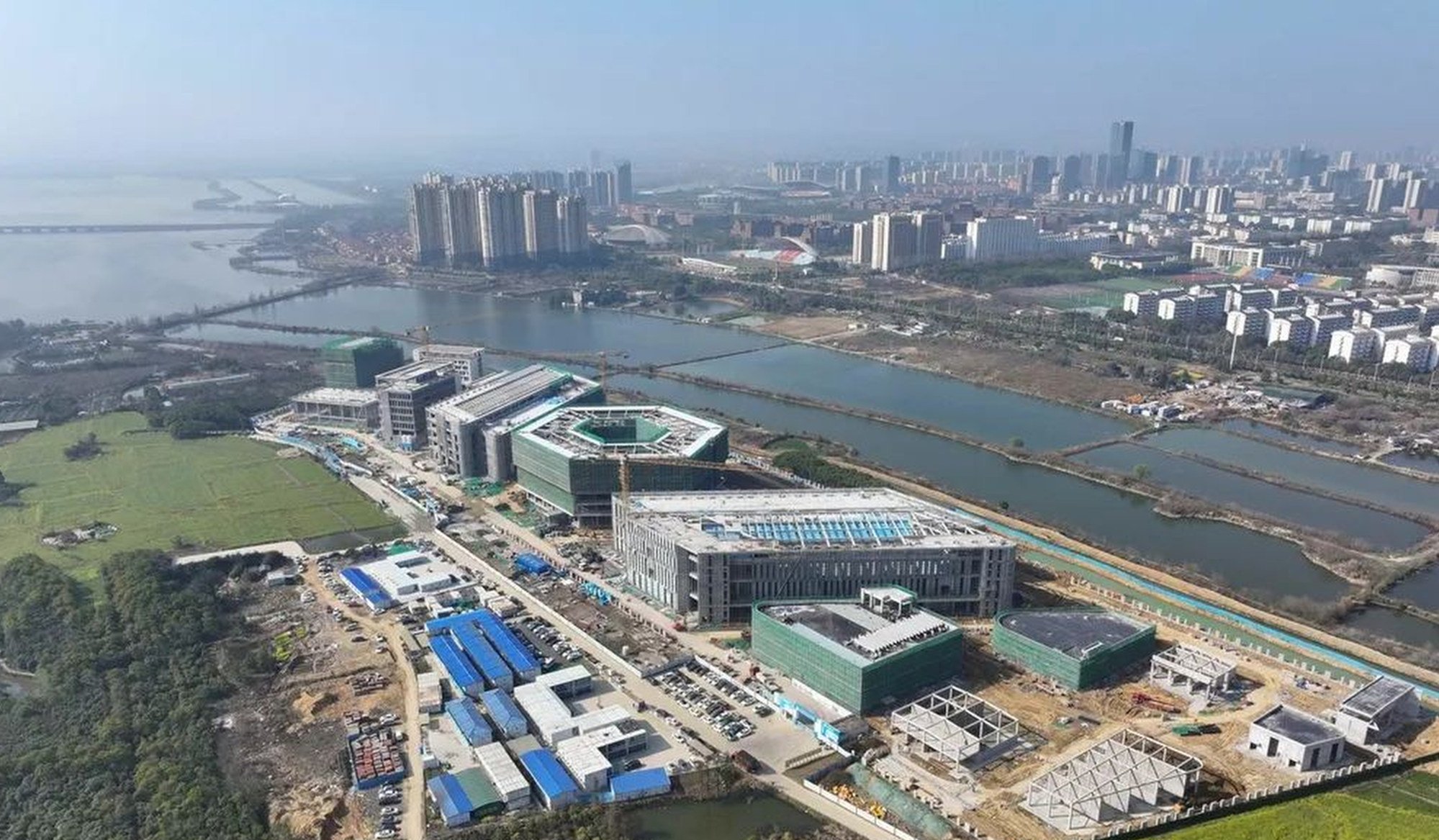
Xinghuo, or spark, comes from the Mao Zedong quote: “A single spark can start a prairie fire.”
The project is a joint venture between the state-owned China Nuclear Industry 23 Construction Corporation and Lianovation Superconductor, a spin-off from Lianovation Optoelectronics in Jiangxi. The province is known for its copper resources, a key metal for making superconducting materials.
According to a collaboration agreement signed in 2023, the Xinghuo reactor aims to achieve an unprecedented Q value of more than 30. The Q value, or the energy gain factor, measures the ratio of thermal power output to the input power used to heat the plasma in a fusion reaction.
For comparison, the International Thermonuclear Experimental Reactor (ITER) under construction in France is targeting a Q value above 10. In 2022, the US National Ignition Facility achieved a Q of 1.5 – meaning the fusion energy output was 1½ times greater than the laser energy delivered to the fuel pellet.
Fusion is the process that powers the sun: it fuses light atomic nuclei, such as hydrogen, to release enormous amounts of energy. Fission, by contrast, splits heavy atomic nuclei like uranium to generate power, which is how today’s nuclear power plants work.
Major fission reactors, such as those at Japan’s Fukushima or throughout France’s nuclear fleet, already power cities today. Fusion-only projects such as ITER have yet to demonstrate net energy gain.
A fusion-fission hybrid uses high-energy neutrons produced by a fusion reaction to trigger fission in surrounding materials – boosting energy output and potentially reducing long-lived nuclear waste. Xinghuo would be the first major hybrid project in the world designed to deliver real-world power by combining the strengths of both processes.
The construction timeline for Xinghuo has not been officially disclosed, but the project’s environmental impact assessment is expected to wrap up by the end of this year, according to the tender.
A 2021 science and technology development plan from Jiangxi province sought demonstration and application of the Yaohu fusion-fission project by the end of the decade. In 2023, Lianovation Superconductor revealed plans to complete a 100-megawatt-scale hybrid facility within five to six years.
If Xinghuo delivers a functioning 100 megawatt hybrid plant on that timeline, it would put China years, if not decades, ahead of comparable fusion-fission or pure fusion efforts in the rest of the world.
It could also pave the way for the China Fusion Engineering Test Reactor, a large-scale, fusion-only project planned for Hefei, Anhui province, in the mid-2030s, which is widely seen as China’s counterpart to ITER.
More from South China Morning Post:
- Princeton nuclear physicist Liu Chang leaves US for China in fusion energy quest
- Starship rival: Chinese scientists build prototype engine for nuclear-powered spaceship to Mars
- China’s top weapons scientist says nuclear fusion power is 6 years away
- Trump pushes Zelensky to put Ukraine power plants under US control
- China’s energy supply ‘quite secure’ amid diversified imports, expert contends
For the latest news from the South China Morning Post download our mobile app. Copyright 2025.