The European Union is offering Brazil a “more beneficial” partnership on critical minerals than the United States or China, the bloc’s international partnerships commissioner said on Thursday, promising investment in domestic refining and technology as Brussels works to cut its dependence on Chinese supply chains.
European Commissioner for International Partnerships Jozef Sikela made the case during a week-long visit to Brazil that included a stop on Saturday at a rare earth research and processing centre run by Australian miner Viridis Mining and Minerals in Pocos de Caldas, in Minas Gerais state, one of four projects chosen to speed up cooperation between the two sides.
The European approach was an advantage, he argued, because it prioritised business sustainability and the local processing of rare earths, aligning with a Brazilian government push to export processed minerals rather than raw ore.
“It is extremely important that Brazil also moves beyond low-margin business, that value is created here in the country,” Sikela said, describing Brazil as the EU’s most strategic partner in Latin America.
The bloc could cover its needs through offtake agreements, while Brazil built its own refining capacity and moved up the supply chain towards higher margins.
Brazil holds the world’s second-largest rare earth reserves and has already set domestic processing as a condition of foreign access to its deposits, a position President Luiz Inacio Lula da Silva cast as national sovereignty when he told US President Donald Trump in May that the reserves were “open to China and any other nation” willing to mine, separate and process the minerals on Brazilian soil.
“We have no preference. What we want is to share with whoever wants to invest in Brazil,” Lula told reporters after meeting Trump in Washington, adding that Brazil would not repeat its history of exporting silver, gold and iron ore raw without capturing the industrial value.
China leads way in rare earths race after decades of production
Brazil’s ambition takes it into a competitive industry that China spent decades building. China controls about 91 per cent of global rare earth separation and refining, according to the International Energy Agency, and its share of permanent magnet production has climbed to 94 per cent.
Brazil’s own attempt to close that gap, a government-backed programme called MagBras, has produced magnets only at pilot scale on a budget of 73 million reais (US$12.6 million), a fraction of what China spent.
But the West’s need to diversify its sources of such critical minerals has already drawn Brazil’s only operating rare earth mine, Serra Verde, towards Washington.
The company ended long-term supply contracts with Chinese buyers in December and, within two months, closed a US$565 million financing package with the US development finance arm DFC, a deal that includes an option for Washington to take a minority stake.
Sikela’s visit brought the EU into that contest as a third bidder. On Tuesday, he met officials at the mines and energy ministry in Brasilia, where the two sides discussed financing mechanisms and a memorandum of understanding that is still under negotiation, as well as cooperation on low-emission hydrogen and energy infrastructure.
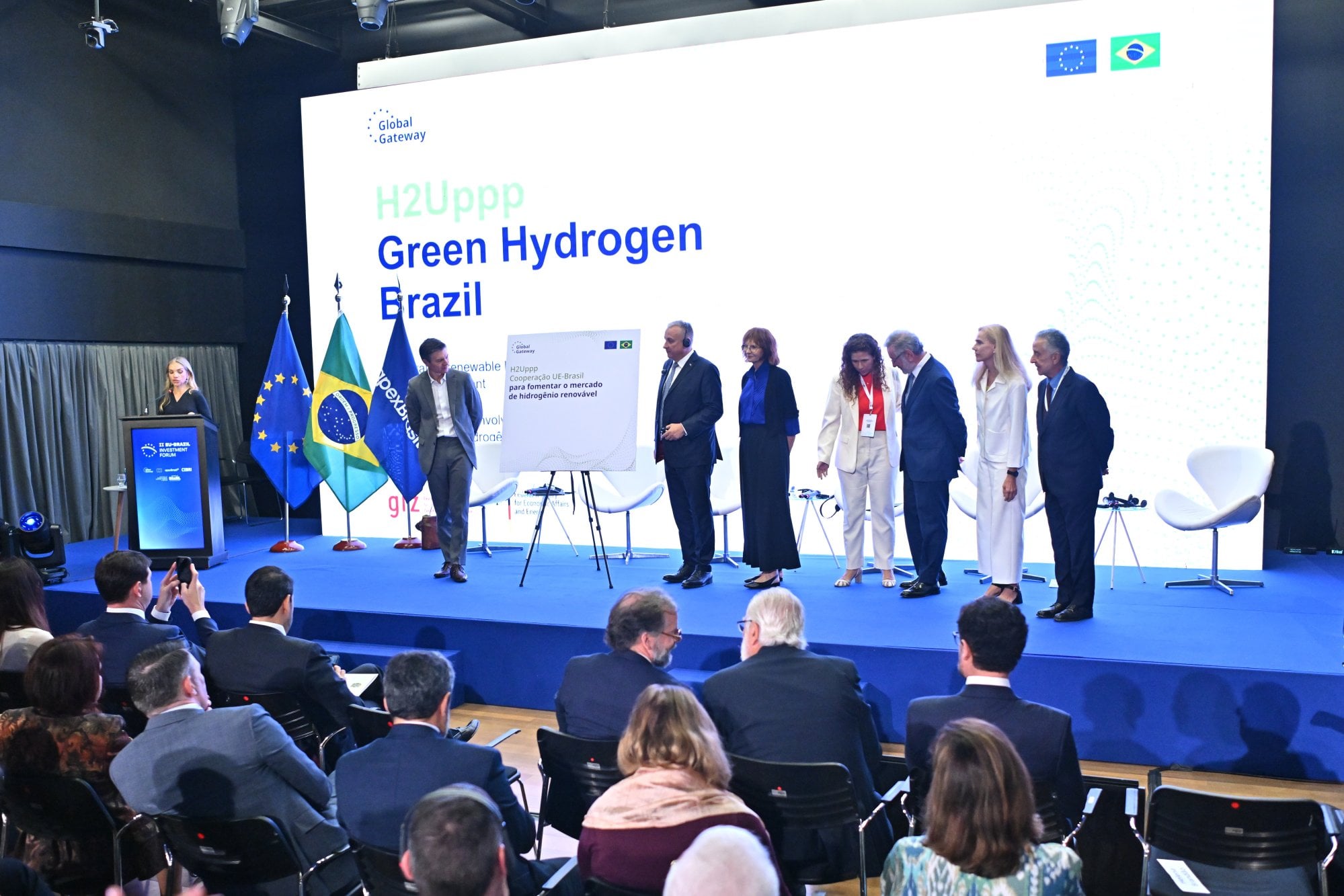
Nickel and lithium projects in Brazil were also priorities, the commissioner said, without naming them, and he pointed to the EU’s Global Gateway strategy and its critical raw materials partnership as the vehicles for new investment.
At the Viridis project, which Sikela praised, the company plans to invest US$360 million to build a commercial plant capable of producing 15,000 tonnes of mixed rare earth carbonate per year starting in 2028. Its pilot unit, opened in May, can process 100kg (220lbs) of ore an hour.
The commissioner singled out a non-binding letter of intent signed this month between Viridis and Belgian chemicals group Solvay for the supply of the carbonate, which could expand into a broader partnership that includes processing technology.
Viridis chief executive Rafael Moreno said a deal with Solvay could be closed by the end of July and that talks with the EU on support for the project were advanced.
Brazilian officials echoed the value-added message. With a partner like the EU, Brazil could advance in leaps rather than steps, Ana Paula Bittencourt, the national secretary for geology, mining and mineral processing, said, citing an electricity grid that is about 90 per cent renewable.
Brazil will need time to build infrastructure before global success
Moreno struck a more cautious note at an ApexBrasil investment forum in Brasilia on Tuesday, where Sikela also appeared, warning that Brazil needed patience to build a full chain of mining, separation, refining and processing.
“China took two decades to make its value chain work, not two months,” Moreno said, adding that Brazil could become a global growth leader in the sector if it moved at the right pace without procrastinating.
The country still had to prioritise mining itself, he cautioned, because magnet makers and separation plants would not come to Brazil without it, and the business model had to start there.
Moreno also offered a reading of history that supported the European argument, saying it was Europe that taught China how to separate rare earths and that Brazil’s geological potential could be combined with European technology and standards.
Viridis was in advanced talks with potential buyers in Europe and the United States and was not seeking Chinese customers, Moreno said in late May, a choice that carries its own risk given that any processing line built with Chinese equipment or know-how could still require Beijing’s approval to export under controls China asserted in October. -- SOUTH CHINA MORNING POST