China’s new home prices fell for the 17th month in October, but at a slower pace, suggesting that Beijing may be one step closer to stabilising the market after a slew of support measures.
Across 70 mainland cities, new home prices dropped 0.5 per cent from September, the slowest decline in seven months, according to data released by the National Bureau of Statistics on Friday.
Prices fell 6.2 per cent on a year-on-year basis, slightly worse than the 6.1 per cent year-on-year decline in September.
Do you have questions about the biggest topics and trends from around the world? Get the answers with SCMP Knowledge, our new platform of curated content with explainers, FAQs, analyses and infographics brought to you by our award-winning team.
In the four tier-1 cities – Beijing, Shanghai, Guangzhou and Shenzhen – prices fell 0.2 per cent month on month in October, narrowing from a 0.5 per cent decline in September, the data showed.
Tier-2 cities such as Tianjin, Wuhan and Chengdu, and tier-3 cities such as Dali, Xuzhou and Huizhou, saw a 0.5 per cent drop in new home prices last month, compared with 0.7 per cent in September.
Prices of second-hand homes in tier-1 cities gained 0.4 per cent on average in October after a 1.2 per cent drop in September – reversing a 13-month decline.
Tier-2 cities saw prices for second-hand homes fall 0.4 per cent, versus 0.9 per cent the previous month, while prices in tier-3 cities dropped 0.5 per cent, compared with 0.7 per cent the previous month.
Seven out of the 70 cities recorded increases in new home prices last month, four more than in September, according to the data. Eight cities saw second-home prices rise, versus none in September.
“It is an important signal and an early sign of a turnaround in the property sector,” said Yan Yuejin, vice-president of the Shanghai-based E-House China Real Estate Research Institute.
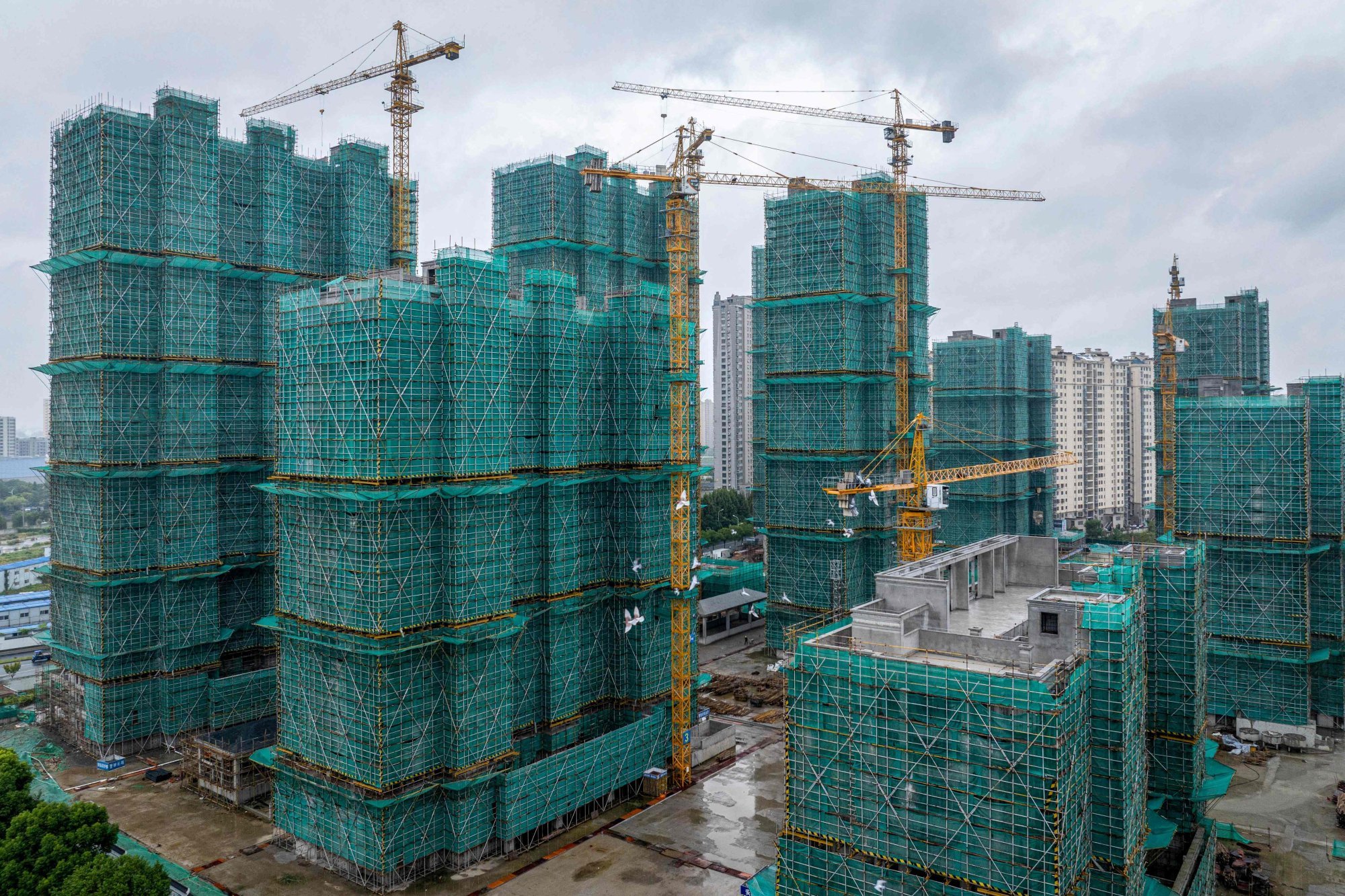
The statistics show the effect of a substantial rescue package for the property market, unveiled in late September, which included cutting mortgage rates and trimming down-payment requirements. All four tier-1 cities have relaxed purchase curbs on local or non-local residents since then.
In a further effort to stabilise the market, Beijing on Wednesday announced amendments to taxes on residential property transactions to lower the cost of ownership and motivate a larger pool of buyers.
In addition, China’s top legislature last Friday approved an additional 6 trillion yuan (US$830 billion) bond quota to help reduce local governments’ hidden debt and shore up the economy. The Ministry of Finance also acknowledged that special bonds could be used to acquire idle land and reduce excess housing inventory.
“This round of supporting measures has been a launch pad for market improvement, and we expect home prices will marginally increase in the short term, while an overall stablisation in the market may take a while,” said Guan Rongxue, a senior analyst at the Linping Real Estate Data Research Institute.
The recent stimulus measures will likely narrow the decline in national contracted sales value over the next 12 to 18 months, according to a report from Moody’s on Monday.
But whether the downturn will be halted remains uncertain due to fragile homebuyer sentiment amid a slowdown in economic and income growth, combined with concerns about unfinished homes, the rating firm added.
Nationwide, the top 100 developers sold 435.5 billion yuan worth of homes in October, a 73 per cent jump from September, according to data compiled by China Real Estate Information Corp. Distressed developers including China Vanke, Longfor Group and China Jinmao last week reported their October sales increased from 23 per cent to 66 per cent.
Still, some developers acknowledged the difficulties ahead. Yang Huiyan, chairwoman of Country Garden, told staff that “challenge remains” during an internal meeting a week ago. And Hu Baosen, founder and chairman of Central China Real Estate, said last Thursday that the company needs to “hold the fort” amid the slow market.
More from South China Morning Post:
- China unveils new tax breaks to boost property sales, free up household cash
- China’s home prices see biggest drop in 9 years despite efforts to revive market
- China’s housing market nightmare is nowhere near over as owners eye quick exits
- Beijing puts no price cap on land sale, signalling property-market shift
- China’s property developers from Vanke to Longfor see October sales surge
For the latest news from the South China Morning Post download our mobile app. Copyright 2024.