




When Kwun Tong Maryknoll College in Hong Kong announced that it would tighten its mobile phone rules on campus, some pupils reacted so strongly that the Catholic boys’ school was forced to put the changes on hold.
The secondary school, which currently only bans pupils from using their mobile phones on campus, had planned to require devices to be stored in designated lockers on each floor. Gaming near the school entrance was also to be banned, with rule-breakers facing four demerits.
Form Five student James Chan* was among those who launched a petition against what they described as a “heavy-handed” policy. He said forcing more than 120 students in one grade to retrieve their phones from a single locker area at lunchtime would create daily chaos. He added that many pupils relied on their phones to order and pay for lunch online.
Chan said it would be unfair to tighten the rules because some students broke them more often than others. Chan, however, admitted that he and his classmates did scroll through their phones during lessons.
“Some lessons are boring ... so we choose to scroll on our phones to kill time,” he said, adding that they had also used their phones to socialise during recess, such as creating reels on social media platforms together.
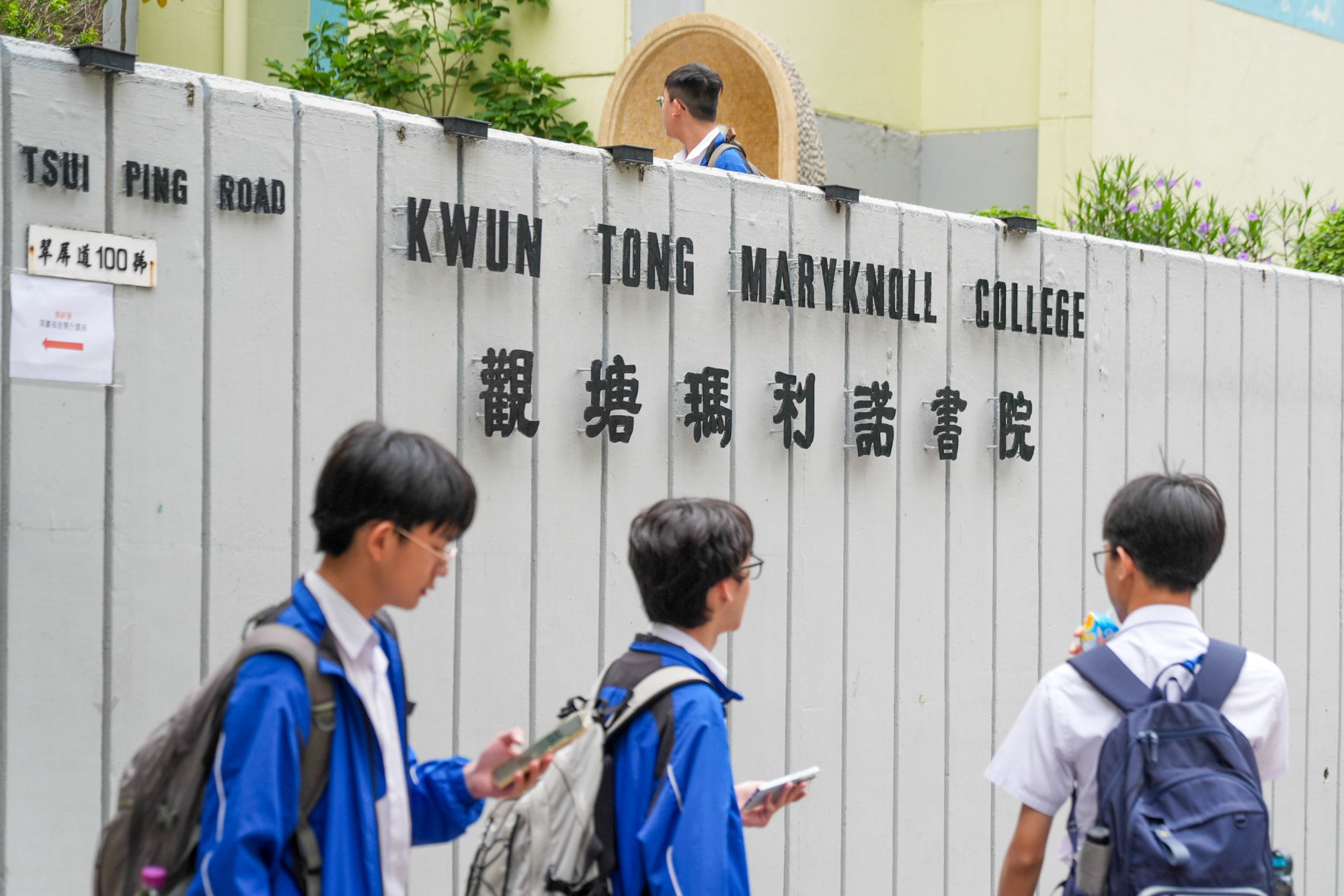
He said he spent six hours on his phone on weekdays and up to eight hours on weekends, averaging five hours on WhatsApp calls with friends. His parents do not restrict his usage. But pupils knew where to draw the line, he said.
“We are the ones who bear the results of our exams and the DSE [Diploma of Secondary Education], and we know how phones affect us. We are actually more self-aware than adults think,” he said.
The school had initially planned to impose the new rules on Form Three and Four students in a trial in April before extending them to other year groups. However, objections forced a rethink.
“The phone locker policy is under revision, and the school will continue to consult stakeholders, including parents and students,” principal Caroline Sin Nga-lam said.
The school’s U-turn has highlighted the contentious nature of the issue, with some arguing mobile phones are a necessity for transport and payment purposes, while others are concerned about social media addiction and its impact on youth development.
Mobile phone rules on campus are set by individual schools in Hong Kong. Educators and parents the South China Morning Post spoke to showed no consensus on whether there should be a blanket ban, as seen in some countries.
Mobile phone plans
France has enforced a nationwide mobile phone ban for students up to middle school level since 2018, with many institutions requiring devices to be kept in pouches or lockers during the day. There have also been discussions on banning phones in senior secondary schools starting from the 2026-27 academic year.
In Britain, the government introduced a statutory ban on smartphones in state-funded schools in England starting on June 29, with schools responsible for ensuring pupils switch off or store away their devices throughout the day.
British Prime Minister Keir Starmer also announced plans in June for a social media ban for all children under the age of 16 using the same model as Australia, which became the world’s first country to impose such restrictions in December 2025.
In 2024, Hong Kong’s Secretary for Education Christine Choi Yuk-lin said in a reply to a question on phone management on campuses that schools should enforce their rules in a lawful, sensible and reasonable manner, while ensuring fairness and consistency in application, and respect for students’ dignity.
Ng Wun-kit, principal of Pui Kiu Middle School and a lawmaker, said mobile phone policies should remain the responsibility of schools, as each had to consider its own circumstances, such as administrative needs and storage space.
“Like our school, students live in different parts of Hong Kong and rely on taking public transport, which may require tapping phones for fare payment every day. Parents may also want to know where they are after school,” he said.
Ginny Wong, a Form Six student at Po Leung Kuk Yao Ling Sun College in Tsuen Wan, said her school would also require pupils to lock their phones away upon entering the campus in the coming semester, although no penalty had been specified.
She said her screen time averaged about six hours on weekdays, mostly on social media via her phone and on her tablet for online tutorials and digital design apps for personal interest. Her parents have not imposed any restrictions.
Wong said her school currently banned the use of mobile phones on campus, but enforcement had been lenient.
“No one has opposed the [new] policy in school so far, as teachers are lenient when dealing with phones and students are quite cooperative,” she said.
Terrance Nam, acting chairman of the Kowloon City district Federation of Parent-Teacher Associations, said many secondary schools had implemented phone locker policies or provided students with tablets or more basic devices for limited communication, to curb over-reliance on artificial intelligence in learning.
He said communication was key to implementing such policies.
“The school should explain to parents why it has this policy, and there should also be school-based guidance to ensure fairness,” he said.
He added that while parents considered mobile phones valuable property, they were also concerned about devices being lost or students showing them off at school. Nam suggested that lockers should not be concentrated in one area to avoid crowding.
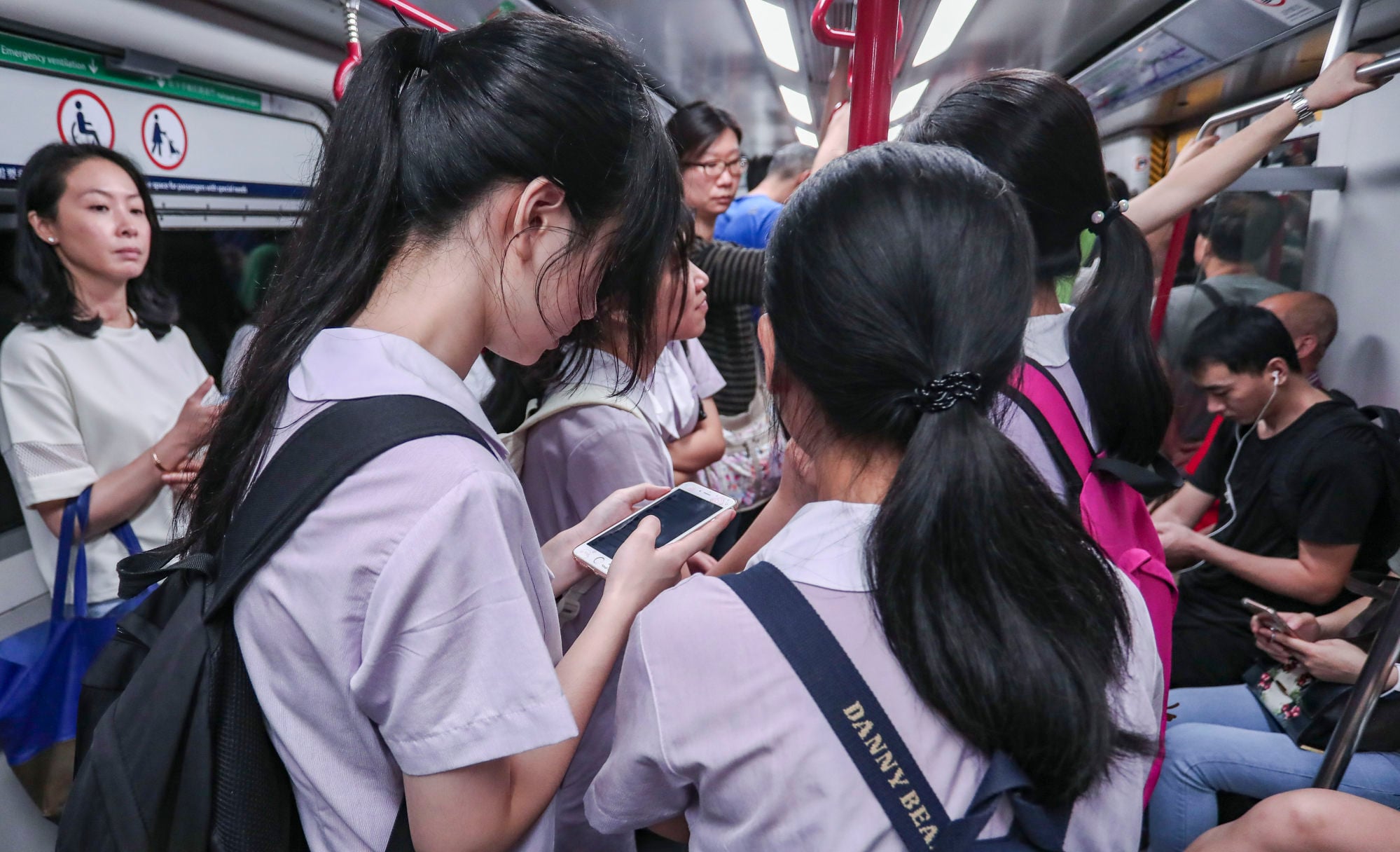
Robert Board, founder of Look Up Hong Kong – a parent-led group launched in April 2024 to delay children’s smartphone use – said mobile devices should be kept out of bedrooms and schools so youngsters could experience childhood in the real world.
He stressed the importance of parent-school collaboration, noting that more than 500 parents from over 100 schools had signed the group’s Smartphone Delay Pact as of May. The voluntary commitment involves withholding smartphones until children turn 14, with a broader goal of keeping them off social media until 16.
“We have organised digital literacy workshops across Hong Kong schools,” he said.
“We teach parents how social media works and how to communicate with their children, and we teach children critical thinking regarding online content, whether it is harmful or fake.”
'Instant rewards'
Chief executive John Lee Ka-chiu announced in his policy address last October that the government would revise guidelines to mitigate the impact of social media on young people.
In April, the Health Bureau told the legislature: “Given that social media has profound impacts on the mental health of children and adolescents, the Advisory Committee on Mental Health, after deliberation, suggested that the Department of Health should update relevant guidelines.
“The Department of Health has established an interdepartmental expert advisory group to review the latest medical and scientific evidence, and drawn reference from relevant developments and experiences in other countries and regions, with a view to issuing updated health recommendations on screen and social media use by children and adolescents within 2026.”
Excessive phone use could cause physiological problems that affected academic performance, warned Dr Cindy Lau Cin-yee of the Chinese University of Hong Kong.
“Social media provides instant rewards and generates dopamine, a hormone that can cause teenagers to become addicted to their devices,” she said.
She added that heavy screen time could also rewire the brain, reducing white matter and leading to slower cognitive processing speeds and attention deficits.
“Imposing phone restrictions nowadays is not possible as students will find ways to circumvent the controls easily,” she said.
“The only way to reduce phone use is through gradual parental and school support, such as having a family commitment to more non-mobile phone time. Students will also need metacognitive skills to reflect on their phone use.”
Annis Fung Lai-chu, a professor of social and behavioural sciences at City University, conducted a study on teenagers’ screen time in 2024-25 and found their usage was double that of adults, at six to seven hours per day.
Fung suggested that teachers and students should establish mutual boundaries regarding phone use on campus.
“Teachers should understand the attachment students have to their devices, as media consumption forms part of a teenager’s self-identity,” she said.
“At the same time, students should remain aware of the physical and mental effects of addiction.”
Fung added that while many jurisdictions, including mainland China, had implemented strict “zero-phone” policies on campus, Hong Kong should accelerate its legislative efforts and encourage group activities, such as scouting, to ensure mobile devices did not remain the sole source of teenage self-esteem and peer recognition.
“We have seen more cases of student suicide related to phone conflicts between youngsters and their parents or schools in recent years,” Fung said.
“It is more advisable to push for a phone ban policy step by step and by engaging students to reach a consensus.”
Balanced lifestyles
Professor Paul Yip Siu-fai, director of the HKU Centre for Suicide Research and Prevention, highlighted extreme cases of phone addiction, including one where a teenager took his own life after his mother confiscated his phone.
He warned that phone addiction could lead to hikikomori – a Japanese term for severe social withdrawal – which could ultimately become a precipitating factor for suicide when sparked by immediate triggers, such as family conflicts.
While data consistently links excessive mobile use to adverse mental health outcomes, Yip said research fell short by failing to analyse what users were doing on their screens.
“Students may use phones for homework, which is perfectly fine; the issue is excessive use during leisure time,” Yip said, adding he was currently researching what constituted healthy mobile phone use.
He emphasised that content and lifestyle context mattered, noting that the impact of an educational game differed greatly from that of a violent one.
“Spending five hours playing outdoor sports can offset and counterbalance the negative effects of spending five hours on a phone,” he said.
“The crux of the issue is not just the number of hours spent on phones, but what users do afterwards to maintain a balanced lifestyle. We must make the phone a servant that helps us accomplish tasks, not a master that dictates our lives.”
Yip also expressed empathy for parents caught in a vicious circle: giving children phones for a short break or confiscating devices and risking conflict.
He noted that adults’ own phone addictions made it harder for them to persuade their children. Yip also stressed that adults had to understand children’s fear of missing out, or FOMO, as being offline often excluded them from vital peer discussions about trending games.

Yip traced the roots of addiction to tech companies and their manipulative algorithms, suggesting they should face fines for intentionally designing platforms to hook users.
He pointed to a historic ruling in Los Angeles, where a jury found Meta and YouTube liable in March for harming a young woman through addictive platform design, ordering them to pay US$6mil (RM24.45mil) in damages.
Yip urged the Hong Kong government to introduce official guidance on phone addiction, rather than placing the entire burden of responsibility onto schools.
Currently, the Education Bureau suggests that if students are suspected to have addictive behaviour, teachers should encourage parents to seek help from teachers or student counsellors.
A 2022 study by researchers from several Hong Kong tertiary institutions and the Hong Kong School Guidance Teachers Association surveyed 2,770 students from six primary and four secondary schools.
The findings revealed alarming levels of excessive screen use: 31.8 per cent of students reported playing online games continuously for five hours or more, with one extreme case reaching 60 hours. Meanwhile, 42 per cent said they watched videos uninterrupted for more than five hours, with a peak of 90 hours.
The study found that 12.6 per cent of the primary and secondary school students showed clear tendencies towards online gaming addiction.
The report also highlighted serious mental health concerns, with 49.1 per cent of students suffering from moderate to severe depressive symptoms, and 53.3 per cent experiencing moderate to severe anxiety.
Yip said the engineers behind the development of addictive apps were clever but he questioned their knowledge of mental health issues.
Wong, the Form Six student, said a hardline approach to a ban without communication or clear justification would be counterproductive.
“Even if the school has a hundred ways to collect phones, students will have a hundred ways to secretly play with them,” she said. – South China Morning Post
*Name changed at interviewee’s request.
Those suffering from problems can reach out to the Mental Health Psychosocial Support Service at 03-2935 9935 or 014-322 3392; Talian Kasih at 15999 or 019-261 5999 on WhatsApp; Jakim’s (Department of Islamic Development Malaysia) family, social and community care centre at 0111-959 8214 on WhatsApp; and Befrienders Kuala Lumpur at 03-7627 2929 or go to befrienders.org.my/centre-in-malaysia for a full list of numbers nationwide and operating hours, or email sam@befrienders.org.my.



