




Chinese AI-enabled equipment can help police assess the physical health, mental state, and even risk level of suspects, according to demonstrations at a law enforcement equipment exhibition in Beijing last week.
Chinese firms presenting their latest biometric devices at the international police and anti-terrorism technology expo said they could reduce manpower requirements for a police force and improve efficiency amid a shortage of frontline officers.
The three-day exhibit which ended on Saturday aimed to show police both inside and outside China the latest law enforcement equipment on the market. On the sidelines of the expo, Indonesia expressed an interest in Chinese equipment, particularly counterterrorism gear.
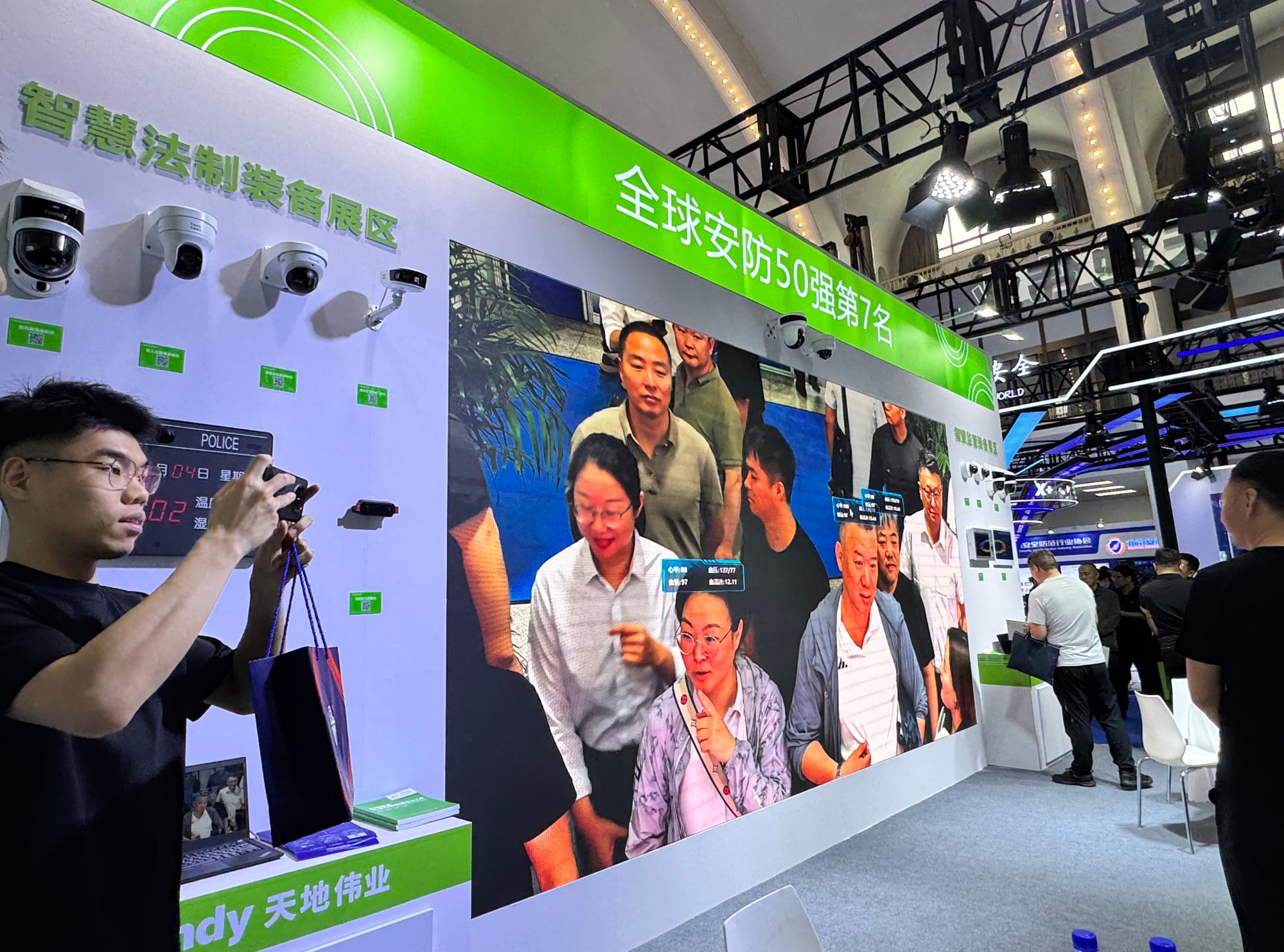
Among the displays was a camera developed by video surveillance supplier Tiandy, based in the northern Chinese city of Tianjin, which is designed to assess the vital signs – including heart rate, blood pressure, blood oxygen level and blood flow rate – of up to six people at a time, according to a presentation by the company.
It generated results from subjects standing in front of the camera for about 10 seconds, results that Tiandy said were more than 90 per cent accurate. In the demonstration, the participants’ vital signs were shown on a screen alongside their live images, with increased blood pressure, heart rate or other abnormal indicators highlighted in yellow or red.
The company said the product was best employed in an interrogation waiting area where four cameras could capture the vital signs of two dozen people.
Tiandy said the technology could track detainees’ live location and warn of a sudden medical crisis. It could also flag irregular policing behaviour that breached protocols, such as leaving a detainee unattended or interrogating a subject with only one officer present.
Another company, Lianxin Technology, said its AI-enabled cameras and psychological analysis large language model (LLM) used facial features to generate personality analysis that had been deployed by more than 30 police stations across China.
According to the company’s product brochure, if the subject looks at the camera for eight to 12 seconds, the system will generate a personality assessment that includes personality traits, emotional stability, health vulnerabilities, core motivations, risk of committing a crime and whether they are experiencing a mental health crisis.
The company said the mental analysis LLM was based on 80 million human samples and registered with the Cyberspace Administration of China, Beijing’s top cybersecurity watchdog.
Lianxin Technology said the company’s products were developed out of a shortage of frontline officers. As policing demands continued to grow, officers were under “huge physical and mental stress” from a high workload and fatigue, the brochure said.
Without explaining why, it said police interrogation and investigative skills were becoming “weaker” and that the firm’s contactless analysis could aid interrogation and help police make detention decisions based on the suspect’s risk level.
A company based in Hefei in central China said that in a shift from traditional human oversight towards smart device AI monitoring, it used cameras to capture images and voices to analyse indicators of mental health, emotional state, character and integrity.
Anhui Wuyu Security Technology’s products are used in state and public security agencies, border inspection stations and discipline inspection and supervisory authorities in more than 20 Chinese provinces and cities, according to its website. Additionally, they were deployed by special government agencies, from the military to kindergartens, to screen potential workers.
The company said it used video cameras to capture facial skin reflection across spectral wavelengths to study blood changes invisible to the human eye before integrating its algorithms to determine a person’s physiological and psychological condition. – South China Morning Post


