
As Malaysia sets its sights on becoming a regional leader in artificial intelligence (AI) through efforts like the upcoming National AI Action Plan 2030, research and development (R&D) has become a centrepiece for the country’s future.
Global players are already setting up shop for local R&D facilities, with AMD, for instance, opening up an office and engineering lab in Bayan Lepas, Penang last month.
Meanwhile, others are looking to invest hefty sums in developing R&D centres, like China’s Rianlon Corporation, which is planning an RM820mil facility in Johor, according to Prime Minister Datuk Seri Anwar Ibrahim.
Academic boost
Local universities have also stepped up to play a key role in developing talent, and providing the facilities needed to further push technological boundaries and work towards the country’s ambitions.
Take Universiti Putra Malaysia’s (UPM) planned AI Sandbox, announced in early August, which aims to create a safe and controlled environment that can be used by universities, industries, and government agencies to experiment, test, and validate AI solutions before large-scale deployment.
According to Dr Azree Nazri, head of laboratory at the university’s Institute of Mathematical Research, the Sandbox is modelled after the Taman Maya AI project in Terengganu that he had previously developed, which he says directly shaped UPM’s model of test-beds and integrated R&D-commercial pipelines.
“Like Terengganu’s Taman Maya AI, it focuses on rapid prototyping, innovation cycles, and de-risking adoption – ensuring that AI projects are practical, responsible, and scalable while fostering talent, IP (intellectual property) creation, and commercialisation.
“Looking ahead, the long-term vision is for the AI Sandbox to serve as a launchpad for developing more national-level AI projects, driving innovation across key sectors,” he says.
The Sandbox will be situated on UPM’s campus and is designed as a platform to test and develop smart city innovations in areas including agriculture, healthcare, mobility, governance, and biotechnology, with operations targeted to begin by end of this year.
It will even come equipped with its own private 5G network, allowing the development of systems supported by the technology.
“Initial studies will focus on BVLOS (beyond visual line of sight) drone safety, AI-driven traffic systems, and conflict applications.
“The facility will also strengthen collaboration among students, researchers, startups, and industry, creating a scalable innovation pipeline integrated into UPM’s AI ecosystem,” he says.
This in turn has given birth to one of the initial projects under the Sandbox, that being the AI Corridor set to launch next year, which will serve as a test-bed for autonomous drone technology.
“The AI Sandbox acts as a test-bed for safe experimentation, prototyping, and validation of AI solutions,” Azree says. “The AI Corridor then scales these proven innovations through shared compute, talent pipelines, and commercialisation pathways.”
“Together, they form a connected ecosystem – Sandbox feeds innovation, while Corridor ensures real-world impact.”
He adds that Sandbox will also house projects aside from the Corridor, which will be announced in phases as they reach maturity.
The drone zone
In establishing the AI Corridor, UPM seeks to eventually connect all Malaysian smart cities together with what it calls a “superhighway” that will see the deployment of drones and unmanned aerial systems.
In the long run, Azree described the AI Corridor as “a national plan to place Malaysia at the forefront of a transport revolution” and believes that the AI Corridor will transform Malaysian e-commerce logistics, particularly for last-mile and middle-mile delivery.
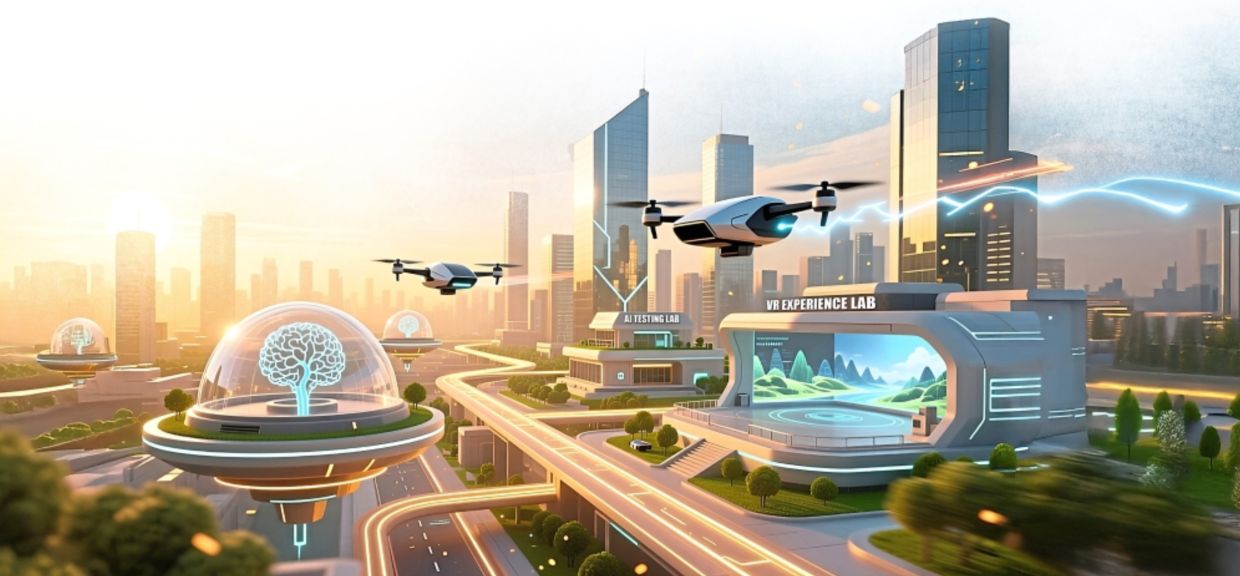
“Just as trains reduced transport times from days to hours, UAVs (unmanned aerial vehicles) will reduce them from hours to minutes, using energy from renewable sources,” he says, adding that BVLOS would extend the operating distance of drones and unlock their true potential.
“Once UAVs can travel long distances safely alongside other sky users, they will be more readily used for e-commerce or last-mile delivery – amongst many other beneficial uses.”
Benefits would come in the form of lower costs as part of a transition from traditional vehicles like motorcycles to autonomous drones operated from BVLOS, which avoids fuel charges, congestion, and delays while also being faster and more environmentally friendly.
“The real strength of the Corridor is enabling UAVs to fly the Euclidean path – the shortest, most direct route.
“However, the challenge is ensuring these straight-line paths are legally approved by regulators such as CAAM (Civil Aviation Authority of Malaysia), to guarantee safety, compliance, and airspace management.
“In the middle mile, the Corridor connects smart cities between states, creating an aerial superhighway for goods. For example, a UAV could carry parcels from a Johor distribution hub to a Kuala Lumpur smart city hub in hours instead of by-day truck journeys,” he says.
This would improve efficiency, reduce logistics costs, and strengthen Malaysia’s national e-commerce and logistics network, he claims.
At the Corridor’s launch, it will initially target coverage of all UPM grounds with a 5G- powered drone route, with plans to later expand with further routes that include the Malaysian Agricultural Research and Development Institute, Serdang Hospital, and beyond.
This would in turn evolve into a future transport system using AI-powered infrastructure, enabled by vehicle-to-vehicle (V2V) and vehicle-to-person (V2P) communication to ensure safety for drones, pedestrians, and autonomous vehicles.
However, at the start of the Corridor at the Sandbox facility, the project will operate within designated airspace, which is 1,500ft (457m) wide and 500ft (152m) high – with timed flight paths scheduled at 60-second intervals.
Azree further says that the AI Sandbox-Corridor ecosystem will offer students hands-on training, give researchers access to scalable R&D and commercialisation pathways, and provide startups with affordable testing grounds, market entry opportunities, and funding support.
By bringing these groups together, it aims to build skills, share resources, and spark collaborations, fostering innovation, entrepreneurship, and talent pipelines.
Virtual visions
Universiti Putra Malaysia (UPM) is not the only university driving R&D efforts in the country. The Asia Pacific University of Technology and Innovation (APU) has also established XR Studio, an on-campus facility dedicated to augmented reality (AR), virtual reality (VR), and mixed reality (MR).
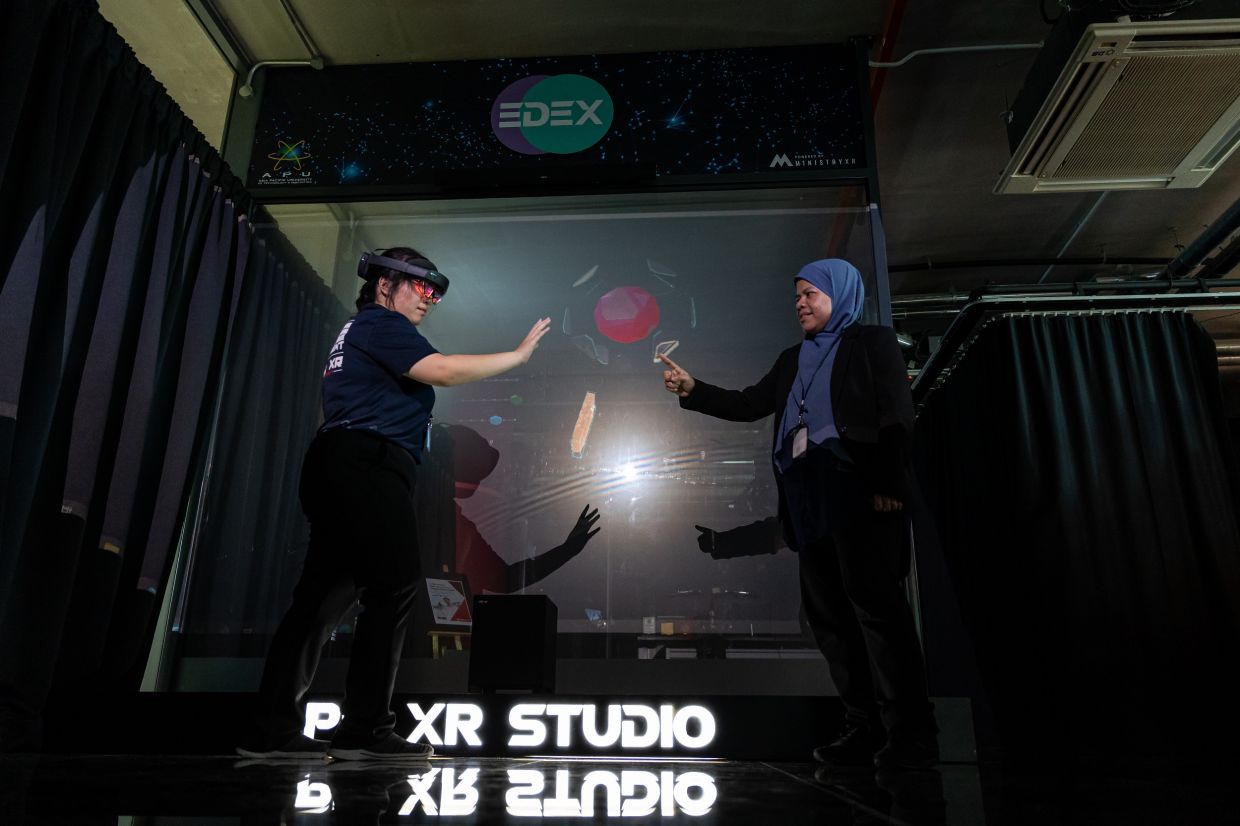
The Studio, currently in full operation, is centred around the development and testing of real-world applications of the various technologies under the extended reality (XR) umbrella by both students and researchers.
APU’s chief innovation and enterprise officer, Prof Dr Vinesh Thiruchelvam, positions the facility as a comprehensive platform that “integrates advanced technologies like 360-degree volumetric video capture, mixed reality smart glasses, and high-spec gaming workstations”, enabling students and researchers to fully engage with XR development and experimentation.
Projects from the APU XR Studio range from teaching and learning tools, to full-fledged industry-focused solutions. This includes the development and evaluation of a microbiology lab simulation built in VR for teaching and learning, as well as several collaborations with other industry partners.
Another is centred around virtual cycling training, with the system designed to simulate wind, uphill climbs, along with tilting slopes, which gives riders the ability to pre-emptively experience the real-world conditions of competition tracks.
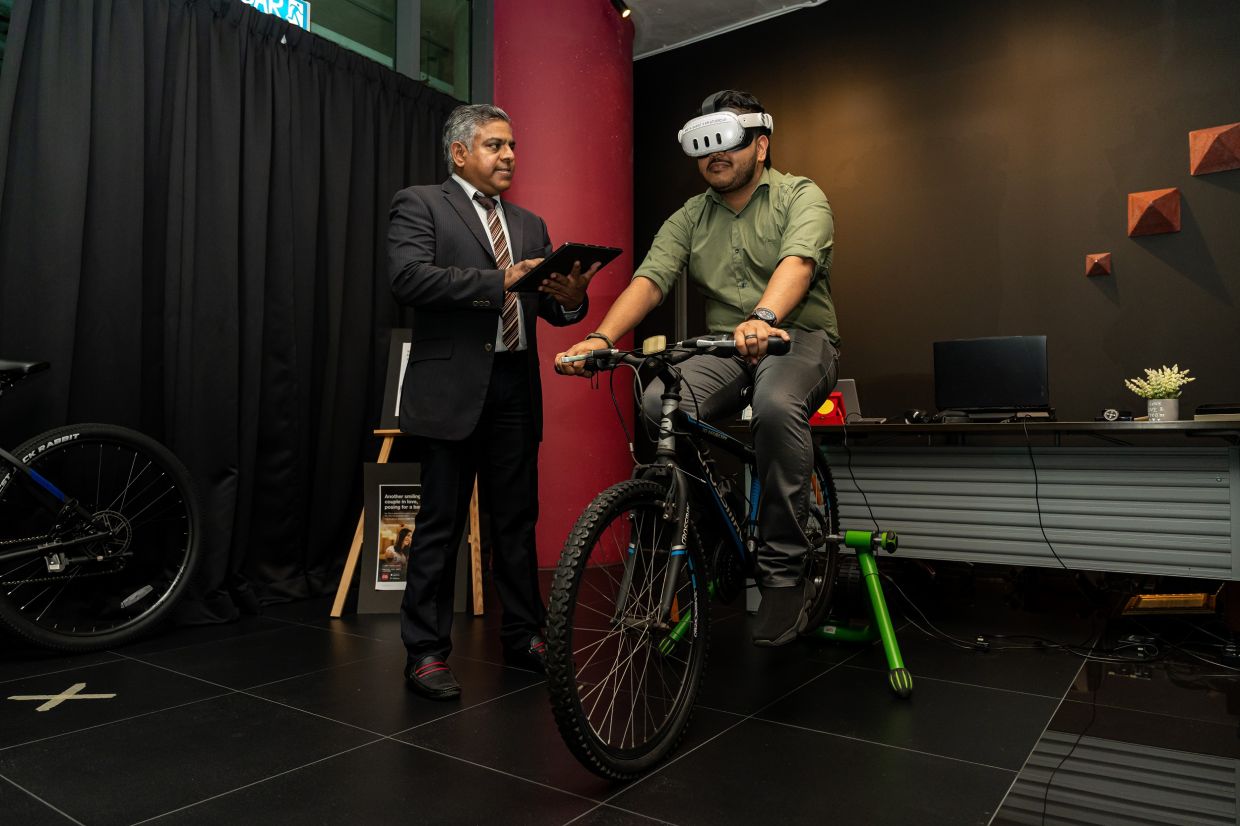
Others include a mental health centric VR game application, while another project with IMU Hospital aims to evaluate its operating theatre using a VR experience designed to enhance clinical training for medical students.
A similar facility can also be found at the Taylor’s University Virtual Online Future Technology and Extended Reality (Vortex XR) Lab.
According to the lab’s director, John Hii Ing Kieng, the lab acts as an XR and AI incubator that provides students access and hands-on experience with the same tools used by the global XR and AI industry.
“Perhaps most exciting is the entrepreneurial edge. Many of these projects have clear commercial potential. Students experience the full journey – ideation, prototyping, pitching, and exploring real market pathways.
“For some, this leads directly into careers in R&D and innovation; for others, it becomes the launchpad for their own startups,” he says.
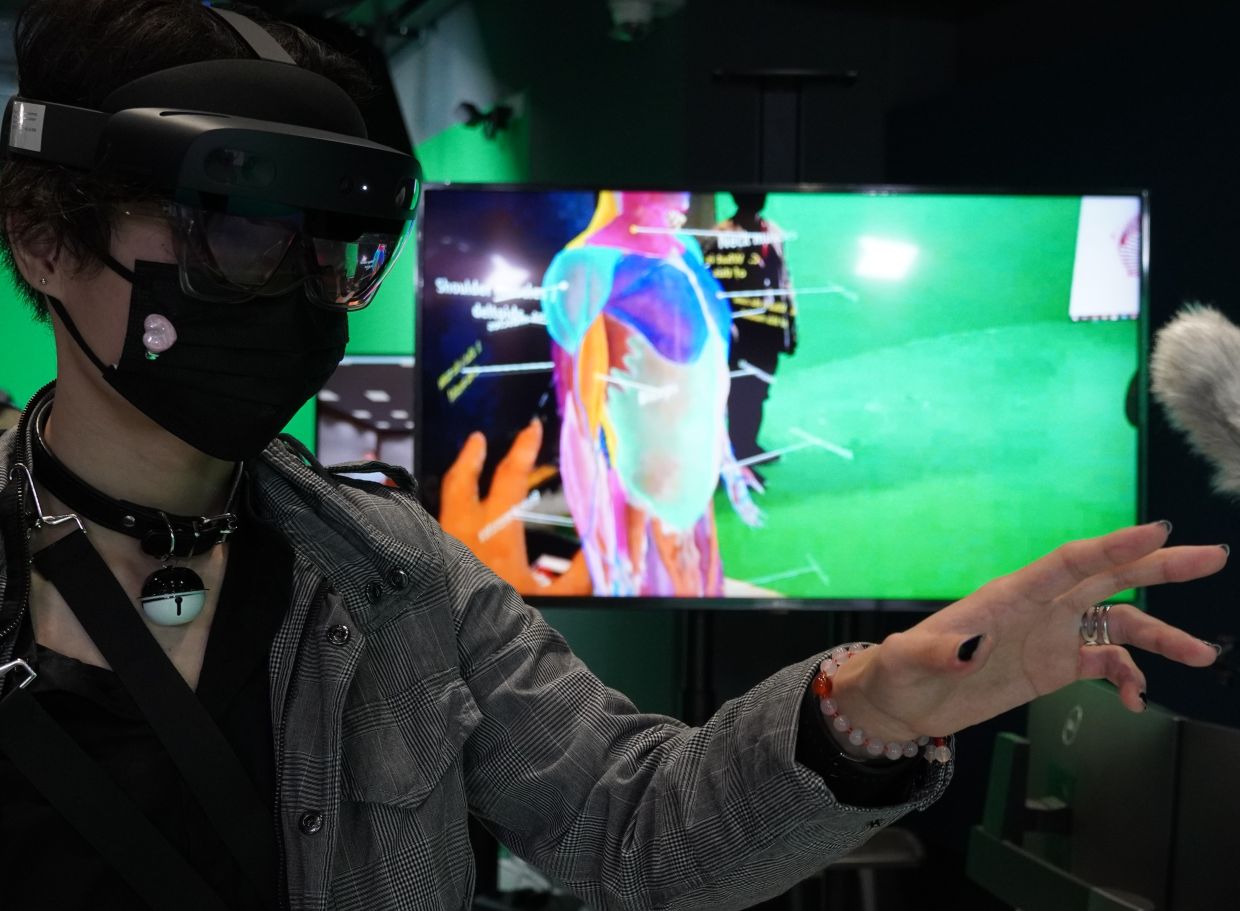
This includes development in Unreal Engine 5 and Unity 6 for the creation of digital twins and high-fidelity simulation work, along with access to hardware like the Apple Vision Pro, Meta Quest headsets, and other AI-powered XR glasses.
“We are also heavily investing in AI innovation. By using agentic AI frameworks and large language models such as GPT-5 and Gemini, we are developing 24/7 AI tutors, personalised learning companions, and lifelike virtual characters that can interact with students in role-play scenarios.
“Another exciting area is Emotion AI, or ‘affective computing’. These platforms can detect and respond to a user’s emotional state in real time, allowing us to design empathetic and adaptive virtual experiences – whether that is a mental health training module, a customer service simulation, or a medical empathy exercise.
“The lab is exploring the technologies that are not just shaping the future of XR, but also reshaping how students learn, practise, and prepare for real-world challenges,” he says.
The Vortex XR Lab is currently developing AI-powered platforms for the university’s students intended to provide a space to develop skills in public speaking, teamwork, and communication in safe, simulated environments.
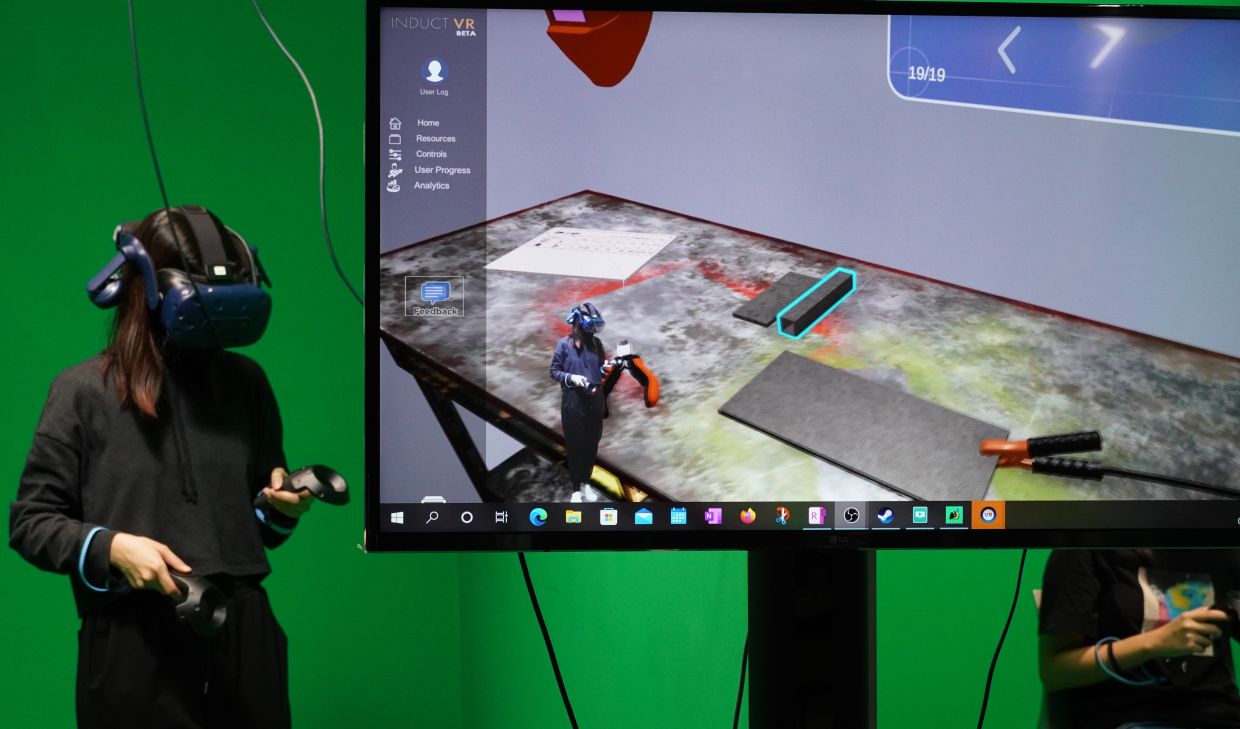
Hii further highlights its flagship project: an AI-powered mental health training platform developed with the Taylor’s University Mental Health and Well-being Impact Lab, which “uses AI avatars to let counselling and psychology students practice therapy sessions in repeatable, realistic scenarios”.
He adds that the Lab aims “to continue developing it as Vortex XR Lab’s first commercial Content-as-a-Service product, with potential applications for universities, corporate wellness programmes, and healthcare providers both nationwide and globally”.
The facility itself has been integrated into 31 undergraduate programmes at the university, and has seen use for immersive virtual lessons.
“Here, law students can argue cases in a virtual courtroom, medical students can explore the human body in fully interactive 3D, architecture students can walk through their designs before a single brick is laid, and business students can sharpen leadership and communication skills through AI-powered simulations,” Hii says.
Cyber defence to the fore
Also on the Asia Pacific University of Technology and Innovation campus is the Cybersecurity Talent Zone, which focuses on developing and equipping students to tackle real-world cyber threats.
“The main goal is to provide our students with an experiential learning environment for cybersecurity and to advance solution developments or research in the digital forensics area,” Prof Vinesh says.
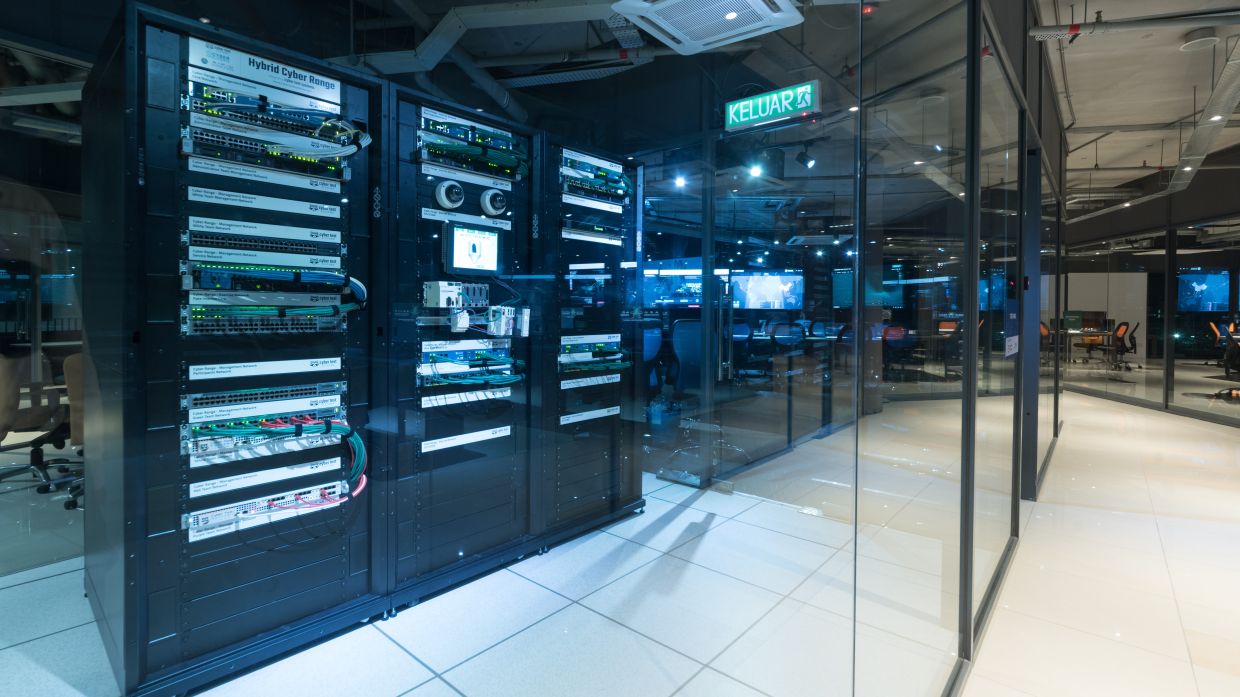
With AI entering the picture and becoming a new vector of attack for threat actors, Vinesh says that the use of machine learning and AI to defend against them has also been reshaping the cybersecurity landscape.
“AI-powered solutions are essential in helping organisations detect and respond to cyber threats faster based on real-time data.
“The only reverse obstacle to this is that cybercriminals are also leveraging AI to refine their attacks.
“This will be the cyberwar of wars in the coming future, in which AI sits as a white or black solution,” he says, adding that this area is where the efforts of research facilities like APU’s Talent Zone will be shifting to.
Prof Vinesh believes that the research focus will be squarely on the AI deployment for early detection of breaches, especially on patterns towards fraudulent access.
“AI can also be deployed for first-sign detection of website spoofing via smart domain security measures. The other advancing research area is in digital forensics, in which investigative studies are conducted to gather evidence using AI to visualise and report crime on the Internet and in cyberspace.
“AI algorithms and techniques will be the virtual assistant for studying complex digital data and enhancing mitigation strategies. This will be added to the Cybersecurity as a Service (CaaS) offering in the near future,” he says.