Scientists may have developed AI that knows if your date is into you


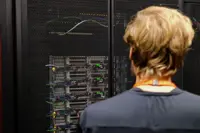
A computer designed by engineers at the University of Cincinnati might be able to tell you if he’s just not that into you. — Dreamstime/TNS

A computer designed by engineers at the University of Cincinnati might be able to tell you if he’s just not that into you.

The wearable technology can possibly predict if a first date is going well based on physiological responses. When talking, people sometimes experience physiological synchrony – where the participants’ autonomic nervous system responses align.

Published in IEEE Transactions On Affective Computing, the study used data from the device to measure participants’ respiration, heart rates and perspiration. In one of the first studies of its kind, the computer was able to identify four conversation scenarios with an accuracy rating as high as 75%. That’s why lead author and U.C. doctoral student Iman Chatterjee told the university the device could give you honest feedback about your next date.

“The computer could tell if you’re a bore,” Chatterjee said. “A modified version of our system could measure the level of interest a person is taking in the conversation, how compatible the two of you are and how engaged the other person is in the conversation.”

Physiological synchrony is likely an evolutionary adaptation humans developed to collaborate better with one another. It even occurs on a subconscious level. Understanding it could open the door to applications outside of gauging first dates, too.

“You could probably use our system to determine which people in an organisation work better together in a group and which are naturally antagonistic,” Chatterjee said.

It’s an opportunity for educators, therapists and more to potentially receive real-time feedback in a professional setting. Study co-author Vesna Novak, an associate professor of electrical engineering at the university, said she wants to take the study a step further.

“Our next step is to see how much nuance we can separate,” she said. “We’ve shown that AI has the ability to identify positive versus negative conversations, but can you separate shades of gray that humans wouldn’t discern?” – Atlanta Journal-Constitution/Tribune News Service

Follow us on our official WhatsApp channel for breaking news alerts and key updates!

Next In Tech News

Smartphone on your kid’s Christmas list? How to know when they’re ready.
A woman's Waymo rolled up with a stunning surprise: A man hiding in the trunk
A safety report card ranks AI company efforts to protect humanity
Bitcoin hoarding company Strategy remains in Nasdaq 100
Opinion: Everyone complains about 'AI slop,' but no one can define it
Google faces $129 million French asset freeze after Russian ruling, documents show
Netflix’s $72 billion Warner Bros deal faces skepticism over YouTube rivalry claim
Pakistan to allow Binance to explore 'tokenisation' of up to $2 billion of assets
Analysis-Musk's Mars mission adds risk to red-hot SpaceX IPO
Analysis-Oracle-Broadcom one-two punch hits AI trade, but investor optimism persists

Others Also Read