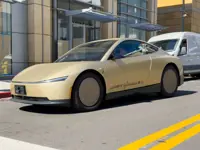
Baidu unveils new robotaxi it says could halve commuting costs


A Baidu employee briefs members of the media on the Apollo RT6, a fully electric vehicle with an ‘optional’ steering wheel that can be removed or installed when required, on July 20, 2022, in Beijing. Chinese search engine and artificial intelligence firm Baidu on Thursday, July 21 unveiled its latest electric autonomous driving vehicle that it says will be soon be part of its robotaxi fleet, as China pushes forward with its autonomous driving ambitions. — AP

Baidu Inc unveiled a new version of its self-driving robotaxi that it says costs nearly half as much to make as the previous model, opening the opportunity for cheaper travel.

Apollo RT6 robotaxis are set to be mass-produced at a cost of 250,000 yuan (RM164,718) per unit, the Chinese search-engine giant said in a statement on July 21. The car, which has a detachable steering wheel, will become available on Baidu’s riding-hailing service in 2023. The company said it plans to eventually deploy “tens of thousands” of the robotaxis.

Play, subscribe and stand a chance to win prizes worth over RM39,000! T&C applies.

Monthly Plan

RM 13.90/month

RM 11.12/month

Billed as RM 11.12 for the 1st month, RM 13.90 thereafter.

Best Value

Annual Plan

RM 12.33/month

RM 9.87/month

Billed as RM 118.40 for the 1st year, RM 148 thereafter.

Follow us on our official WhatsApp channel for breaking news alerts and key updates!

Next In Tech News

Could your phone be affecting your skin? Dermatologists explain
AI is coming for the sommeliers
Happiness Report says it is better to be social than on social media
After K-pop and K-drama, here come K-games
Explainer-What is the World Trade Organization e-commerce moratorium?
More! More! More! Tech workers max out their AI use.
Meta's longtime content policy chief Bickert leaving to teach at Harvard
Coming of age: Mega Cat Studios releases new 'God of War' video game
AI agents: They’re fun. They’re useful. But don’t give them the credit card.
Scientists use saliva for non-invasive, AI-based Parkinson's test

Others Also Read