Play by play: Storytellers for eSports


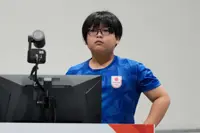
eSports commentators in Malaysia keep the scene alive with their passion and enthusiasm for the game. — 123rf.com

What does it take to be an eSports caster in Malaysia? First and foremost it requires patience, says 25-year-old Matthews Izzac.

It takes time for a career as a commentator to become financially rewarding, says Izzac, who began casting in 2017.

Back then it was harder to land a job and even when he got a gig, event organisers only offered a small token of appreciation.

“I accepted a job that required me to travel from Kuala Lumpur to Johor Baru. I got there by bus and wanted to catch a ride home the same day but none were available after the event.

Though opportunities were slim several years ago, Izzac didn’t give up on his passion of becoming an eSports caster. — MATTHEWS IZZAC

“The pay I received was not enough to cover one night at a budget hotel. So there I was in my suit, desperate to get home but the next bus was only available in the morning. I ended up getting a table at a mamak shop and decided to sleep there,” he says.

This made him question his decision, as others had made fun of his career choice and even his mother was distraught that he dropped out of college to start chasing job opportunities as a caster.

“My father passed away when I was 16 and since then my mother has worked hard to provide for us. We’ve struggled financially so I understood her concerns but I asked her to trust me,” he says.

His perseverance paid off a year later when Izzac saw an opportunity to showcase his talent at a FIFA World Cup match in a mall.

“I told the organiser I don’t need to be paid, as I just wanted them to see what I can do. I can still recall the atmosphere felt like I was in a stadium, which made it all very exciting.

“After the event ended, the organiser GamesBond offered a job as a regular eSports caster for its online platform and I haven’t looked back since,” he says.

On the scene

Terence Yong, 28, wasn’t planning on becoming an eSports commentator but that changed in 2014.

Commentators with a bigger following can attract a higher pay, says Yong, adding that they can also take up emceeing for even more money. — TERENCE YONG

A talent he was managing who was hired to be the commentator for the Defense Of The Ancients 2 (Dota 2) online tournament was nowhere to be found.

“I couldn’t get hold of her and the organisers needed someone so I decided to step in.

“The prize money back then was only US$100. It was small but since then eSports tournaments have come a long way,” Yong says.

The event involved over 1,000 teams from India and though Yong did not receive any payment, the experience piqued his interest in production work for eSports tournaments.

And he also takes the opportunity to volunteer himself as a commentator when the chance arises.

“As an eSports commentator, it’s my job to act as a storyteller.

“I also have to explain the game mechanics, rules and the importance of some items and why picking a certain character can make or break a team’s chances at winning,” he says.

One of his most memorable moments was for a Mobile Legends: Bang Bang (MLBB) tournament at a mall in Petaling Jaya, Selangor.

“It was a major tournament and most fans were there to cheer on a popular local team.

“I commented that the team may have made a mistake by choosing heroes that I thought did not fit their playing style at the time.

“The fans got upset and I received hate for it but my prediction turned out to be true as the team lost the match,” he says, adding that there was an important lesson to be learned.

Though he was right on the money, Yong realises now that the way he phrased his comment could have affected the players mentally.

“It has become a high stakes game and players may be able to hear what the commentators are saying. I try not to be so aggressive now,” he says.

According to Yong, financial opportunities for eSports casters have improved compared to when he first started out.

“Payment varies depending on the scale of the event as well as the experience of the caster.

“For example, amateurs can expect to get paid between RM100 and RM300 per day and pro-level casters can get up to RM800 although some popular commentators with a huge following could earn up to RM2,000.

“Casters can also get paid more if the organisers need them to take on emceeing duties as well,” he says.

Viewership is important to eSports, says Yong, who sees mobile games growing at a faster pace with ever larger prize pools.

“I used to be a commentator for PC titles but I had to shift to where the viewers are, which is mobile gaming now.

“It’s sad because some local professional PC gamers I know are looking to migrate to other countries such as China because it has a bigger market for PC gaming,” he says.

Attracting attention

According to Muhammad Hafiz Sudin, 35, the commentary style for eSports is different from traditional sports such as football.

A standard football match is 90 minutes while the eSports version is typically only 12 minutes and the game becomes exciting very quickly, he says.

Muhammad Hafiz aims to keep his viewers informed and entertained with his enthusiastic commentary. — MUHAMMAD HAFIZ SUDIN

“We have to capture all the action in the time that we have. And after one match is over, we have to immediately move on to the next one,” says Muhammad Hafiz who is a commentator for eSport football leagues like e-Malaysian Football League and the Virtual Bundesliga (the German football league).

As eSports events moved online during the pandemic, Muhammad Hafiz says his role also required engaging with viewers, something which traditional sports commentators typically don’t do.

“Interaction is only warranted when the timing is right. For example, during exciting moments like when a player is making a run towards the goal, I’ll just focus on the match.

“But during half-time or when we’re waiting for players to get ready for the next game, I’ll talk to the viewers so they stay tuned to the stream,” Muhammad Hafiz shares.

Viewers will also ask questions about the match which Muhammad Hafiz will try to answer during an ongoing game.

“A viewer once asked about the ranking of the teams in a match and I quickly whipped out the stats which I had prepared beforehand to address such questions,” he says.

Muhammad Hafiz also perceives interaction as an important way of keeping viewers entertained and passionate about the game.

“For example, during a recent game when our eRimau squad faced off with a team from Japan, I asked viewers to show their support by sharing the Malaysian flag.

“They ‘spammed’ the comment section with the national flag and I was thankful for their participation,” he says.

The Football Association Malaysia formed the eRimau squad in April with players such as Muhamad Luqman “Luqmanhzq” Haziq Hajiman and Ahmad Akmal “Akmaljhd” Abdul Rafil to represent the country in the FIFAe Club World Cup tournament.

Muhammad Hafiz also adds humour to his commentary, especially as many fans miss showing up at an actual event.

“I’ll tell viewers ‘Okay, we are now in the stadium. Please behave well. If you’re at the front, sit down so you don’t block anyone’ and the viewers will chime in saying ‘Duduk!’ to the others and ask where abang burger is,” he says.

Haters gonna hate

However, it’s not all fun and games though as some viewers can get nasty during a game.

“There will always be some negative comments from people who don’t like our commentary. I’ve learned to just take the positive,” Izzac shares.

eSports caster Andriyana Mohamed Ghazali, 32, who is popularly known as ChuChu in the local scene, says she faces more scrutiny from fans compared with her male counterparts.

Andriyana believes more Malaysians now take pride in the performance of local eSports teams at tournaments. — ANDRIYANA MOHAMED GHAZALI

“I’ve been in situations where I would get criticised when I talk about technicalities or explain certain aspects of a game. I get called a ‘know-it-all’.

“But when my male co-host says the same thing I said, the viewers will agree with him,” she says, adding that she also often has to deal with people giving stereotypical opinions about female gamers.

Andriyana, who is a medical graduate, used to organise Dota 2 tournaments while she was pursuing her studies in Egypt. She also formed her own all-female eSports team called Queens in 2009, as she wanted to encourage more girls to participate in competitive gaming.

“It was a male-dominated scene and people needed time to accept change. For me, it came down to my own patience and mental strength. I won’t lie, it has been tough and I’ve experienced breakdowns,” she says.

She began a career as an eSports caster in 2012 for Dota 2 events in Malaysia and has since been involved in more than 100 tournaments for titles like MLBB, Valorant and PlayerUnknown’s Battlegrounds (PUBG).

“I don’t want anyone to experience what I went through when I first started out.

“Whenever I am down, I tell myself I need to do this so future Malaysian female shoutcasters have a place in eSports,” she says.

In February, both Muhammad Hafiz and Izzac received emails from FIFAe informing them they have been selected as the official eSports commentators for the FIFAe Club World Cup 2021 finals.

“It was the first time ever that FIFAe wanted someone to provide commentary in Bahasa Malaysia and it was a huge moment for me as it meant receiving recognition from the governing football body,” Muhammad Hafiz shares.

Viewership is important to eSports, says Yong, who sees mobile games growing at a faster pace with ever larger prize pools. — AFP

Izzac, who provides commentary in English, says he cried when he received the email and felt that his hard work throughout the years had paid off.

“I spend hours practicing by watching a football game and setting it on mute to give it my own commentary.

“It sounds silly but that’s what I do to stay valuable in the market,” he says.

The casters also believe they play an important role in promoting the growing eSports scene in Malaysia, including highlighting the achievements of local teams at international tournaments.

“We often heard misconceptions about gaming being a waste of time back then. Today, people accept eSports as a platform for launching their careers and you can even represent your country,” Izzac says.

The eRimau squad was supposed to represent Malaysia at the FIFAe Nations Cup 2021 in Copenhagen, Denmark but the event was cancelled due to Covid-19 and its continuing impact on travel.

Andriyana is of the opinion that more Malaysians now take pride in the performance of local teams.

“The younger generation is more patriotic than ever. The local teams used to be overlooked but not now,” she says.

It’s crucial to acknowledge the achievements of local teams, she says, as this would help the industry grow, benefiting everyone involved, from coaches and analysts to event organisers.

“If our teams and eSports scene are recognised all over the world, we can go further than we are today.

“More sponsors lead to more tournaments, and better job opportunities,” she says.

Get 20% OFF The Star Digital Access

Monthly Plan

RM 13.90/month

RM 11.12/month

Billed as RM 11.12 for the 1st month, RM 13.90 thereafter.

Best Value

Annual Plan

RM 12.33/month

RM 9.87/month

Billed as RM 118.40 for the 1st year, RM 148 thereafter.

Follow us on our official WhatsApp channel for breaking news alerts and key updates!

Others Also Read