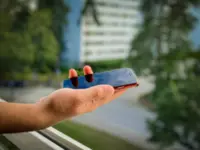
When it comes to smartphone photography, it’s not just about the camera, but how one handles it, say seasoned photographers.
Policeman and Instagram photographer Azmeer Iskandar Amir Hamzah says he’s been an avid mobile phone photographer since day one, having never owned a compact camera.
He recalls starting with the iPhone 5S in 2013, which he bought after being stationed in Terengganu for his training in the police academy.

Although at first he took snapshots of whatever caught his eye, he began pursuing the passion in earnest after joining photography group Igers Malaysia which focused on images for Instagram.
After helping to organise several events for the group in Terengganu, he founded a local chapter there and in the process learnt the fundamentals of photography from his fellow members.
“We all taught each other different things. I prefer landscapes and minimalism, while my friend is better at portraits, so we share what we know. And by teaching others, you also develop the concepts already in your head,” he shares.
Azmeer Iskandar, who now owns an iPhone 11 Pro, says he prefers phones because they are pocket friendly and don’t break the budget.
“Modern smartphones have improved a lot and are now much closer to a dedicated camera in terms of quality,” he believes.
His Instagram account @aazmeeriskndr hit the limelight when Apple shared a photo he took on a beach in Rusila Marang near Kuala Terengganu.

Having been based in Terengganu for the last seven years, the Kuala Lumpur native was happy to highlight the East Coast state’s many beaches and parks, and made a point to explore them to get the best shots.
He shares that these outings can take three to four hours, especially for trick photography, which could take 15 to 30 minutes to get one shot right.
Trick photography combines optical illusion and forced perspective to create surreal images, like making a person in the foreground look as large as a building, or replacing someone’s head with a well-placed object like a balloon.
The big picture
Azmeer Iskandar says a lot of planning and careful direction of models are necessary to get good photos. Lighting and shadows too affect the realism of an image.
Smartphones make it easier to compose an image, as what is displayed on the screen is essentially what you will be capturing, he says.

He suggests spending more time lining up a shot rather than just simply shooting and hoping to edit the photos later.
Though he too edits, Azmeer Iskandar keeps it to a minimum and does it all on the phone using apps like Lightroom and Retouch, as he doesn’t own a computer.
“I recommend not to over edit. If the sky is an odd colour or the water is green, let it be. It’s important to depict nature as it is,” he says, adding that people nowadays tend to overuse social media filters until an image looks nothing like the original.

Long-time photographer Wan Cheng Huat agrees that smartphone photography leans heavily on filters, which erase details, diminishing the value of a shot.
“Personally, I think some of the photographs look more like images for a commercial, rarely showing the true story behind them,” he says.A fan of photojournalism, he admires those who capture images to tell a story and preserve the moment.
He got into photography 22 years ago when he bought a film camera and joined the school photography club at age 16.
“We had to preplan the exposure settings, visualising the final image in our heads, keeping an eye on the weather and many other factors,” he recalls.
“With film, there was no such thing as instant gratification. After taking the shots, it was an agonising week-long process of waiting for the negatives to be processed.”
In contrast, he found going digital made him trigger happy, snapping tons of shots that required spending more money for storage.
“I soon realised that I was straying from the true essence of photography, which is making each shot count – quality over quantity,” he says.
Constantly looking at the screen after each shot also took the fun out of being in the moment and focussing on what he wants to shoot, he says.
Action plan
Wan recommends photographers start slow and devote more time to learning the basics of the art.
“You will need to remind yourself that mastering photography is not a quick process. Good photography is more than pressing a button,” he says.
And there is no excuse to not learn in the digital age, he says, as there are plenty of resources online, including tons of free tutorial videos.
For Ng Wire Hon, it was boredom that made him switch to trick photography using action figures.

“I started taking photos with only the figures, but after two years it felt too boring,” he says.
“I wanted to create something more and was inspired by some of the shots I saw on social media of action figures ‘interacting’ with people.”
He started photographing them with a compact camera but found its narrow depth of field causes either the foreground or background to be out of focus.
The solution for him was a smartphone, which made it easier to focus and shoot from low angles to create the exaggerated perspectives for the small figurines.
It’s also easier to shoot with larger action figures, he says, adding that his collection of 6in and 12in models started with the Transformers franchise in 2002 and expanded to the Marvel and DC comic universes in 2012.
“The person can pose closer to the figure when it’s larger,” he explains.
Forced perspective allows objects to appear larger when seen up close – for instance, placing an action figure closer to the camera and having the people and the background further away makes everything appear about the same size.

Ng, who mostly uses his kids and wife as subjects, says the biggest challenge is when taking photos of himself with the figures.
He accomplishes this by setting a 10-second delay which allows him to quickly get into position.
“Very leceh (difficult) to take the photo then go over and check if it looks right,” he says with a laugh.
Having done this for three years, he says the best way to get better at trick photography is to keep at it while trying new things.
“After a while you get used to telling the distance you need between subjects and that makes planning – which takes up the most time – faster,” he says.
It usually takes him 15 to 30 minutes to perfect a shot.
Asked if he would upgrade to a high-end camera, Ng says he doesn’t see the need as his smartphone is delivering satisfactory results.
“I’d recommend hobbyists to start with a phone, as they are easier to use and have really good cameras. The quality should be good enough for most people since they will be posting on social media,” he says.
Ng also uses his social media presence – he has over 140,000 followers across his Instagram (@WireHon) and Facebook accounts – to remind the public to stay safe during the movement control order (MCO).
He uses his action figures to show that even superheroes are practising social distancing in the new normal.
In one shot, superheroes without masks like Thor and Doctor Strange were posed with a face mask alongside those already in masks like Deadpool and Spider-Man.
Pictures in motion
In Quek Shio Chuan’s case, MCO took away two of his biggest passions – making videos and cycling.
“That’s when I decided to combine both: making videos about cycling,” he says.
In one video, he sticks cardboard cutouts to a wheel hooked up to a stationary bike, which he rides, to “animate” them just like a zoetrope of yesteryear.

A director with creative agency Reservoir Production, Quek is a filmmaker whose recent work Guang netted the Best Film award at the 59th Asia Pacific Film Festival in Macau last January.
Although he studied broadcasting in college, Quek says much of what he knows today was self-thought and the best way to learn is by doing.
“You can learn theory but I say get your hands into it, pick up a phone or DSLR, start filming and editing. Practice makes perfect, but it’s never perfect lah, so you keep practising,” he shares.
As it was MCO, it also meant he had to turn to his phone, as his professional equipment was at work.
Working with a smartphone meant taking into account its limitations – for instance, most phones have a fixed lens and limited zoom.
However, he finds the phone’s wide-angle lens handy when filming in smaller indoor spaces, while the built-in Bluetooth allows him to take photos remotely by using a selfie stick as a trigger.
It’s also easy to create DIY rigs for a phone, like taping it to a broom instead of using a tripod, he adds.
Professional equipment requires professional accessories like light sources and battery packs, he adds, which are cumbersome even though they deliver higher quality results.
For those looking to get into video from photography, he recommends investing in audio equipment like microphones, adding that amateurs get too caught up in the visual and forget the overall experience.
Asked about the creative process for him, he shares the importance of “resetting the brain” and getting into a headspace where one could efficiently plan and execute a project.
And cycling is when Quek problem solves whatever project he is working on.
Discover the latest smartphones at rebated prices with Lazada Promo Code
Already a subscriber? Log in
Get 20% OFF The Star Digital Access
Cancel anytime. Ad-free. Unlimited access with perks.