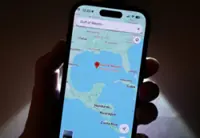
In this Monday, Sept. 10, 2018, image made from a video Greg Psitos works on a computer in the Queens borough of New York. In February, someone took over Psitos' Google Maps listing, and changed his hours to closed on Valentine’s Day, what should have been one of his busiest days of the year. Since then, he’s been on a crusade, putting up web videos explaining how he’s fooled Google Maps into believing his flower shop is home to both news network CNN and Trump Palace, both of which are still listed on Google Maps. (AP Photo)
For centuries, people have relied on maps to figure out where they are and where they’re going. But today’s digital maps – seemingly more precise than ever – aren’t always as dependable as they appear.
At the end of August, for instance, Snapchat users woke up early to find the app’s internal map had renamed New York City with the anti-Semitic label “Jewtropolis”. In Washington, D.C., Google Maps incorrectly renamed a Senate office building after the late Senator John McCain a few days after his death on Aug 25. Researchers have found numerous fake business listings in Google Maps for plumbers and hotels – apparent attempts to game search results and juice referral traffic.
Already a subscriber? Log in
The Star Festive Promo: Get 35% OFF Digital Access
Cancel anytime. Ad-free. Unlimited access with perks.