
Olympus has a baby OM-D and despite its smaller size, the camera is packed with features.
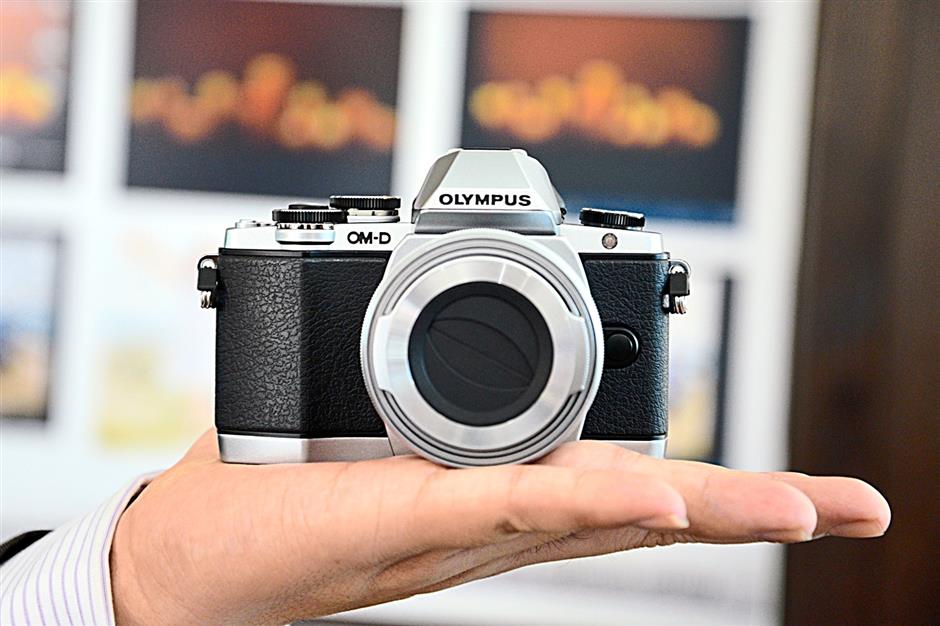
The E-M10 is the baby in the Olympus OM-D line — while it has the same retro look as the E-M1 and E-M5 with the characteristic viewfinder hump, this camera is far smaller than its already small siblings.
The camera even comes with a redesigned 14-42mm f/3.5-5.6 kit lens that is incredibly tiny. When retracted into its closed position, most people would mistake it for the Olympus 17mm f/2.8 single focal length lens. Amazing!
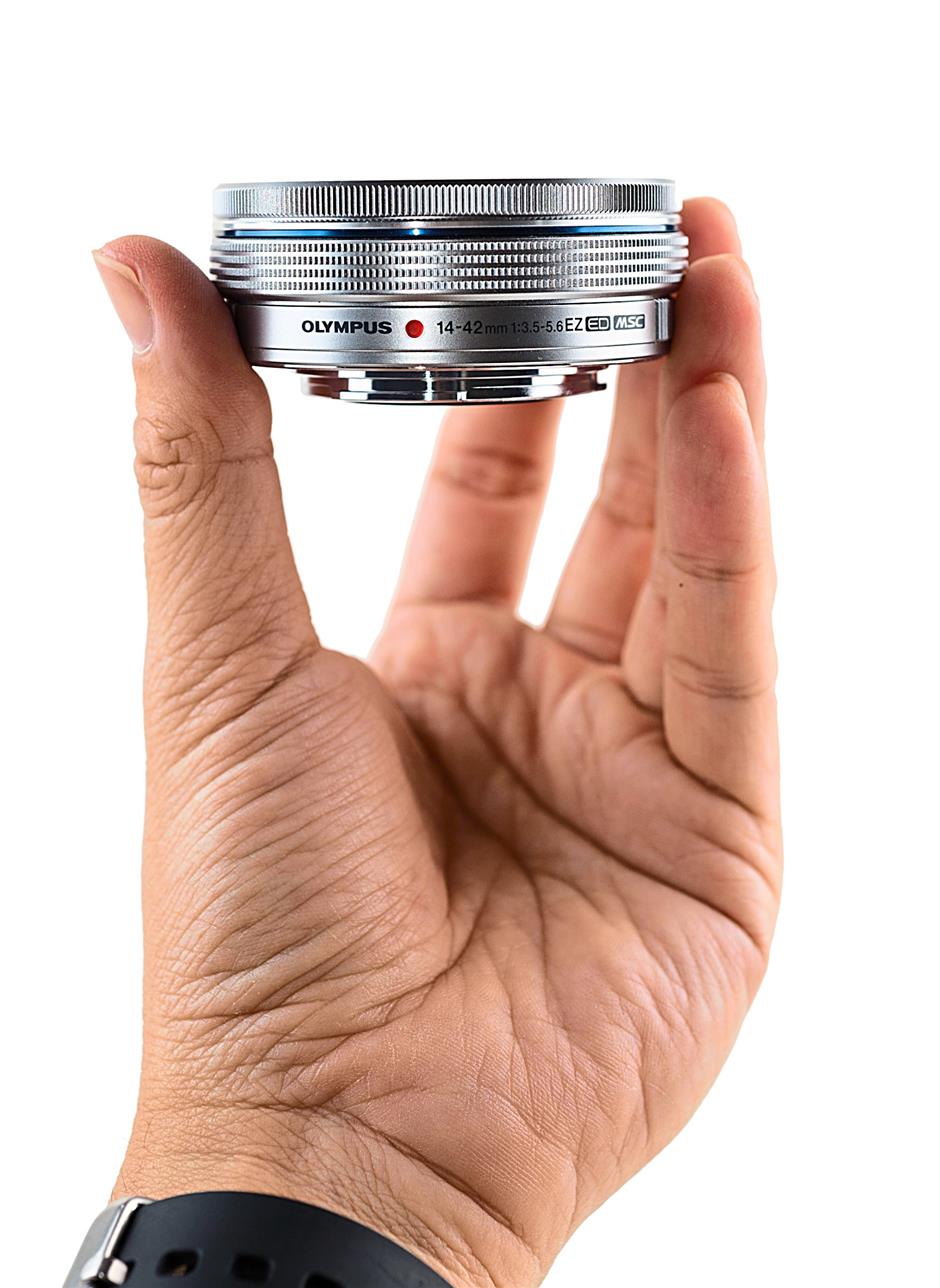
Despite its size the E-M10 actually packs in a lot of features that you’ve come to expect from Olympus, including built-in sensor shift image stabilisation (although a less advanced version compared to the E-M1) and the positionable touchscreen LCD.
Vintage looks
As I mentioned before, the E-M10 looks much like its siblings — it’s available in an all-black finish or black and silver finish if you want the most authentic retro look.
My personal preference is for the black and silver version which I feel looks a lot more like the classic OM-10 film SLR which I think the digital model is based on.
While it doesn’t look like it at first glance, the E-M10 is actually pretty small. It’s not too small for my tiny hands, but for people with larger hands, Olympus produces an add-on grip that will give the camera a more substantial grip.
The surprise, as far as an OM-D model goes, is that the E-M10 comes with a built-in pop-up flash, which is housed inside the viewfinder hump — it’s not a very big flash, but it’s there and should prove useful for the times when you need it.
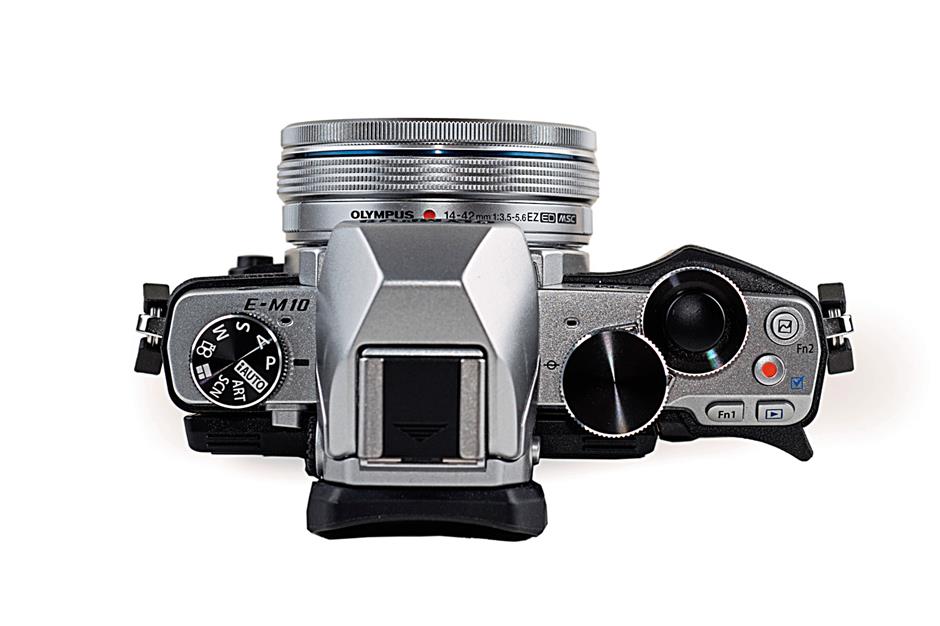
The camera also retains the dual control dials of the E-M1, which is very convenient when you are in manual mode, where both the aperture and shutter controls are right at your fingertips.
The dials are, of course, customisable and you can map them to a number of different functions if you so wish.
Like most modern positionable LCD screens, the one on the E-M10 has a limited number of angles (it can’t be flipped around to the front for a selfie, for example) but on the upside it’s a touchscreen (which allows you to tap to focus, snap a photo, and review your images by swiping across the screen).
There are a few of features that differentiate the E-M10 from the more expensive E-M1 — instead of a 2.36-million dot electronic viewfinder (EVF), the E-M10 has a 1.44-million dot screen, and instead of the five-axis image stabilisation, the E-M10 only comes with a three-axis version.
One unfortunate omission is that the E-M10 has no external microphone port or an accessory connector, which means that you will just have to live with the sound captured by the built-in microphone or use an external audio recorder and sync the audio with the video later.
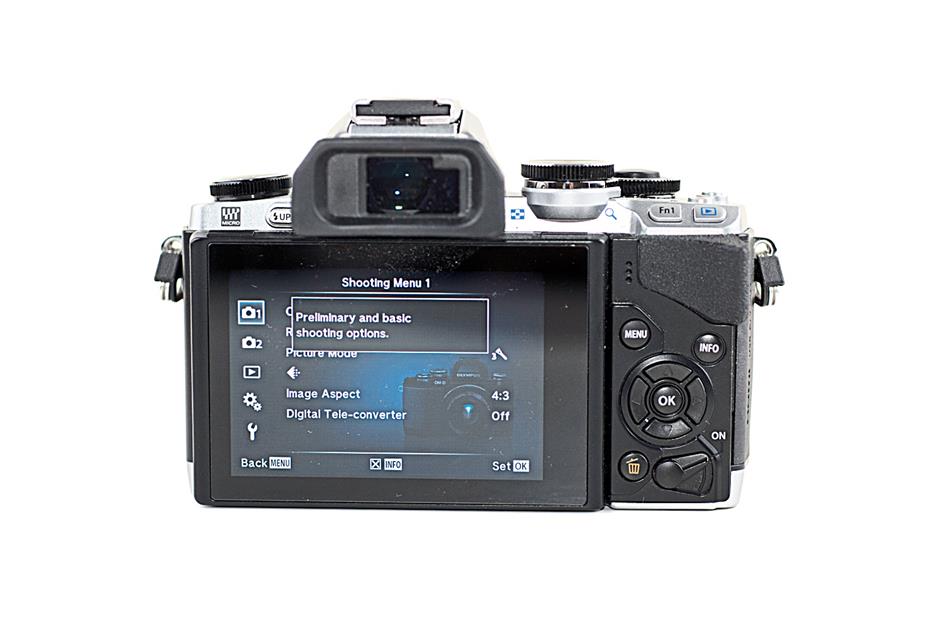
Autofocus, however, is still one of the fastest on the market and I certainly didn’t have any problems with it.
Like the E-M1, the E-M10 also comes with the Live Bulb and Live Time modes which allow you to take a long exposure and see it “develop” on the LCD as you are shooting. This mode is great for figuring out the exposure when shooting night landscapes as it shows you just how the image is forming as the timed exposure is happening.
As mentioned before, the 14-42mm kit lens that comes with the E-M10 is incredibly small when fully collapsed. It’s amazing that Olympus has managed to include the focus and zoom motors in a lens that’s so incredibly small.
Pro performance
Olympus has used nearly the same image sensor as the other models in the camera maker’s range and as such, image quality obtained from the E-M10 is about on par.
High ISO performance is really good from ISO 200 to 1600, with ISO 3200 still usable although there is noticeable smoothing of detail due to noise reduction at this setting.
By the time you get round to ISO 6400, noise reduction kicks in much stronger and you start to see a more obvious loss of detail.
All this is pretty consistent with the results we had with the E-M1 — while I can’t say it’s exactly the same, it’s pretty close.
Olympus is also one of the companies that does WiFi right. Once you have the OI Share app installed from either Google Play or the iOS App Store, the camera can pair with a smartphone by simply reading a QR code generated by the camera. There is no NFC connection.
Wireless performance and control via the smartphone is also very snappy — live view is quite fast and the app gives you close to full control for modes and settings, allowing you to switch shooting modes, autofocus and other settings right from your smartphone.
Conclusion
Overall, the E-M10 is an excellent camera for the price — it’s well-featured and gives you a lot of control, all in a very small package.
Image quality is also up to the usual Olympus standards, which means you get excellent quality especially within the camera’s ISO limitations.
The only drawback is that the E-M10 is not that great for videographers, as it doesn’t have any option for using an external microphone.
However, for photographers on a budget, the E-M10 is a compelling buy — it’s remarkably small yet has almost all the important features found on the pro-level E-M1.
Pros: Small yet full-featured; dual control dials make it easy to switch settings; built-in WiFi.
Cons: No microphone input.
| OM-D E-M10 (Olympus Corp) Mirrorless interchangeable lens camera Sensor: 16-megapixel Live MOS sensor (4,608 x 3,456 pixels) Viewfinder: 3in 1.04-million dot LCD, 1.44-million dot EVF Shutter speed: 60secs - 1/4000sec ISO range: 200 - 25,600 Shooting modes: P, S, A, M, iAuto, Scene Modes, Art filters Video format: Up to 1080p at 30fps, H.264 Battery: BLS-5 lithium-ion Storage: SDXC Interface: MicroHDMI, USB 2.0 Other features: Three-axis sensor shift image stabilisation Dimensions (W x H x D): 11.9 x 8.2 x 4.6cm Weight: 396g Website: www.olympusimage.com.my Price: RM3,299 (with 14-42mm f/3.5-5.6 kit lens) Rating: 4.5/5 stars Review unit courtesy of Olympus (Malaysia) Sdn Bhd, (03) 6411-0000. |
Already a subscriber? Log in
Get 20% OFF The Star Digital Access
Cancel anytime. Ad-free. Unlimited access with perks.