AS Nigerian women dominate sports on the continent, they’re facing off not just against top talent abroad but a domestic atmosphere of mismanagement and pay disparities – and even the risk of repression for speaking out.
Nigeria is fresh off a win at the finals of Women’s AfroBasket, their fifth-consecutive championship at the continent’s top hardwood tournament, while last month the Super Falcons clinched their 10th Women’s African Nations Cup football title.
The football team’s successes in particular have come in the face of pay disparities compared to their male counterparts – when they get paid at all.
The women receive a training camp allowance but the bulk of their pay comes from per-match bonuses, which vary depending on the team’s results.
Both the women’s basketball and football teams have been plagued by late or unpaid match bonuses for years, despite their records as arguably the best teams on the continent.
But when the Super Falcons landed in Abuja after their 3-2 WAFCON victory over host Morocco last month, none of the players answered questions about whether they would ask the president, who was welcoming them at his villa, about being paid the same as the men’s team. Nigerian journalists on the scene said the question was useless: it was far too politically charged.
“If you speak up against what’s going on, you completely lose the possibility of getting what you’re entitled to, you could actually be blacklisted,” said Solace Chukwu, senior editor at Afrik-Foot Nigeria.
Not that there aren’t clashes: in 2021, basketballers called out the authorities when they topped Africa, protesting against unpaid match bonuses.
The Nigeria Basketball Federation at the time denied any wrongdoing, blaming the issue on clerical errors.
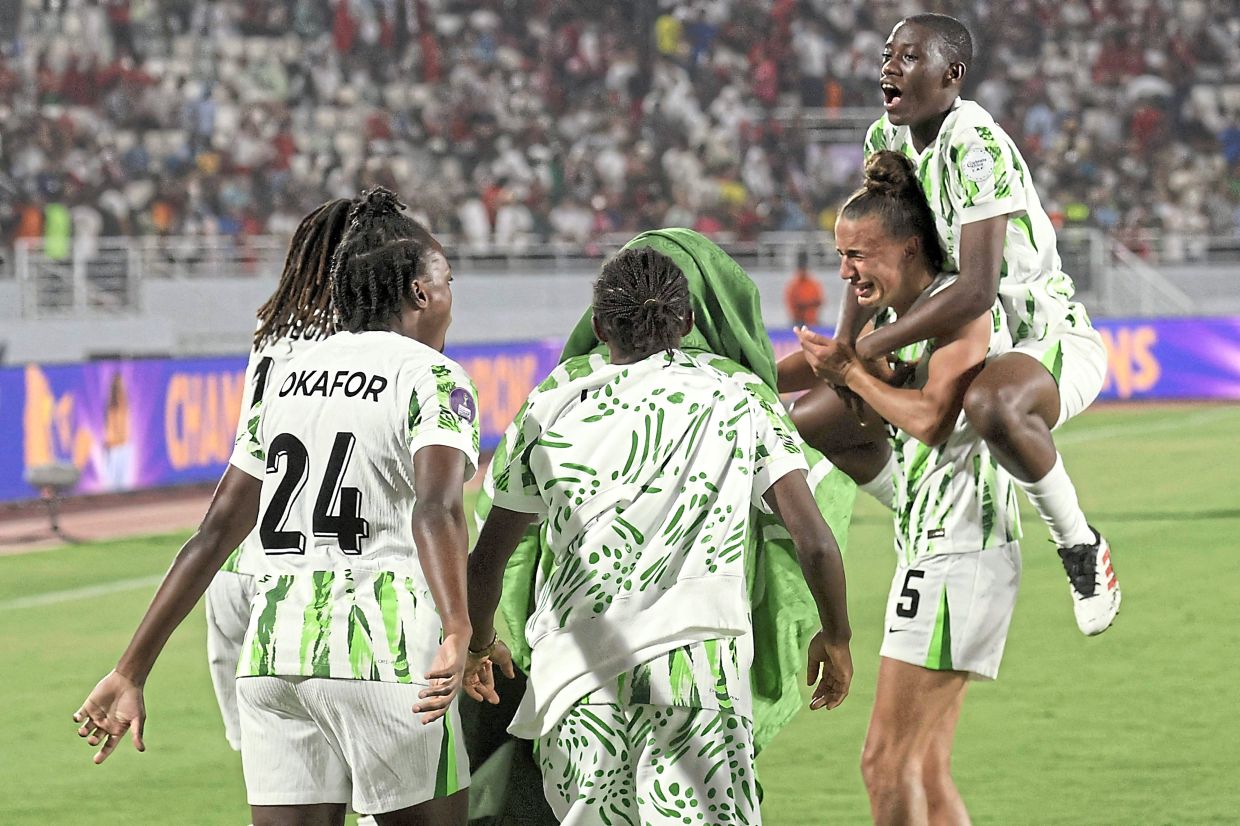
Like the basketball team, the women’s football team have found remarkable success, stemming in part from the country’s population of more than 200 million – the largest on the continent, complemented by a widespread diaspora.
They also benefited from early investments in women’s football at a time when other African countries focused on men’s teams, Chukwu said, helping the Super Falcons win the first seven editions of the WAFCON, from 1991 to 2006.
Yet they only played a handful of test matches before they landed in Morocco for this year’s competition, cobbled together at the last second.
The Super Falcons haven’t been completely silent in the face of mismanagement and disinterest from authorities.
But rocking the boat too much appears to come with a cost.
“Players who lead or dare to protest ... always risk not being invited or sidelined outrightly,” said Harrison Jalla, a players’ union official.
After Super Falcons captain Desire Oparanozie – now a commentator – led protests over unpaid wages at the 2019 Women’s World Cup, she was stripped of her captaincy and was not called up for the 2022 tournament.
Former men’s coach Sunday Oliseh – who himself was let go from the national squad amid protests over backpay in the early 2000s – called the situation a case of “criminal” retaliation.
The Nigerian Football Federation ( F) at the time denied that they dropped Oparanozie over the protests.
Players still have hopes for women’s sports to expand.
“I think the sky is the limit,” said Nigerian point guard Promise Amukamara, fresh off her AfroBasket win.
“Obviously, more facilities should be built around Nigeria. I feel like maybe, one year we should host the AfroBasket.”
Aisha Falode, an F official, meanwhile, called on the government to “invest in the facilities, invest in the leagues and the players, because the women’s game can no longer be taken lightly”.
Despite the challenges, women’s sports are still finding a foothold among younger fans.
Justina Oche, 16, a player at a football academy in Abuja, said that the exploits of the team inspired her to pursue a career in the sport.
“They say what a man can do, a woman can do even better,” said the youngster, whose role model is six-time African Footballer of the Year Asisat Oshoala.
“The Super Falcons have again proved this.” — AFP