Another side of... Tan Twan Eng


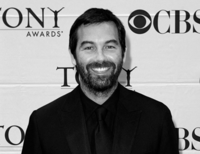
Award-winning Malaysian author Tan Twan Eng
THE world knows him as the best-selling, award-winning author of The Gift of Rain and the Garden of Evening Mists. Tan Twan Eng's knack for bringing historical situations to life has seen him garner both the Man Asian Literary Prize and the Walter Scott Prize for Historical Fiction in recent times. What is rather less known is his deep interest in the brooding keyboard bands of the 1980s. Tan took time out of his globe-trotting to answer some email questions about his little-known passion for bands like Depeche Mode and New Order.

Q: What first got you into 80s synth pop?

A: I started listening to pop music when I was 10 or 11, in the early 1980s, so this was the music that was all around me, playing from the radio, blasting out from the shopping malls and school buses and the pirated cassette stalls in pasar malams.  

I was living in Penang and the RAAF had its own radio station, Radio RAAF Butterworth, or ‘Double-Arr-Bah-yee’ as their DJs called it. RRB played fantastic songs, so I was exposed not just to British and American pop songs, but also to Australian bands – Pseudo Echo, Midnight Oil, Mental As Anything, Dragon, INXS in their early days … 

Q: Personally I rate OMD, Ultravox and Depeche Mode as the biggest synth pop bands. Do you agree? Who would you say are the key contributors to the genre?

A: I’d agree with you about OMD and Depeche Mode, but I never got into Ultravox (Midge Ure’s ‘If I Was’ is a favourite of mine though). There were so many good bands – A-ha, the Pet Shop Boys, the Eurythmics, New Order, Erasure, The Communards, Wham!, Frankie Goes To Hollywood, Alphaville … 

Each band had its own distinctive sound, so you know who’s on the radio immediately when a song comes on: ‘Ah, that’s Boy George’s vocals, or George Michael, or Tony Hadley, or Annie Lennox, or Kate Bush, or Simon Le Bon, Neil Tennant, Holly Johnson, Tracey Ullman, Laura Branigan ...’ 

Martin Gore, David Gahan and Andrew Fletcher(L-R) of the British band Depeche Mode perform during their concert in Puskas Ferenc Stadium in Budapest, Hungary, 21 May 2013 - EPA
Q: Are they any little-known bands that you think should have made it big? What attracted you to them? 

A: Alphaville wasn’t a little known band, but they should have been bigger. Thanks to iTunes I recently downloaded unplugged and live versions of ‘Forever Young’, and the song sounds as haunting as ever. Pseudo Echo. Camouflage, with their one hit, The Great Commandment. Cutting Crew.  A lot of people think A-ha were a one-hit wonder with ‘Take On Me’, but they had a long career (their farewell concert was held in 2010, after 25 years and 9 albums) and a string of strong, well-crafted songs – The Sun Always Shines on TV, Stay on These Roads, Waiting For 
Her and Summer Moved On.

Q: By the 1990s, electronica was giving way to combos like Enigma and Deep Forest? What do you make of such groups?

A: They broke new ground – who would have thought of combining electronica with Gregorian and tribal chants? Even today I can still listen to Enigma’s album MCMXC a.d. from start to finish without skipping a single track. The first three Enigma albums have complex sonic layers and depth – they’re marvels of sound engineering. 

Q: Are there any contemporary groups still flying the flag or does it seem like a dated genre?

A: The Pet Shop Boys are still going strong (their new album ‘Electric’ is coming out in July) and OMD just released an album, Electric English, a few months ago. ‘Electric’ seems to be a trendy word at the moment! And Depeche Mode also released their latest album recently, although their sound has changed completely from their early days.  I hear the influence of the 80s in bands like Empire of The Sun and Hurts and Florence and The Machine. The Killers’ song, ‘Human’ was a hybrid of a-ha’s Arctic melancholy and Duran Duran’s over-the-top and ‘what the hell does he mean?’ lyrics, and of course the title itself referenced the Human League song, ‘Human’.

Q: In what format did you first get your music? How has collecting music evolved over the years for you?

A: Cassettes, then CDs, and now mostly downloads via iTunes. These days the only CDs I buy are classical and opera titles.

Q: Ever met any of your musical icons? What was that like?

A: No, never. I’d love to meet Neil Tennant and talk with him. He seems extremely literary and erudite. 

Q: Finally, do you play any instruments yourself? Was there ever an attempt on your 
part to start a new wave band?

A: I don’t play any instruments, so there was never any attempt to form a band (although I know that never stopped some of the 80s synth bands form doing so!)

Get 20% OFF The Star Digital Access

Monthly Plan

RM 13.90/month

RM 11.12/month

Billed as RM 11.12 for the 1st month, RM 13.90 thereafter.

Best Value

Annual Plan

RM 12.33/month

RM 9.87/month

Billed as RM 118.40 for the 1st year, RM 148 thereafter.

Follow us on our official WhatsApp channel for breaking news alerts and key updates!

Next In Columnists

China’s Global Development Initiative and Malaysia’s rail transformation
Controversy over Melaka’s reps
Many Israelis' dual citizenship makes entry ban harder to enforce
Ice, ice, baby: Is freezing the answer to your biological clock?
Negri Sembilan: Testing a new political equation
Campaign season: The never-ending national sport
Asean meets in an uncertain world
The contrasting tales of Rosle and Scaloni
Making mental health a workplace priority
Malay tsunami forming in Negri Sembilan?

Others Also Read