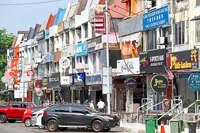
HOW many times have you driven into a town centre, along a busy commercial street or into a public car park, only to find that the parking space is barely wide enough for your vehicle?
How often have you struggled to squeeze out of your car, carefully opening the door to avoid hitting the vehicle next to you? Worse still, how many have returned from shopping or having a meal to discover an ugly scratch or dent on their car door?
For many Malaysians, this is an everyday frustration. Whether it is roadside parking, municipal parking bays, open-air car parks or multi-storey facilities, finding a parking space that allows us to park and get out comfortably is becoming increasingly difficult.
The problem is not simply the growing number of vehicles. It is that our parking infrastructure and standards have not kept pace with changing vehicle dimensions and the needs of the people using them.
Sports utility vehicles (SUVs), multi-purpose vehicles (MPVs) and larger family cars are increasingly common. Yet, many parking bays, particularly those laid out years ago, remain narrow and cramped.
A parking bay may technically meet the prescribed dimensions, but does that mean it is safe and practical? There is a fundamental difference between having enough space to park a vehicle and having enough room for its occupants to get in and out safely.
This problem is particularly noticeable with parallel roadside parking. The driver may manage to squeeze a vehicle into a marked bay, but opening the door towards moving traffic can be hazardous. Passengers, especially children and elderly people, may have to step directly into the path of passing vehicles or motorcycles. Motorcyclists and cyclists, in turn, face the danger of a car door suddenly opening in front of them. These are risks that deserve much greater attention in our road safety planning.
The same concern applies to perpendicular parking bays in commercial areas, public car parks and residential neighbourhoods. When vehicles are parked too closely together, getting in and out becomes an uncomfortable exercise. Drivers also have limited visibility when reversing out, increasing the risk of collisions with passing vehicles, motorcyclists and pedestrians.
Beyond scratches and damaged bumpers, there is a human cost that we should not overlook.
Malaysia is moving towards an ageing society. According to the Department of Statistics Malaysia, people aged 65 and above accounted for 8.4% of the population in 2026, compared with 8% in 2025. This growing segment of our population deserves greater consideration in the way we design everyday public facilities.
Imagine an elderly person with stiff knees trying to get out of a car when the door can barely open. Consider someone relying on a walking stick or walking frame who needs sufficient room to stand steadily before moving away from the vehicle. What about parents trying to lift a toddler out of a child seat, or helping an elderly family member into the car?
For these people, a narrow parking space is more than an inconvenience. It can become a genuine safety hazard, increasing the risk of falls, injuries and unnecessary physical strain.
It is time for the Housing and Local Government Ministry, PLANMalaysia, Transport Ministry and local authorities to take a fresh look at our parking standards and practices. The review should not be confined to new buildings or shopping malls. It must also cover public parking spaces along roads, commercial streets, neighbourhoods and municipal parking facilities.
We need to examine whether existing parking bay dimensions remain appropriate for today's vehicle sizes. Additional clearance should be considered where necessary, particularly beside pillars, walls and other obstructions. Roadside parking layouts should also take into account the safety of motorists, motorcyclists, cyclists and pedestrians.
Local authorities should review the suitability of parallel, angled and perpendicular parking arrangements according to the road width, traffic volume and surrounding environment.
Angled parking, supported by properly designed one-way circulation, may be a safer and more convenient option in suitable locations. However, the choice of layout must be based on sound traffic and safety considerations, not simply the number of vehicles that can be accommodated.
Developers and property managers also have a responsibility. In the pursuit of maximising floor space and the number of parking bays, the comfort and safety of motorists should not become an afterthought. Meeting minimum technical requirements should be the starting point, not the definition, of good design.
I recognise that providing wider parking spaces may mean fewer bays within the same area and could involve additional costs. However, should commercial considerations always take priority over the safety and convenience of the people who use these facilities every day?
A well-designed parking facility is an investment in customer experience, accessibility and the long-term value of a property. The same principle applies to public parking. Local authorities should recognise that convenient and safe parking contributes to a more liveable town and a better experience for residents and visitors.
I would urge the relevant authorities to engage developers, property managers, motorists, senior citizens, disability representatives and road safety experts in reviewing these requirements. Existing public parking facilities should be progressively assessed and improved while new developments should adopt standards that reflect today's realities.
To those responsible for planning and approving our roads and buildings, put yourselves in the shoes of ordinary users. Your own parents may one day struggle to get out of a car parked in a narrow bay. Your children may be walking behind a reversing vehicle without being noticed. You, too, may find yourself frustrated after returning to your car and discovering a fresh dent caused by a lack of space.
Parking is not merely about allocating a piece of land for vehicles. It is part of our everyday public environment where motorists, pedestrians, motorcyclists, cyclists, children and senior citizens interact.
We have invested considerable effort in improving road safety, but safety should not stop at the roadside or at the entrance of a building. It must extend to the very places where we park our vehicles and where people move around.
A little more space, better planning and greater consideration for human needs can make a significant difference.
Ultimately, the measure of good parking design should not be how many vehicles we can squeeze into a given space, but how safely and comfortably people can use it.
CHIN YEW SIN
Safety and Health advocate
Shah Alam
Already a subscriber? Log in
Get 20% OFF The Star Digital Access
Cancel anytime. Ad-free. Unlimited access with perks.